
SLDC Recovery Planning Document Outlines Redevelopment Priorities
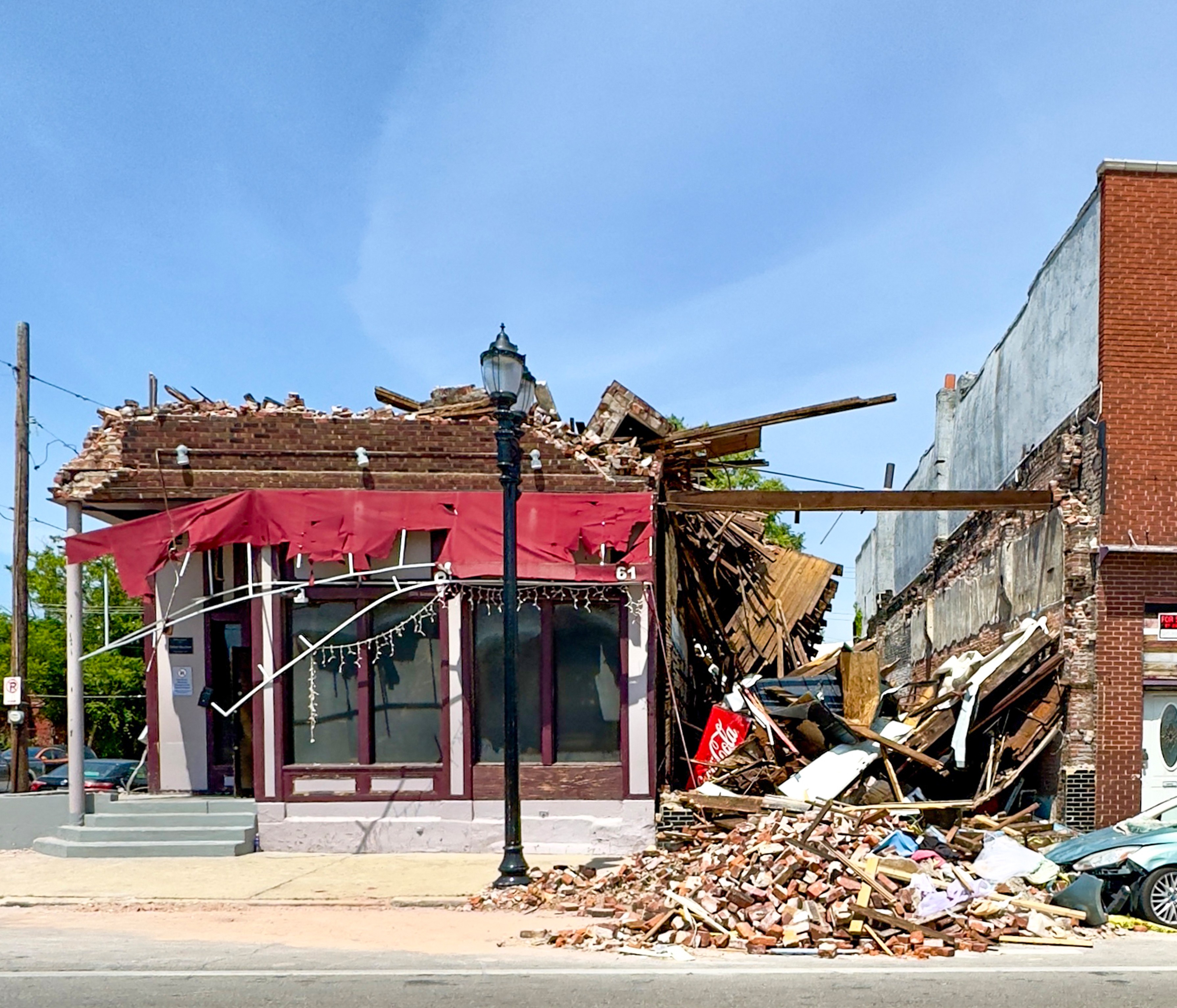
Over a year after the historic tornado that devastated homes in central and northern St. Louis, SLDC and its primary recovery planning partner, Kea Group Solutions LLC, have put forth numerous plans about the next steps to be taken in the city’s rebuilding efforts. A recent public records request uncovered scant information in the way of progress reports, but did produce a ten-point plan that SLDC is using to guide its efforts. The short planning document is dated January 9th of this year and has a corresponding presentation. Unfortunately for existing residents who were victims of the tornado, most of the plans appear to have little to do with them and are focused on long-range redevelopment goals with unclear timelines.
Roadways
The top priority in this document was the application for a federal grant to make changes to Dr. Martin Luther King Jr Dr. The document states that the application would likely focus on the portions of MLK Dr located between Union Blvd and downtown. The document states that it will complement changes to Cass Ave already underway. Throughout the document, it is apparent that SLDC will be continuing much of the Jones administration’s focus on rebuilding MLK Dr as a commercial corridor.
Residential Construction
The second area of focus is encouraging more private development in the affected areas. The document states that an unnamed developer is interested in building at least 200 homes in the impacted neighborhoods. The document states that “This framework may require SLDC through LCRA and LRA to provide land for development, Other considerations relate to develop support such as city side program management, upgrade utilities, upgrade street, lighting and sidewalk and clearing and regrading sites and providing utility taps ready for development.” It mentions that the homes will be marketed to “displaced residents and others that wish to locate in the area”. It does note that the developer would forgo development fees normally associated with new home construction. SLDC was asked whether existing residents would be granted any kind of priority for the houses, as well as the identity of the developer alluded to in the document. SLDC’s Vice President of Communications and Public Affairs Deion Braxton declined to comment, stating, “Nothing has been finalized, so we won’t elaborate further as details are subject to change.”
Later in the document, the document points out that a developer of modular homes named Modular Building Systems will be building 10-15 new homes in the affected area. It states that the new homes will be “grouped to infill large open areas north of MLK and in support of commercial development.” This had previously been announced, and reporting from late 2025 indicates that this will be funded with $3.2 million in federal funding.
On a list of priority developments in the area, SLDC highlights Elevate on the Bridge. This is the new name for a previously approved development known as “Fields Place at Natural Bridge”. The project was originally approved for Low Income Housing Tax Credits in 2021. It is described as a mixed-income development. The development’s former name relates to its original plan, which included a Fields Foods location as a commercial tenant to anchor the development. Fields Foods closed all locations in 2023, meaning it would no longer be able to fill the commercial space envisioned. SLDC was asked if a new commercial tenant has been identified. They have not responded as of writing.
Another project that SLDC has targeted is something referred to as “Delmar Repair”, and it has the highest estimated investment of the projects SLDC has cited as a near-term project that has been identified for investment. The name and categorization indicate that it is likely a large multi-family property on Delmar that was damaged in the storm. SLDC was asked for more information on this project, but the agency declined to answer the question.
Small Business Grants
When looking at small business funding, the document notes that $35.2 million is needed, based on estimates. It says that this number was derived from surveys gathered from the 782 businesses impacted by the tornado. The document states that this amount would only cover “up to 50% of those requests”. The document says that the city would focus on businesses on a list of priorities. Examples of high-priority businesses include pharmacies, book stores, shoe stores, and restaurants. Medium-priority businesses would include toy stores, art galleries, grocery stores, barbershops, and more. Businesses not in the top and medium priority lists fall into the low priority category.
The document also calls out a specific goal of redeveloping the site that once housed Harlem Tap Room. The tavern long served as a community gathering space, and bringing the establishment back to the area is called out as a specific redevelopment goal. SLDC’s Broxton says that there are no updates on progress towards bringing Harlem Tap Room back to the corner it long called home.
The document also says that HOSCO is considering moving into SLDC’s The Monarch on MLK facility on MLK Blvd. According to the document, HOSCO “healthy meals for the city under the shelter program along with servicing the majority of hospitals across the district with ‘food as medicine’ meals at a rate of approximately 2,000 meals per week.” The planning document states that HOSCO is currently unable to continue growing at its current facility and that “Landlord and tenant works are under design to accommodate this use” at The Monarch. When asked if there is a more recent update on HOSCO’s potential move into SLDC’s stalled Monarch development, Broxton stated that an agreement has still not been executed.
Neighborhood Planning
The document states that redevelopment will be centered on a development plan led by 4theVille. The document states that the purpose is to formalize the neighborhood plan and to align incentive usage (tax abatement, TIF, etc.) with a process of community involvement and feedback.
Related to this, the document also mentions working with the St. Louis Community Foundation. The document states that the effort will help the city “gain a deeper understanding of the persistent needs facing Community Development Corporations (CDCs) and nonprofit housing developers across the St. Louis Region and assess how they’ve changed over time, particularly with the May 16th tornado and federal funding cuts.”
Tax Incentives
The final two areas covered in the document focus on tax incentive deployment within the impacted neighborhoods. The document suggests that SLDC has settled upon a strategy that will “consist of one or more TIF districts covering portions of the MLK, Kingshighway and Natural Bridge commercial corridors near the Ville and Kingsway East neighborhoods, as well as an LCRA redevelopment area covering the aforementioned commercial corridors and the adjacent residential areas.” While the envisioned TIF will be focused on residential development, the document notes that there would be potential benefits for area businesses. “Commercial corridors will directly benefit from the TIF because it will create a stronger customer base – i.e., more nearby residential units = more customers for the commercial corridors,” states the document. The section on TIF also includes a discussion of a 1% increase in sales taxes along the commercial corridors. The document states that this would be done using the passage of a Community Improvement District (CID) covering the commercial corridors in the focus area. When asked to elaborate further on the points in the document, including whether increased sales taxes in an area of increased poverty is a wise decision, SDLC’s Broxton declined to comment further. He stated that nothing has been finalized.
Finally, the document proposed expanding a program that has been instituted in the neighborhoods surrounding the NGA development on N. Jefferson Ave. The program makes it easier for residents to apply for tax abatements for their existing homes by lowering the minimum investment needed to qualify for reduced property taxes. The new program reduces this amount to $2000, and information from SLDC indicates that it has been used by twelve property owners in the neighborhoods covered by the program. Also included in the ordinance authorizing the program were instructions to convene neighborhood advisory groups to approve tax incentives for larger developments. When asked about NGA-area examples of the advisory groups being proposed, SLDC stated that no developments in the area around NGA have met the threshold necessary to trigger that portion of the ordinance. “Development around the NGA has been slow, but progress is ongoing with the Land Clearance for Redevelopment Authority’s (LCRA) eminent domain proceedings to acquire land around NGA for development,” said Broxton in response to questions about the program.
This article was updated to correct a typographical error.


