
City’s Tornado Rebuilding Efforts Deserving of Northsider Scorn
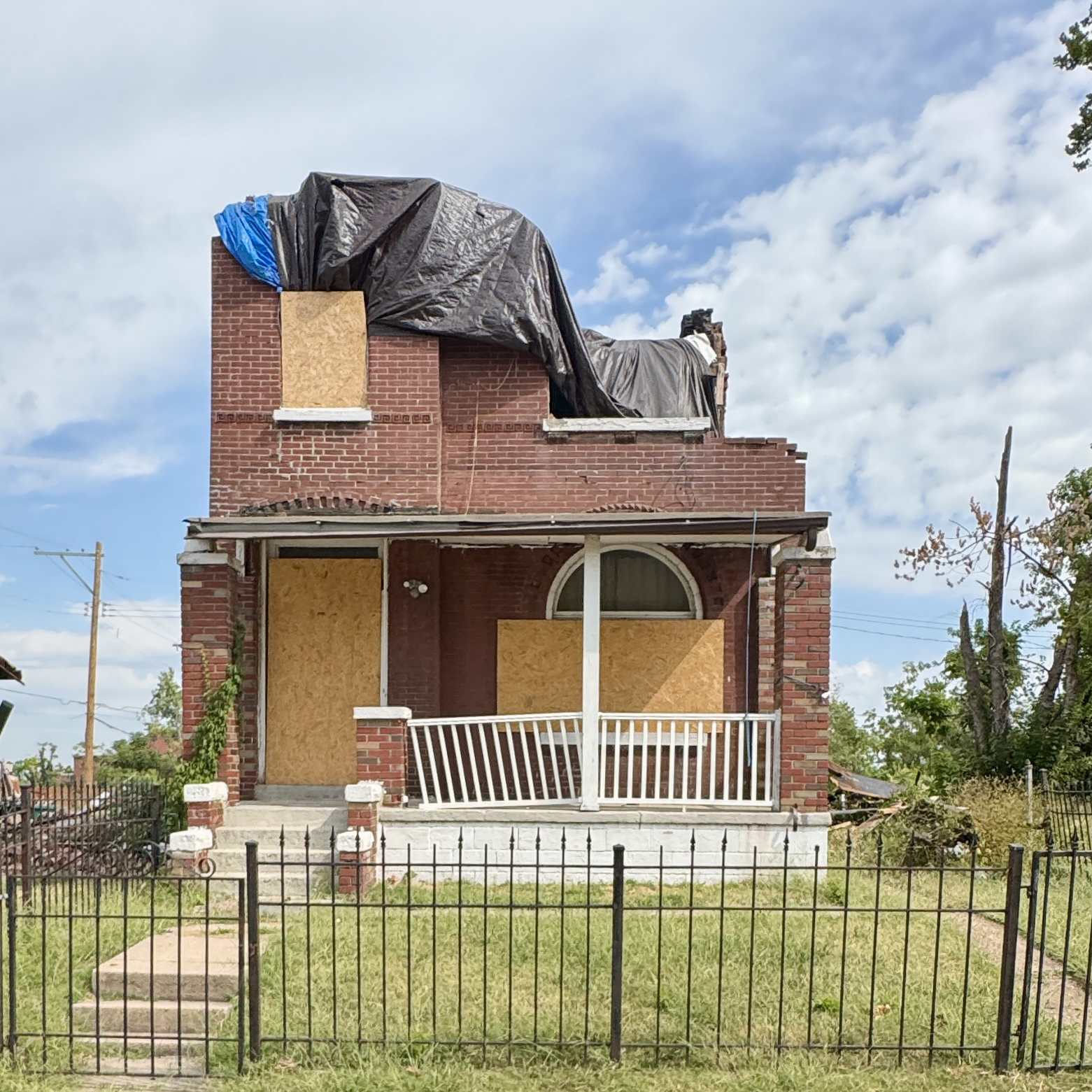
Recent reporting has given local residents a window into the city’s tornado recovery response, and it is safe to say that the city’s own data strongly backs complaints from northside residents who say the city’s response has been slow and insufficient. While the Spencer administration points to metrics that cast things in a more positive light, the city’s ability to provide home repair assistance is of paramount concern to many families in the path of last year’s historic tornado. The city’s own data shows that a paltry 24 homes have had work completed, leaving thousands of families to wonder if help will come in time to salvage their homes.
At the same time, the city has had no problem paying a bevy of consultants for their post-tornado work. Tetra Tech, one of the city’s recovery consultants, has seen its billing grow so rapidly that the Board of Aldermen felt the need to step in and put a limit on the contractor’s ability to continue reaping a windfall from the city’s misfortune. Local reporting states that setting up a new “bureaucratic backbone” to process home repair requests was among the duties for which this contractor has been billing the city. Why a new system needed to be set up, given that the city has run its home repair program for many, many years, is unclear. Even if it was necessary, the fact that the program continues to move at a snail’s pace begs the question: what did the city get for the money? It certainly doesn’t seem to have been a more efficient and nimble program. The lack of action on home repair also calls into question the veracity of another Spencer administration talking point, which is that a top priority is to stop population loss caused by the tornado. How better to show this than by prioritizing fixing the homes of those who have been displaced? Land assemblage planning for developments that won’t be built for years does not stop people from leaving now.
In fact, former Community Development Agency (CDA) head Nahuel Fefer points out that the city had significantly expanded the home repair program under the Jones administration. Given that the program recently saw significant expansion, the city’s inability to provide home repair services to impacted households is even more curious. Were no lessons learned during the previous expansion? Did the contractor paid to improve the system speak with CDA staff about their experience and take it into account?
Whatever the reason for such slow deployment of home repair dollars, it will be of little comfort to families now facing the prospect of the sweltering summer heat in their storm-damaged homes. Instead, we’re told that the city is readying plans for larger redevelopment projects. This shows where the city has been more focused and doubles down on critics’ questions about the city’s focus and priorities. As is, the city’s repair tracker shows that 24 homes have seen work completed. This is the same number cited in St. Louis Public Radio’s mid-May reporting on the subject and a clear sign that progress has been and remains slow. For context, the city has completed work on roughly one percent of the homes that have applied for assistance. At this current pace, it would take generations to complete the work.
Of course, this plays into the hands of the administration’s critics. Organizers and neighborhood leaders point to St. Louis’s long history of clearing out Black neighborhoods for redevelopments geared towards attracting higher-income, white residents. The administration has to be aware of this fact.
The Spencer administration wants the public to give it high grades for the city’s response to the historic natural disaster. Most people would think that the number of people whose homes have been restored would be very important in judging the city’s tornado response. In fact, I think most reasonable people would see it as the most important metric, especially given Mayor Spencer’s repeated claims that retaining population is a major city priority.
Mayor Spencer used the tornado’s anniversary as an opportunity to present the city’s recovery effort in a positive light. This would be expected of any politician in her position. While the city has done better at certain tasks, keeping northside residents in their neighborhoods does not appear to be one of the administration’s strengths. In turn, this plays directly into the rhetoric of Spencer’s critics. If the administration hopes to improve the community’s estimate of its tornado recovery performance, it should focus on the metrics most people are concerned about: how many homes it has repaired and how many families have returned.
In former CDA Director Nahuel Fefer’s piece in the St. Louis American, he noted that the Jones administration completed home repairs on 499 homes. This is roughly twenty times the number of homes that the Spencer administration says it has repaired. The fact that the current administration is so far behind the pace of her predecessor shows that the public is right to question the value of services rendered by contractors and Mayor Spencer’s claims that she is focused on rebuilding and retaining northside population.


