
St. Louis’s Worsening Identity Crisis Deserves Discussion
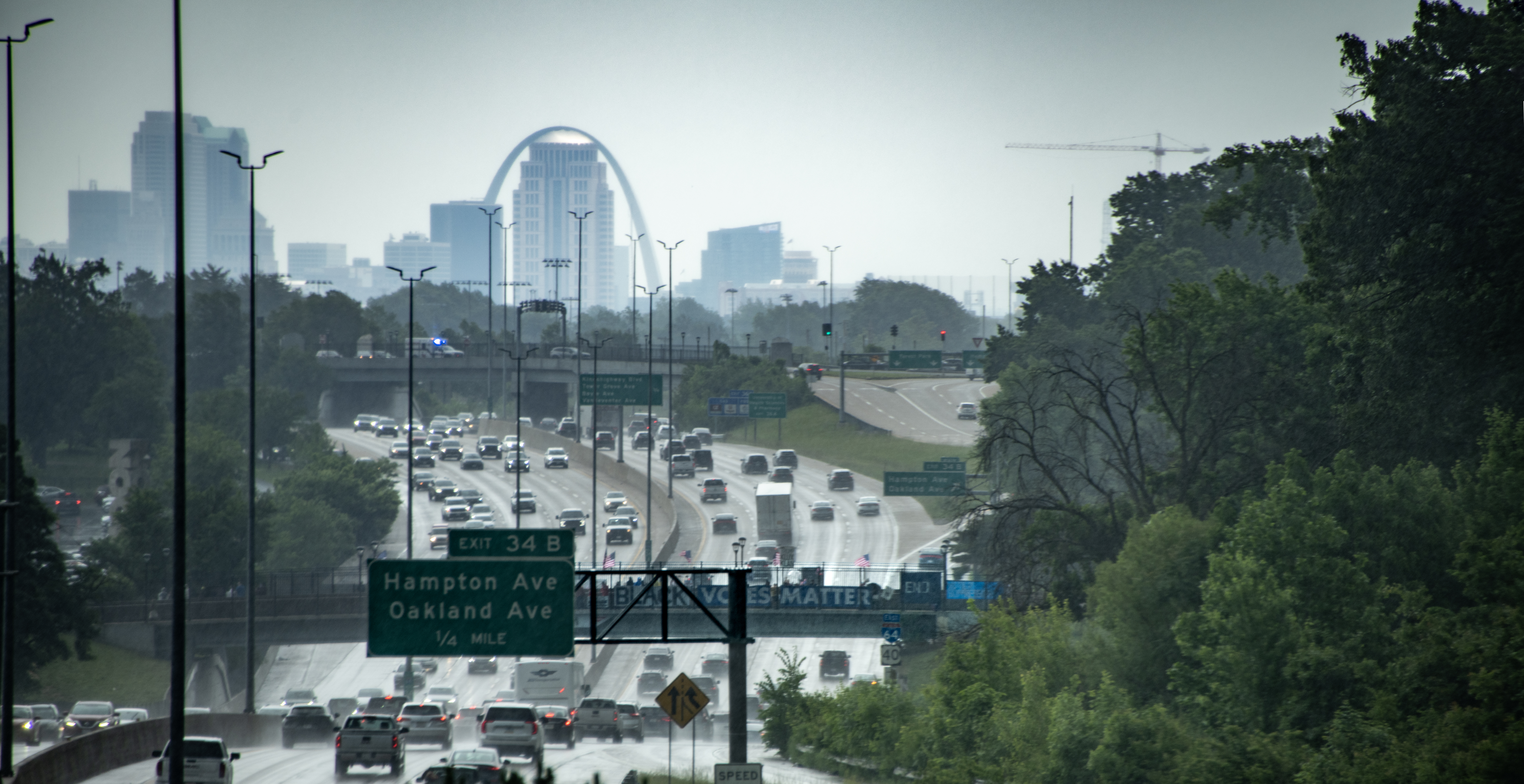
How will St. Louis culturally rebrand? It seems to be a question that a lot of people have been asking themselves, yet there hasn’t been much public discussion of the topic. Instead, most discussion about reversing the city’s fortunes continues to be centered on expensive development projects. St. Louisans can feel a malaise that is both palpable and enduring, and it is increasingly becoming apparent that what may have worked in the past is no longer up to the task of stopping the city’s renewed decline. If the city is going to get out of its proverbial rut, it will mean at least some form of cultural renewal.
For roughly the past thirty years, St. Louis was part of a nationwide trend of increasing investment in core cities. Accompanying this came a sustained push to prioritize attracting higher-income households to the city. In a limited number of neighborhoods, the impact was dramatic. Washington Ave became a downtown destination district, filled with bars, restaurants, and an increasing amount of amenities to support the newly arrived loft dwellers. The neighborhoods around Tower Grove Park saw dramatic changes, as countless multifamily buildings were converted to single-family homes and rehabbing sent home prices skyward. The end result was more suburbanized neighborhoods with lower density and populations that were whiter and more affluent.
To the north of the Tower Grove area, the neighborhoods near Washington University’s booming school and medical campuses likewise saw dramatic changes. In these areas, upscale multifamily housing rose alongside the prices of single-family homes. These new apartments and condos brought with them a different neighborhood feel, and local civic leaders began talking about a “mega downtown” that would stretch from the Arch to Clayton’s gleaming towers.
Of course, we all know this was done with massive amounts of public subsidy. This focus on subsidized growth in the central corridor and some southern neighborhoods did not spread its benefits to other parts of town. Northern and southeastern neighborhoods largely continued their slow declines. The low interest rates and public subsidy that drove residential growth in many areas simply didn’t impact neighborhoods where there wasn’t much residential lending or issuance of the subsidies that come with new development and upscale rehabbing. Downtown’s stalled residential real estate market is also a testament to the fact that neighborhoods can make substantial moves forward, only to lurch backward a decade later.
Throughout all of this uneven change, the city benefited from a narrative that made it a destination for many people choosing which community to call home in our region. The regional population has been largely static for many years, and most of the real estate competition in the area comes from communities striving to attract families that live within the region. It is a somewhat weird form of intramural competition, but it is the basis of competition within the local real estate economy.
Over the 2000s and 2010s, city boosters had a pretty clear message. Sure, some areas of town had elevated crime, and the school district wasn’t the best, but the city had so much culture to offer. It has amazing parks and incredible architecture that most of the suburbs can’t match. The city served as the cultural epicenter for the region, with most touring musicians, comedians, and other entertainers performing at venues located within the city limits. Compared to our suburban neighbors, the city was still the unquestioned hub of the region’s arts and entertainment. While the population may have spread across the suburbs, the city remained the region’s cultural center.
This period, simultaneously marked by gentrification and continued decay, was one where the city also began to add new cultural feathers to its proverbial hat. The city’s drinking and dining scenes exploded. Enterprising new chefs and restaurateurs turned a sleepy local food scene focused on toasted ravioli and other standbys into one of the most innovative dining scenes in the country. Local chefs began winning recognition in national competitions and publications. The city’s longtime role as a hub for immigrants also added an international flair to the burgeoning dining scene. The city’s craft brewing culture exploded, and local breweries began garnering national recognition and respect. As the home of Anheuser-Busch, it was a natural progression of the city’s narrative and even represented a reclaiming of historic local brewing culture that had dwindled. The city was fun, sophisticated, and the unrivaled center of cultural vibrancy in the region. When combined with low interest rates that made upscale rehabbing relatively affordable to finance, it was a recipe for increasing reinvestment into some neighborhoods that had long seen declining property values and homeownership rates.
Fast forward to today, and that narrative has largely collapsed. The swagger is gone. Our population is dropping at a rate not seen in a generation, and it seems to be a sustained trend. Instead of a turnaround story, the city’s narrative now largely focuses on crumbling infrastructure and the sense that the decay goes far beyond potholes. Partially, this again reflects national trends. In the 2020s, we have seen a resurgent suburbanism take hold in Americans’ post-pandemic lives, dramatically slowing the “return to the city” movement. Likewise, the higher interest rates that have impacted development financing are national in scope. In our metro, this slowing of urban growth has turned into a full reversal. As the city’s population drops at an alarming rate, suburbia continues to surge ever westward.
As mentioned earlier, Downtown’s residential real estate scene has long stalled, while “post-COVID” trends that emptied downtown’s office buildings stubbornly refuse to reverse. We’ve lost not just businesses, but also public art to western suburbs. Meanwhile, the city’s entertainment venues have lost programming to newer competitors in Maryland Heights and Chesterfield, an area that is increasingly becoming the region’s center of gravity. The city’s dining scene, which elevated the entire region’s culinary reputation, seems to have lost its sparkle and inspiration, while the trendiest local restaurants increasingly call the suburbs home. Likewise, suburban microbrewery locations now outnumber the city’s. Many of these breweries initially began in the city, too. While most of them have retained their original locations, the focus for growth and expansion has clearly moved westward. Then there is the whole issue of alcohol consumption’s declining popularity. What does a town whose identity is tightly bound to beer do when people cut back on booze?
All of this begs the question: what makes the city special? If the suburbs now offer most or all of the amenities that were once considered the city’s bailiwick, why would you choose to live in the city? The negatives are well-known, and the city needs to make a compelling case that the positives outweigh them. If many of the amenities that once drew people to the city are now equally available in the suburbs, St. Louis will need new ways to positively differentiate itself from our suburban competitors. We can’t just be a place with sinkholes, nice parks, museums, and stadiums. We need to make the case that the city provides a living experience that is both unique and invites people to build lives here.
That’s the conundrum city leaders face, and it is one that they are ill-suited to answer. This is because this question is more cultural than political. This can’t be fixed with a tax abatement or speed hump installation. Culture can’t be simply reshaped and revitalized by city ordinance.
I posted about this on my social media, and it drew a lot of conversation. Folks from activist backgrounds, local elected officials, artists, real estate professionals, and others chimed in. While they had different ideas about how to approach the situation, almost everyone agreed that they could feel that the city has become culturally stagnant. A longtime civil rights leader posited that many discussions on the issue are stymied by unempowered people who are consumed by passivity. An elected official put forth the idea of more aggressively courting new Latino and LGBTQIA+ residents. Matching the Spencer administration’s recent focus, some pointed to a revitalized riverfront as part of a potential rebrand. Numerous commenters stated that the city needs to refocus on people, rather than the narrow focus on attracting new developments that largely dominates local political discussions about revitalization.
If we are to turn the tide, the city needs to find its swagger and rediscover the things that make it a unique and vibrant place to call home. That will mean coming up with new ways to positively differentiate itself from suburban competitors. That won’t be done by simply trying to employ the same playbook that was used for the past thirty years. It’s a different time, and the city will have to adapt and find new ways to attract and retain residents.
Seeing as this topic drew so much discussion, we reached out to a number of commenters, offering them the chance to flesh out their ideas in upcoming guest articles. As this is an important conversation, we are also inviting our readers to submit their ideas about how we can culturally rejuvenate the city. If you would like to submit an article for consideration, email us at editorial@moundcitymessenger.com.


