
SLDC Awards Tornado Recovery Planning Contract to McKee-tied Firm
Earlier this month, the St. Louis Development Corporation (SLDC) Board of Directors approved a $1.1 million contract with a consulting firm that will assist SLDC with “business and economic recovery” following the May tornado. That firm is Kea Point Solutions LLC, which was incorporated on July 14, 2025, by Registered Agents, Inc. The company has an official mailing address in Harrisonville, Missouri, near Kansas City. While brand new, there is no secret about who is leading the company created seemingly just for the contract: Russell Halliday, a New Zealand-based architect who has previously worked with SLDC in north St. Louis. Kea Point Solutions apparently is named for Kea Point, a scenic spot in New Zealand’s Aoraki/Mt. Cook National Park. The ownership behind Kea Point Solutions does not have to be disclosed under Missouri law, and the registration with the Missouri Secretary of State keeps much information hidden.
Halliday is no stranger to contracting with SLDC under the leadership of Executive Director Otis Williams. In his prior role as a Project Manager at the giant engineering and design firm Stantec, Halliday served SLDC’s Project Connect, established to “connect” the National Geospatial-Intelligence Agency (NGA) north side campus project to surrounding neighborhoods. According to Halliday’s LinkedIn profile, he served at Stantec until February 2024. Williams, recently re-appointed to lead SLDC on an interim basis by Mayor Cara Spencer, previously served as Deputy Executive Director from 2002-2013 and President and CEO from 2013 through 2021.

Halliday’s LinkedIn profile description of his role at Stantec reads as follows:
“Part of the talented team managing the redevelopment of the NorthSide regeneration area of the City of St. Louis. The City has decided to reverse the deterioration trends in historic neighborhoods north of the City’s downtown area through the creation of the NSR Project. The NSR Project has been planned as a holistic, sustainable regeneration of the neighborhoods and businesses in a way that enhances the community, maintains a high quality of life, and creates new ‘economic engines.’”
Prior to his work in St. Louis, Halliday was a Domestic Program Manager at MWH Global from 2011 through 2014. In this capacity, he led planning for recovery around the Canterbury, New Zealand, earthquakes of 2010 and 2011. He earned a Bachelor of Architecture degree at New Zealand’s University of Aukland in 1986 before working in various architectural and planning jobs in England, New Zealand, Arizona, and Ohio before the role at MWH.
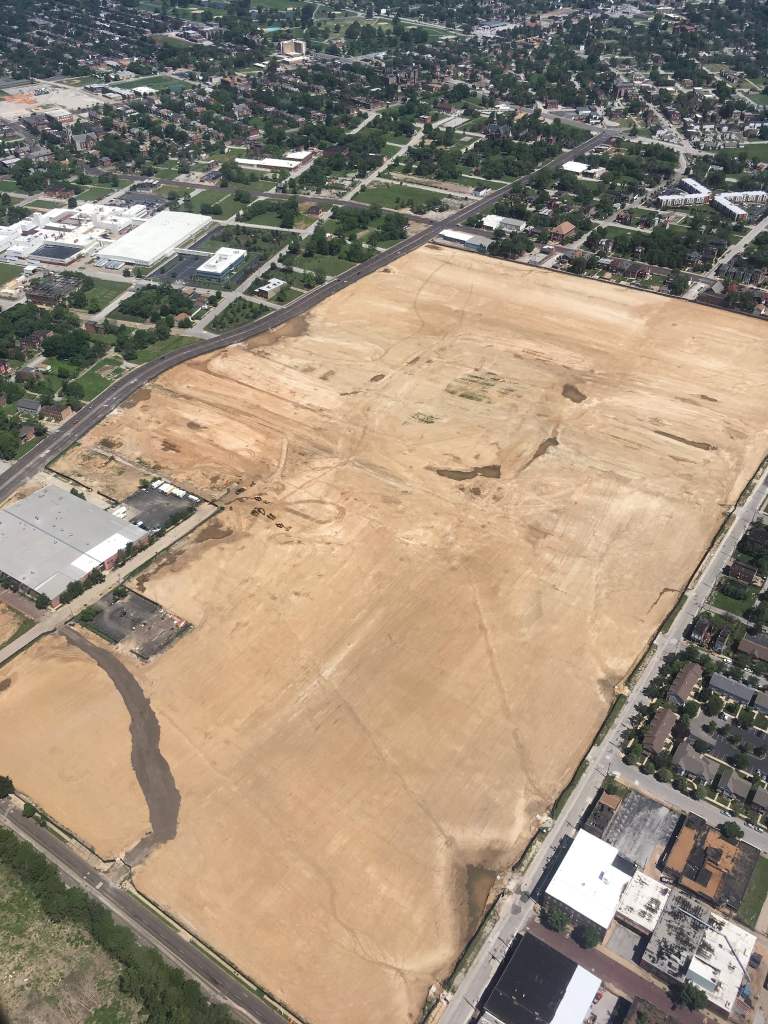
Project Connect was created by SLDC before the NGA had decided to relocate its St. Louis headquarters to the southwest quadrant of St. Louis Place, which would eventually be bulldozed to make way for the new campus opening this fall. As Halliday’s LinkedIn biography lays out, Project Connect was often conflated with Northside Regeneration, a speculative real estate project led by Paul J. McKee, Jr. In fact, Project Connect was led from 2014 through 2019 by a planner named Isa Reeb, who was a project manager at Denver-based urban planning company Civitas. Civitas had already been working for McKee on Northside Regeneration since at least 2009, when McKee first announced his 1,500 acre redevelopment project that included where NGA would eventually be built.
McKee began purchasing properties secretly in 2003, and after years of denying his role in evicting tenants, small businesses, and churches from the northside neighborhoods of Carr Square, Old North St. Louis, St. Louis Place, and JeffVanderLou, he rolled out a plan to capture Missouri tax credits in 2007. McKee successfully led the Missouri General Assembly to pass the Distressed Areas Land Assemblage Tax Credit (written by his attorney Steve Stone’s staff) and eventually claimed more than $41 million in credits reimbursing him for purchases, demolition and maintenance.
By the time that SLDC created Project Connect under Williams’ previous leadership, Northside Regeneration had had five years to use the generous $390 million in tax increment financing provided as part of the larger redevelopment package approved in 2009 by the Board of Alderman and then-Mayor Francis Slay. McKee had done little except deplete population and let buildings be burned by arsonists. He even threatened to obstruct the NGA at one point by not agreeing to land sales SLDC was negotiating. McKee continued to hold redevelopment rights until 2018, and Williams was a bullish voice supporting Northside Regeneration even when affected neighborhoods’ residents rejected the controversial developer. Also in 2018, then-Missouri Attorney General and now Senator Josh Hawley unsuccessfully sued Northside Regeneration, alleging that McKee’s company engaged in fraud on its tax credit applications.
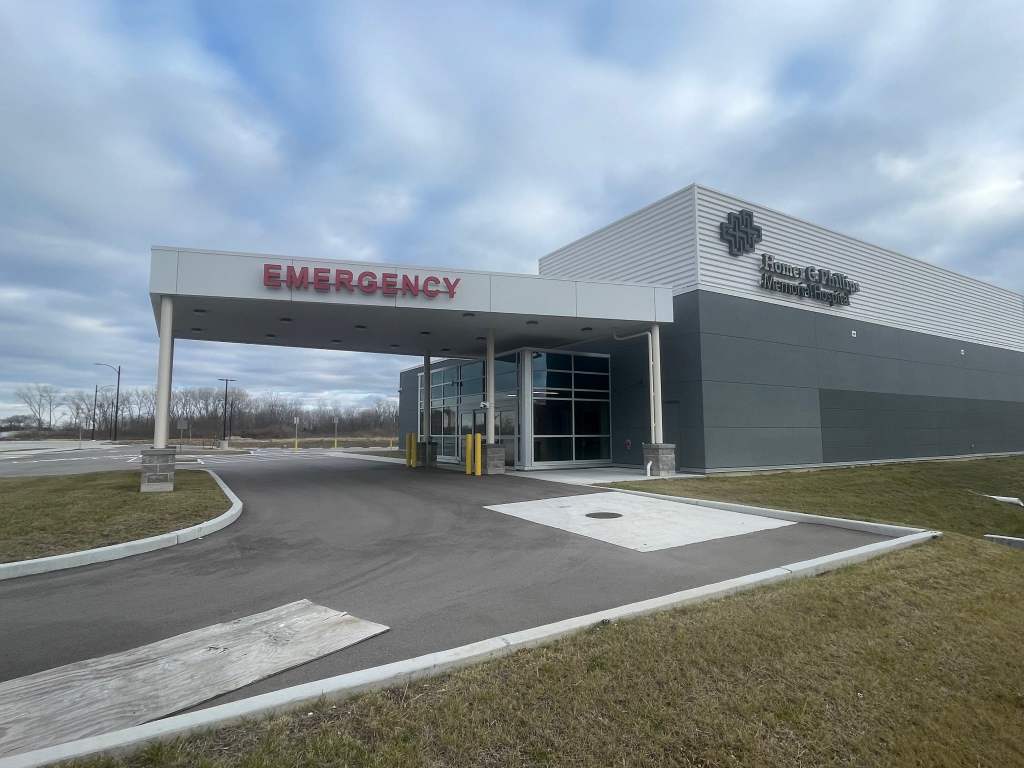
Project Connect shifted the SLDC rhetoric around the planning goals for McKee’s proposed redevelopment area from earlier endorsement of Northside Regeneration to a public-minded view anchored around the NGA project. (Note: The current version of Project Connect is framed around six neighborhoods adjacent to NGA’s site, but has different leadership and consultants.) Halliday’s LinkedIn description of his role promoting McKee’s name for his project shows that the conflict of interests did not dissipate. Halliday gave an interview to the Lincoln Institute of Land Policy claiming that when the time came closer to NGA opening, developers would leap to finance projects in surrounding blocks. However, the projects named in the article after his quote are just McKee’s gas station, grocery store, and three-bed urgent care “hospital,” all of which were built. Only the gas station remains open.
Halliday stated to the SLDC board that natural disasters create a “net benefit post recovery.” That claim is reminiscent of similar claims made over the years by McKee and Williams about the near north side – except that the social disasters of redlining, depopulation, and McKee’s own government-funded removal of residents, businesses, and churches seem hardly fit for such a sanguine stance. Project Connect left such empty promises that Williams now has told media that SLDC may end up buying out land speculators – including McKee, perhaps? — around the NGA to spur development.
What Russell Halliday will bring to the tornado-impacted neighborhoods is unknown, as details of his company’s contract are not publicly available. Halliday’s work on Project Connect shows that his previous work in St. Louis, even by his own claims, remains unfulfilled in ambition and measured objectively by accelerated population, building, and business loss.
Correction: This story originally stated that SLDC had made Mr. Halliday available to St. Louis Public Radio (STLPR) for its September 4th article on Kea Point Solutions being selected for the contract. While the STLPR article made no mention of the quotes coming from an SLDC board meeting, SLDC contacted this publication to clarify that the quotes came from a board meeting and included a link to the video. The story has been edited to reflect this new information.


