
Greed And Manipulation Meet Their Match In THE CURIOUS SAVAGE
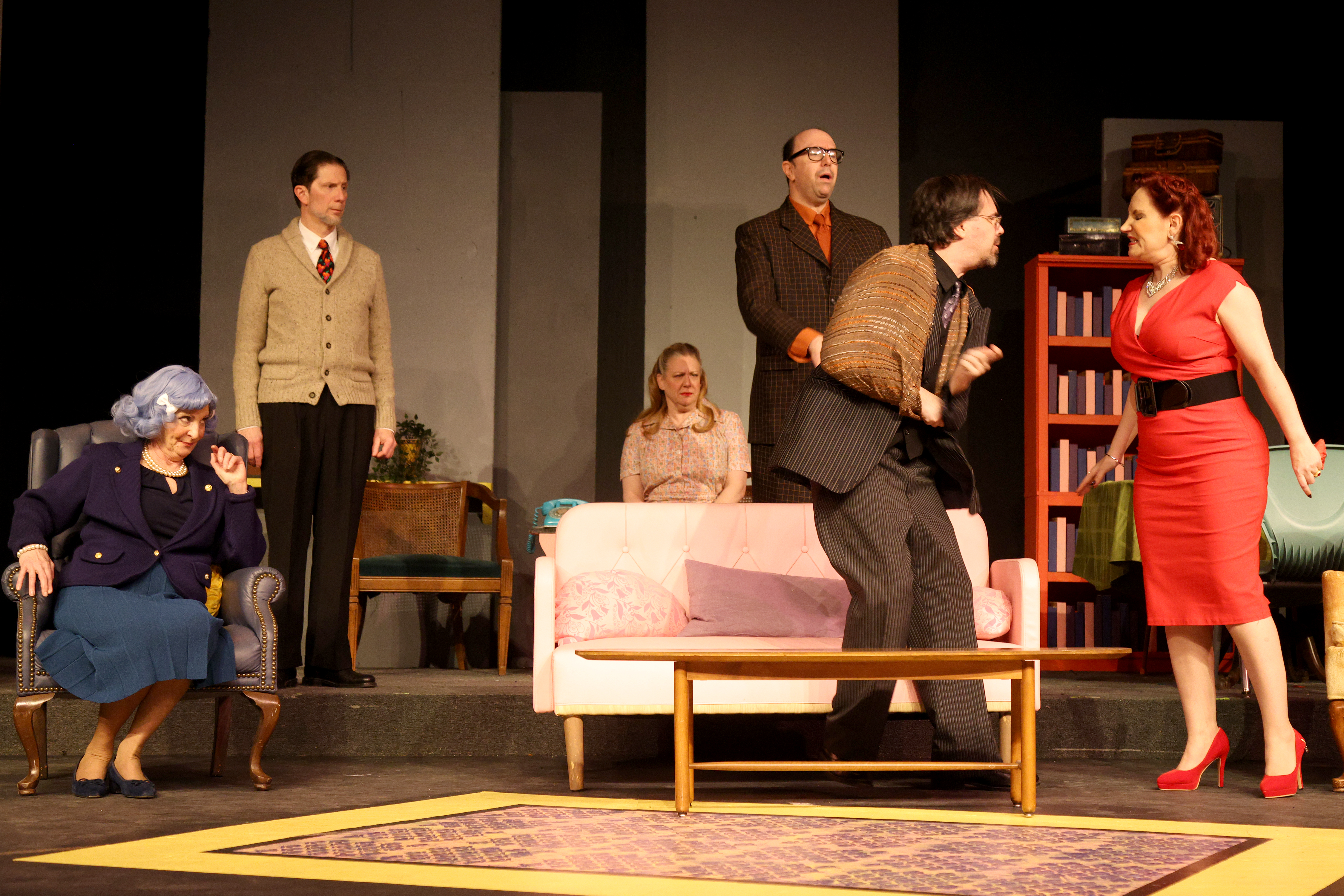
Plays and playwrights, like most art and artists, reflect the knowledge, social structure, and cultural norms of their period and place of origin. As such, theater companies and artistic directors must often consider how the norms reflected by the characters in a play will affect a contemporary audience’s experience and enjoyment. Such is the case with Stray Dog Theatre’s production of The Curious Savage, written by John Patrick and set in a private psychiatric hospital in 1950. Director Gary F. Bell and the talented cast rise to the challenge and largely succeed in tempering outdated and potentially offensive characterizations while delivering a suspenseful drama layered with false sincerity, greed, and manipulation.
The permanent residents of The Cloisters are anxiously awaiting the arrival of Ethel Savage, a potential new patient. A wealthy widow, Ethel breezes into the resident’s communal rooms like a breath of fresh air. Vivacious and clearheaded, she exudes warmth, respect, and acceptance of others, as well as a steely desire to memorialize her departed husband in her own way. Her adult stepchildren find Ethel’s largesse erratic and are pressing the doctor to have her committed so they can take control of the family fortune. Aware of their intentions and rapacious desire for wealth, Ethel out maneuvers them and hides the money. After initially dropping Ethel off and sneaking out without a goodbye, the greedy children return in a huff, leading to a standoff wherein the family might lose everything.
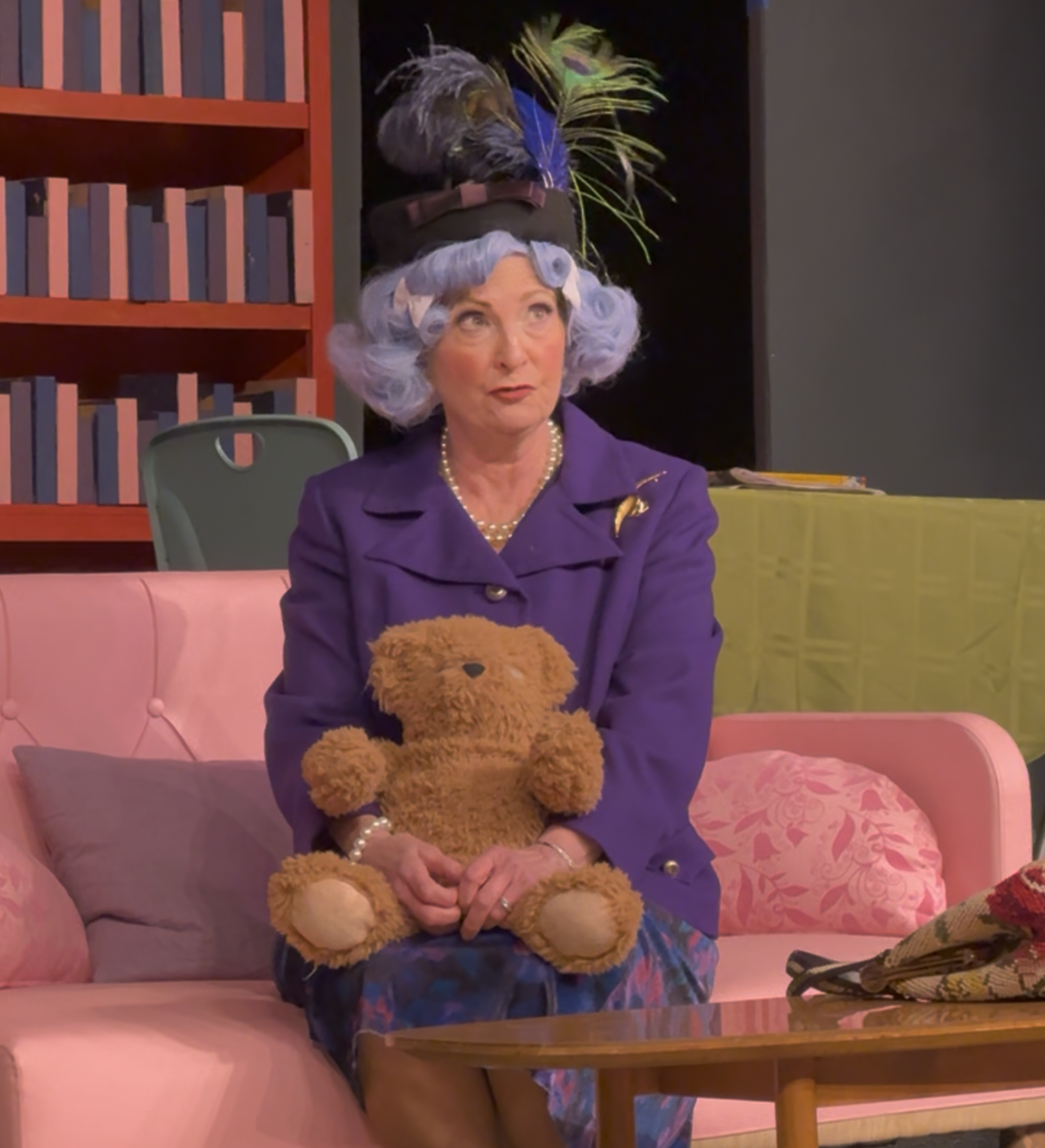
Liz Mischel is captivating and delightfully spry as Ethel Savage, ensuring the audience can’t help but cheer for her to outwit her corrupt stepchildren. Matt Anderson, Sarajane Clark, and Joseph Garner are gleefully selfish, a bit sleazy, and competitively manipulative as the conniving siblings. David Wassilak and Claire Coffey are personally and professionally invested and attentive as the facility’s doctor and nurse, and they’re not as easy to fool as the scheming Savage offspring may think. Tyler Cole, Camille Fensterman, Gansner, Lindsey Grojean, and Anne Vega ensure that the facility’s long-term residents are personified with respect, despite scripted characterizations that feel stereotypically broad and dismissive of individual agency.
Though never labeled, the residents display a variety of behaviors that suggest diagnoses of schizophrenia or personality disorders, hyperactivity, self-regulation, and cognitive challenges, as well as deep depression and trauma, including PTSD. They would not live together in a modern healthcare facility. Thankfully, director Bell and the capable cast embrace Ethel’s conundrum, leaning into the suspense and morality tale aspects of the story and taking care to avoid demeaning generalizations and exaggeration. Bell and the performers neither gloss over nor lean into the outdated depictions of people with mental health, neurodiversity, and cognitive challenges. Instead, the residents are mostly restrained and underplayed; and the cast keeps their focus on plot development and storytelling. This includes ensuring the stepchildren, who are money-hungry, self-absorbed, and morally bereft – shortcomings much more malevolent than the patients’ disabilities – get their deserved comeuppance.

The Curious Savage is an interesting and at times humorous play, with a title that’s a bit of a double entendre, reflecting both common attitudes towards mental health in the late 1940s and ‘50s as well as the widow’s “curious” or unusual state of mind. And there’s a lovely scene near the end of the show where the doctor encourages Ethel and, by extension, the audience to neither romanticize nor minimize the lives of people dealing with serious mental illness and trauma. The short but poignant speech, in response to Ethel’s momentary desire to stay safe and sequestered at the Cloisters, may be the best bit of writing in the script. The moment transcends the period and still rings true and relevant today.
While I doubt I would recommend the play for a contemporary company, Bell understands where to push and where to pull back to ensure the story remains interesting and compelling. Stray Dog Theatre’s production is engaging and unexpectedly fun; and it treats the characters with kindness and understated affectations that minimize the sting of period attitudes towards mental health. Theatregoers who can overlook the stereotypes inherent with the period are sure to enjoy the plot’s cheerful machinations, light suspense, and occasional twists as well as a satisfying conclusion that features enough quick thinking and decisive action to restore a little faith in human nature.


