Workers Centers Help Employees Build Better Connections With Other Workers And Their Communities
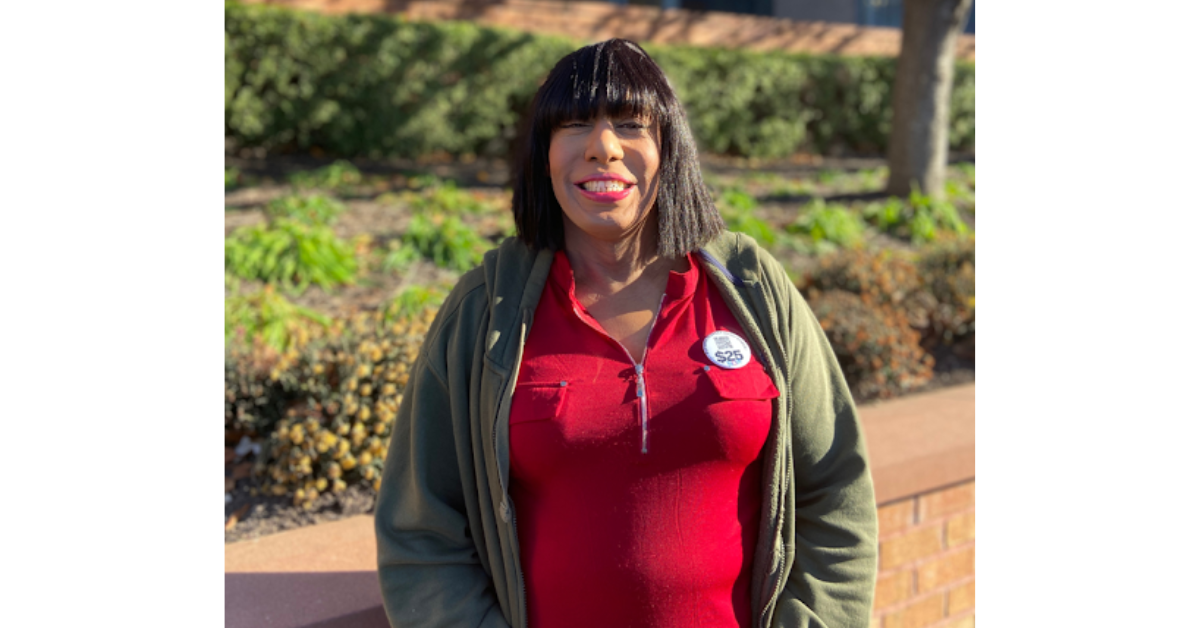
By Chris Grant and Vallerie Clarice Sailor
Decades of increasing income inequality have laid bare seemingly insurmountable fault lines in American society. But this division is not what you think—Republicans vs. Democrats or rural vs. urban. Rather it is the increasing isolation of individuals from each other, and in particular workers from their communities. We attend church less often. We don’t volunteer as much. Do people still play in softball leagues? At the same time, the demands of work alienate us further. We are pushed into part-time and temporary jobs to protect ourselves from the precarity of unemployment. Employers use complicated algorithms in scheduling to cover as many hours with as few employees and as little overtime as possible. And companies reduce the tasks that workers perform to their simplest elements, then monitor every second and move in the workplace. Were you more than five minutes “time off task” at work today? Your boss knows.
For years, labor unions served as bulwarks against isolation. Where they remain strong, like in the construction industry, they still are. Unions run sports leagues. They sponsor charitable fund-raisers and encourage people to volunteer in their communities. They also inculcate workers in the habits of participatory democracy. When you attend a union meeting, you are given the opportunity to complain and argue and vote. You learn how to think strategically and democratically. In addition, unions counter isolation in the workplace. A union is a group of workers acting collectively against their employer. Through a union, workers fight for dignity and respect via job protections, better scheduling, and halting invasions of their privacy. Workers in a unionized workplace also navigate the difficulties of developing common goals, as they are forced to balance individual needs with what the majority wants.
It is no surprise that our social isolation has increased at the same time as declines in union density. This is not by accident, but design. The same forces that drive income inequality–tax policies that favor the rich and big business, globalization, free trade, and increased outsourcing, higher executive pay, and the advent of digital technology and now artificial intelligence–undermine the strength of unions. The result is employees working longer hours, at lower pay, with less time to socialize, and feeling more alienated. And workers in historically non-union workplaces and those with the fewest job protections–those in the service industry, low-wage hospitality and warehouse jobs, in light manufacturing in the rural communities, domestic workers, and African-American and immigrant workers–are hurting the most. These workers span the political spectrum. They are Trump voters in Rolla and Poplar Bluff and long-time Democrat voters in St. Louis City. What they share is the same anxiety.
This is not the end of the story, however. Worker centers have stepped into the void, supporting employees most in need of protection. Worker centers are not unions. They are often established as nonprofits. The earliest worker centers emerged in the 1990s and early 2000s, many in immigrant communities, others in support of low-wage workers like janitors and restaurant workers. Worker centers continue to proliferate. Drawing inspiration from the civil rights movement, they focus on organizing worker power to address inequalities. This is not collective bargaining. Rather, worker centers provide legal and other support services, worker education, and advocacy around policy issues. But like unions, churches, and other civic organizations, worker centers bring workers together, to develop strategies not only to improve their lives, but to build stronger connections with each other and their communities.
The Missouri Workers Center was formed several years ago. A primary focus of the group is supporting Amazon warehouse workers. But the Missouri Workers Center also takes a broad approach, in advocating for all types of employees, and improving protections in all workplaces. The Center teaches workers about OSHA and workers compensation; it develops leaders and it pushes for increases in the minimum wage and paid sick leave in general. Most recently, the Missouri Workers Center opposed a new, tax-subsidized sports stadium in downtown Kansas City, when the owners would not commit to fair labor standards and affordable housing. (See https://moworkers.org/)
“STL8” is an Amazon facility perched on the edge of St. Peters. It employs thousands of employees, from rural and exurban areas. Its employees are men and women, Black, white, and Brown, and queer, trans, and straight. The facility is gigantic – the size of multiple football fields. It can take 10 minutes to walk from your work location to the breakroom. The work is very hard and unrelenting. Moreover, the boss watches every move. Amazon uses cameras and apps to monitor and measure every task of a worker to ensure no downtime.
Vallerie Clarice Sailor is a member of the Missouri Workers Center and one of the workers at STL8. Below is her story, in her own words, of how she and her co-workers are acting together, to improve their working conditions, and in that process building stronger social bonds with each other.
Whether we are Black or white, transgender or not, Missourians work hard and want the freedom to thrive—to be our full selves, to care for each other, and to leave things better for those to come.
That’s why I began working at Amazon. I’ve worked in the warehousing industry alongside people of different races and genders for much of my life, and I came to STL8 a couple years ago because my nephew said the benefits are great for the medical care I needed. I was grateful to start treatment as soon as I joined the company.
But I quickly found that Amazon is not like other warehouse jobs. The pace of work is extremely fast; plus I was losing muscle quickly thanks to my hormone therapy, so my body couldn’t handle this type of work like it used to. I also just celebrated my 60th birthday, which makes labor this physically grueling even tougher on the body and has exacerbated pain from joint injuries I had before.
It’s not easy to avoid aggravating those injuries when I’m expected to move up to 170 items—sometimes 50 pounds each—every hour. We’re not robots, after all.
But Amazon doesn’t often remember that. I work hard enough to hit my quota, yet Amazon “rewards” me by pushing me even harder instead of showing me care and dignity. Management has even repeatedly misgendered me, which is dehumanizing as a transgender woman. And I’m treated like a cog, along with my coworkers. I saw one worker in tears, doubling her speed to make rate when a PA came over to her like a predator after a rabbit. It’s no surprise Amazon has an injury rate double the industry standard.
It might be easier to stomach all this if the company paid us for the true value of our work, but Amazon has chosen to prioritize shareholder profit over our compensation. Because of corporate greed, our paychecks have not kept up with the cost of living. Instead, management hands us candy. If they really wanted to show us respect they should put it in our checks.
Better pay would mean a safer, affordable home to catch up on rest between long shifts, and new clothes so I could feel more like myself with the transition. Better working conditions would mean less pressure, aching, and emotional strain.
And as our work has helped the company prosper, certain politicians have let Jeff Bezos rig the rules even further in his favor. Amazon pays next to nothing in taxes, redirecting away our public resources from our parks, schools, and neighborhoods for his private gain. These same politicians and wealthy CEOs try to control us, stirring fears based on what we look like or where we come from, hoping we will blame everyday people for the hardships these wealthy few create. But we know better.
We the employees of Amazon—the stowers, the packers—have made the company worth over a trillion dollars. And we look out and care for our communities too. Without us, nothing moves.
It’s why I joined the STL8 Organizing Committee. If we don’t act together right now, we’ll be in the same situation a year from now. And singularly, there is no power. But collectively, they’ve got to listen.
Work is more bearable since I’ve come together with my coworkers to fight for a real voice on the job. One of my best friends is on the Organizing Committee too, and it’s good to be there for each other. We’ve won raises and people across the country know what we’re doing to make Amazon safer for all employees.
Together, across our races, backgrounds, and genders, our STL8 Organizing Committee is rejecting division and demanding Amazon pay us what they owe and treat us with the respect we’re worth so that nothing stands in the way of us providing a great life for ourselves and our families.
This article was written by Chris Grant and Vallerie Clarice Sailor. Vallerie is a member of the Missouri Workers Center and a worker at STL8. Chris is a local labor attorney.