The Happy Urbanist Sees Potential and Strength in St. Louis
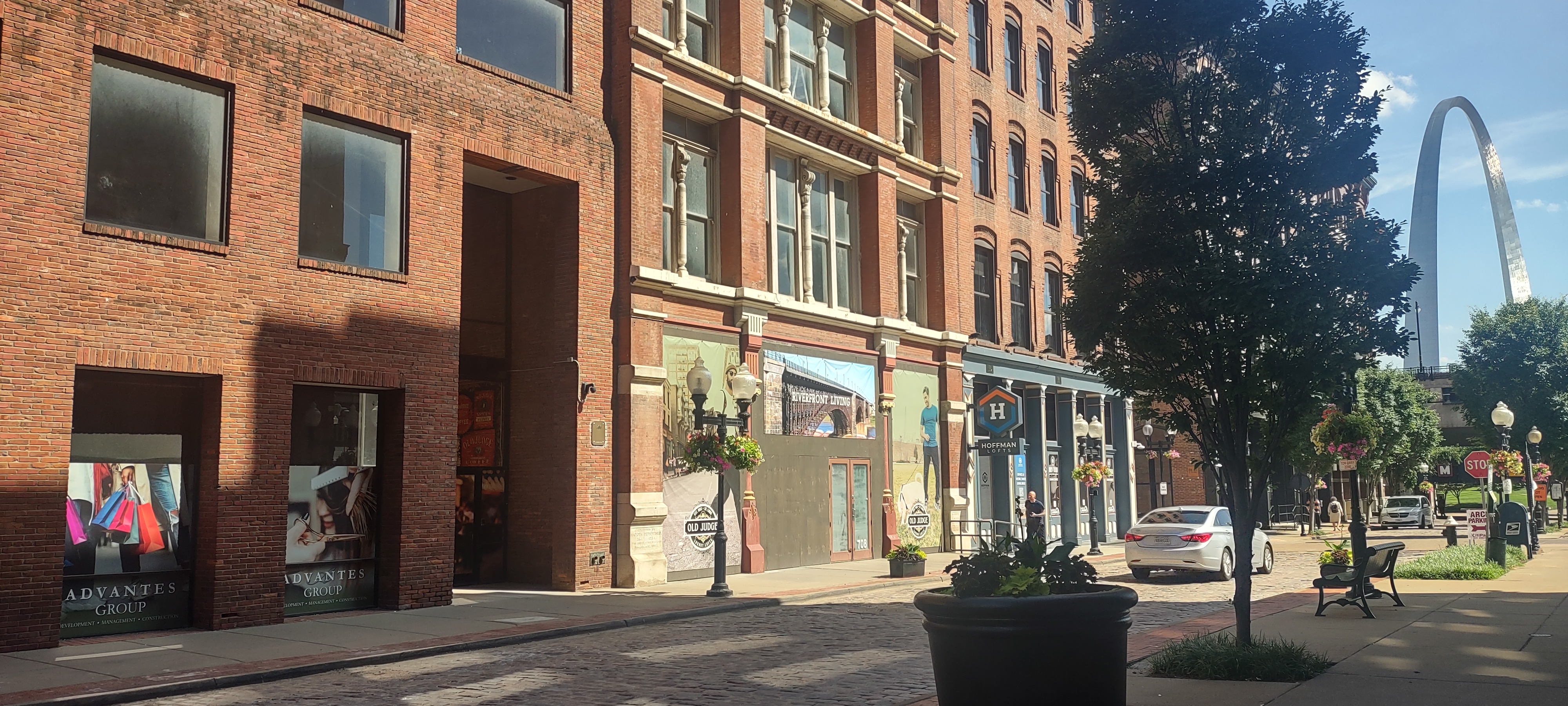
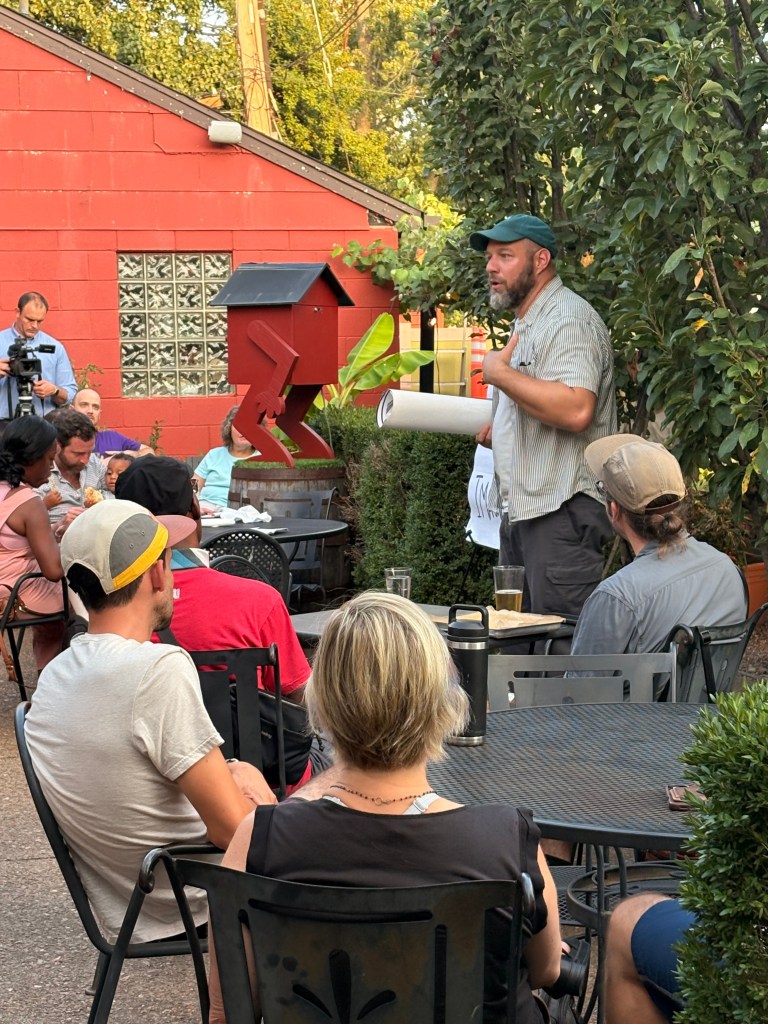
Jon Jon Wesolowski, known online as The Happy Urbanist, is a Chattanooga-based urbanism advocate, educator, and content creator focused on making cities safer, more walkable, and more welcoming. Through approachable videos, public talks and community projects, he translates complex ideas about transportation, street design and development into practical ways people can improve their own neighborhoods. His work has attracted more than a half million followers and earned him a national audience as an energetic voice for people-centered cities and grassroots change. Jon Jon recently visited St. Louis to speak at the St. Louis County Library as well as The Royale. During his visit, he covered aspects of urbanism in St. Louis for his online videos, including small entry point business spaces as well as urban landscaping on public/private tree lawns.
SS: When you arrive in an unfamiliar city, what do you notice first? What has jumped out at you about St. Louis?
THU: I try to read the history of the built environment and people’s reactions to it. This means noticing how things were built and how people may have adapted them to their current uses. Cities are like coral reefs, with new growth happening on old growth. And in St. Louis, there is so much old growth here that has remained. But beyond the buildings, I’m looking at the streets and alterations people have made. I love it when I can see proof of skateboarders altering the environment, or pathways that are laid down in the grass. Of course, this is only possible if you move at a human speed. So my preferred mode of transportation to see the built environment is almost always going to be by foot or by bike.
SS: St. Louis inherited a strong street grid, dense neighborhoods, corner storefronts, and beautiful old buildings. What advantages does that give us, and where have we undermined those strengths?
THU: There’s this thing called missing middle housing. Essentially, America seems to be really good at building single-family homes and, when housing becomes a huge problem, giant apartment complexes. But most cities thrive with medium-sized housing options: duplexes, fourplexes, and small apartment buildings. St. Louis has these in droves.
More than just the grid, it’s about how you house people. When you house people densely enough, small businesses can survive with a customer base that lives within walking distance. Throughout St. Louis, almost every type of neighborhood, even those that aren’t especially dense, has corner stores. Whether they’ve been converted back into housing or are sitting empty, they’re signs that there was once a lot of life there. And there are neighborhoods where there is still a lot of life.
Something else St. Louis gets right is the four-way stops. When four-way stops are common in an area, they increase predictability and safety for pedestrians. I’ve jokingly called them the “St. Louis yield” because there are so many that people often don’t even come to a complete stop. But that doesn’t bother me.
One problem St. Louis has is the width of its roads. There are overly wide streets with no space dedicated to cyclists. Sometimes they’re only two-lane roads, but there might be 10 to 15 feet of extra space on either side of the centerline. In these situations, the city could add edge lines, mark out parking, or use other visual cues that give drivers feedback and encourage them to slow down.
And, of course, the highways and interstates cutting through the city have created deep divisions. There was one striking example where you could see a neighborhood cut in half and then begin again on the other side. Those neighbors may never develop relationships with one another simply because an interstate stands between them.
SS: St. Louis is divided among the city, county, and many dozens of municipalities. How does that fragmentation complicate transportation, development, and the creation of walkable communities?
THU: In some ways, St. Louis is doing a good job. The greenway is phenomenal in how it connects different areas, although it could obviously be better connected.
I think there will always be challenges when trying to get different municipalities to work together. Chicago does a good job of this, but that is partly because its transit system connects people from across the region to the central core. I know there is some resistance to transit, whether because of funding or the importance placed on it, but it is a great way to connect different parts of a region.
For the most part, though, I think St. Louis should focus on the city itself. It should become a place that drives the regional economy and encourages people to move into the urban core. Surrounding municipalities will always try to influence what happens there, but I think the core needs to focus on itself.
That is easier said than done, especially in a place like St. Louis, which has been hollowed out so much. But I don’t think the city will get anywhere by trying to ensure that dozens of different municipalities get exactly what they want.
SS: Street design is not socially neutral. Some neighborhoods receive beautification and traffic calming while others live with dangerous roads and decades of disinvestment. How can cities improve streets equitably without making those improvements another tool for displacement?
This particular problem is multifaceted. In part, communities resist change because they see it as a sign of gentrification, and that fear is valid. At the same time, it is difficult to invest money in places with fewer people, and struggling communities typically have more vacancies and greater challenges.
The first part of the problem will require a lot of education and communication about what is happening in the streets and why. Addressing actual displacement will require greater housing security. Groups like the Lincoln Institute of Land Policy have recognized that secure housing provides the stability people need to address almost everything else in their lives.
There are many interconnected problems, but housing seems to be the kingpin.
SS” You recently wrote that “small is worthy,” arguing that small businesses and adaptable storefronts create resilient communities. What kinds of buildings, streets, and public policies allow independent places to survive?
THU: I said it in the title: being small makes things resilient. If you have large spaces and can divide them into smaller ones, there is a much greater chance that first-time entrepreneurs and small businesses can move in.
Think of it this way: an 800-square-foot coffee shop could become a pie shop, a small clothing boutique, or an insurance agent’s office. But if you have a 10,000-square-foot grocery store, very few businesses can inhabit that much space.
I’ve seen people successfully divide large spaces into flea markets, coworking spaces, and other uses, but adaptation is much easier when the spaces are already small. The good news is that St. Louis has these small spaces in droves.
SS: Places like The Royale function as informal public gathering spaces even though they are privately owned businesses. What makes a good third place, and why have so many American developments failed to produce them?
THU: Places where people can gather and meet outside of their homes and workplaces are often called third places. They do not necessarily have to be publicly owned or free. In that sense, the Royale is a third place.
Small neighborhood bars like the Royale are important for several reasons. Economically, clusters of small businesses help one another. Businesses located close together are not necessarily competing. Together, they give people more reasons to visit an area.
Because these businesses are small and centrally located within neighborhoods, they are accessible to people who might not have the time or a car to travel across town. They can also help make streets safer. When employees are working and patrons are present, more people are paying attention to what is happening outside. Business owners also tend to care for the area immediately surrounding their establishments.
If I dropped a bag of trash in the median of a highway, it might sit there for weeks or even months before a paid crew noticed and removed it. In that time, the bag could be torn open and its contents scattered into a thousand pieces.
But if I dropped a bag of trash in front of the Royale on a Friday morning, someone would probably pick it up when they arrived to open that evening. There is something powerful about having many small businesses and many people caring for their own little piece of the public realm. Together, that care makes streets and sidewalks better.
SS: Cities often install a few planters, bollards, bike racks, or murals and call it transformation. When does tactical urbanism lead to meaningful change, and when is it merely decoration?
THU: The goal of tactical urbanism is to not be permanent. Its effect is meant to be immediate, it’s supposed to be studied, and eventually a permanent change made based on the data. However, so many use the excuse of not having the money to maintain tactical projects or to replace them with permanent ones as a reason to not do them. I think any change can be meaningful if its effects are real. For example, a planter by a stop sign that isn’t maintained and all the plants die might feel like a failure. But that planter is mostly there to keep people from making tight and fast turns, or to keep them from parking illegally. What might look ugly or abandoned may still be doing some good. So yes, done right, tactical projects intervene quickly, are maintained, gather data, and are hardened with permanent changes based on that data. But even less than ideal situations are good!
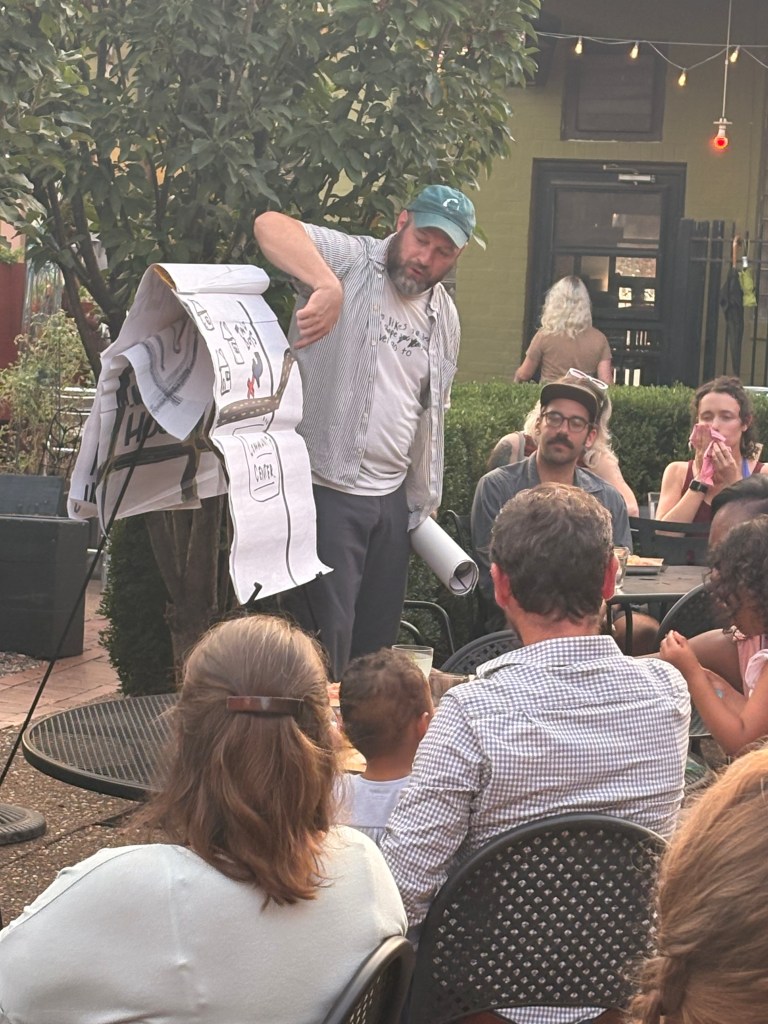
SS: You use short videos and giant hand-drawn slides to explain complicated ideas. What have you learned about reaching people who would never attend a planning meeting?
THU: To me, it’s not enough to tell the truth. If people won’t hear something, you have to be able to meet them where they’re at. Analogies, looking at the words I use and how they may turn certain people off, are a constant obsession. My goal is to be an idea translator and to communicate to people in ways they need to hear. City planning can be esoteric and complicated, but it affects everyday people’s lives, so I think it needs to be communicated in a simple way.
SS: If St. Louis could make three realistic changes over the next five years, without waiting for some enormous redevelopment project, where would you begin?
THU: Identify places that are destinations: shopping areas with dense urban fabric (Cherokee Street comes to mind), school streets, and pedestrian-centered places. Treat them like destinations and prioritize people arriving over those cutting through. Close down for festivals. Make a safe school street. Start in high-impact areas and make them enjoyable! These are classic “streets.”
Roads, on the other hand, are primarily about throughput. Where there are roads (Gravois might be seen as one where throughput is prioritized over arrival), make it safe and convenient to take transit or bike. If cycling and transit are useful, people will use them. You’ll have safer, cleaner, and more effective forms of transit. The goal isn’t to ban cars on any actual road, but to reuse the space to give rational pathways for people to travel differently. In the end, safety can be increased alongside congestion.

Steve Fitzpatrick Smith is the longtime owner of The Royale in South St. Louis and a longtime participant in the city’s civic, cultural, and media worlds. He currently heads the St. Louis–Galway Sister Cities effort and is studying Public Advocacy at the University of Galway.