
Violence Against Cyclists Isn’t Funny
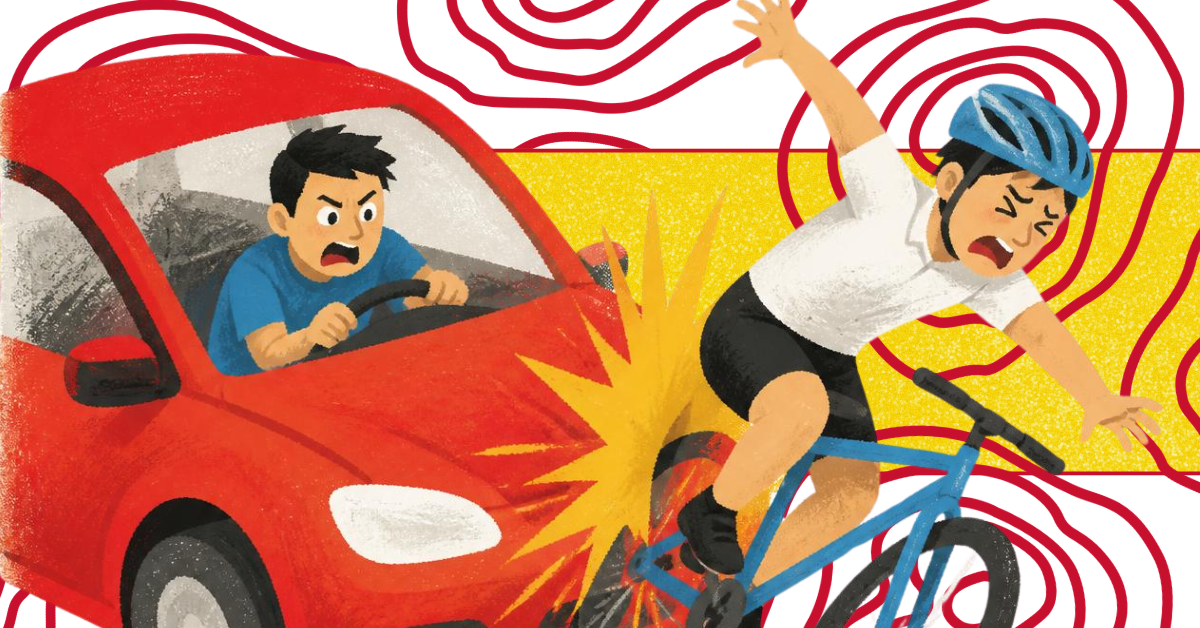
I spend hours every week riding my bicycles around both city streets and suburban trails. It can be, at times, a somewhat scary experience. City drivers are often frustrated to have to share the road with slower vehicles, and some will drive past you in a very dangerous manner. Some of them will also yell at you to get off the road, despite it being where you’re supposed to be on a bicycle. In fact, 2025 was the most dangerous year for cyclists tracked by Trailnet’s annual bike and pedestrian safety reports. It is against that backdrop that I read St. Louis Magazine columnist Collin Preciado’s recent piece “5 ways St. Louis can take care of its e-bike problem”. In the piece, which was intended as satire, the writer contemplates vigilante violence against cyclists, specifically those on e-bikes. To me, and many other cyclists I know, it was not funny.

Due to numerous old injuries, I usually ride an e-bike. It is a pedal-assist model, and the motor takes the pressure off of my formerly broken knee and ankle. For years, these injuries kept me off bicycles, owing to the discomfort that would come from climbing inclines. Missing the experience of riding around the city and wanting more exercise, I purchased an e-bike. It was a fantastic decision. I am now able to not only ride around the neighborhood, I can also go on much longer rides that often take me across the river and through Madison County’s trails in Illinois. The e-bike has even helped me rebuild strength that allows me to ride a standard bicycle with less discomfort, compared to before. The fact that many people are using e-bikes to increase their physical activity levels doesn’t really seem to register in the article, which repeatedly suggests that e-bike riders are lazy and need to exercise more. Again, we’re supposed to take this as “humorous”, not mean.
As the author notes, e-bikes are not all the same. Some of the models being sold are really much more like electrified scooters and small motorcycles. While some can go quite fast, many top out at about the same speeds as a standard bicycle. While on the trails, I am often going faster than many cyclists, while some still pass me on carbon-framed racing bikes without motors. As they are relatively affordable, they have been growing in popularity, and it was inevitable that there would be some push to better regulate them. This article appeared to be St. Louis Magazine’s way of engaging in that conversation. As the magazine regularly engages in public policy discussions, it is understandable that it would want to run an article on the subject. Why they chose to engage with the subject through the motif of violence is the question other cyclists and I have wondered.

While there is no accounting for taste, the article reads as though the author has been dreaming up ways to harass and harm cyclists. Piublishing it was an editorial decision that is hard to understand, especially as it ran alongside an article that mentions traffic violence on S Grand. The article’s first “humorous” suggestion is to “bully” e-bike riders “relentlessly”. Again, riders on city streets do not need to be bullied more. While most drivers are courteous, due to the physics involved in bike-car collisions, it only takes one crash to leave a cyclist with life-altering injuries or dead. Like many cyclists, I get yelled at somewhat regularly by angry drivers passing me. Oftentimes, they are dangerously close as they hurl curse words out of their windows, usually while instructing me to ride on the sidewalk. It is not pleasant. It is also worth noting that my experience is that this harassment is more common on standard bikes. The fact that e-bikes can reach a reasonable speed quickly means drivers are generally less annoyed by my presence. My e-bike also has rear brake lights and turn signals, which further helps drivers understand what I am doing and makes urban rides safer.
The second “suggestion” in the article is that the author be allowed to enact vigilante “justice” on e-bike riders, presumably for simply riding their bicycles on the streets and paths on which they are supposed to be on. Again, while the article was intended to be tongue-in-cheek, what was the point of approaching the subject of regulating e-bikes using the rhetorical device of hurting cyclists in a city where cyclists are often hit by automobiles, sometimes ending their lives? If the publication wanted to engage with the conversation around regulating e-bikes, there were much better ways to approach the subject.
Contacted by email, editor Sarah Fenske defended the decision to publish the article, noting that it was intended as comedy. The author did not respond to my request for comment.
I accept that there is no accounting for taste, but I was not alone in finding that the article misses its mark by some distance. Violence against cyclists in our region is not funny. It is a very real, at times deadly, concern for the cycling community. It should be treated as such.


