
South Grand CID Says Deny Water, Call Police on Unhoused Individuals
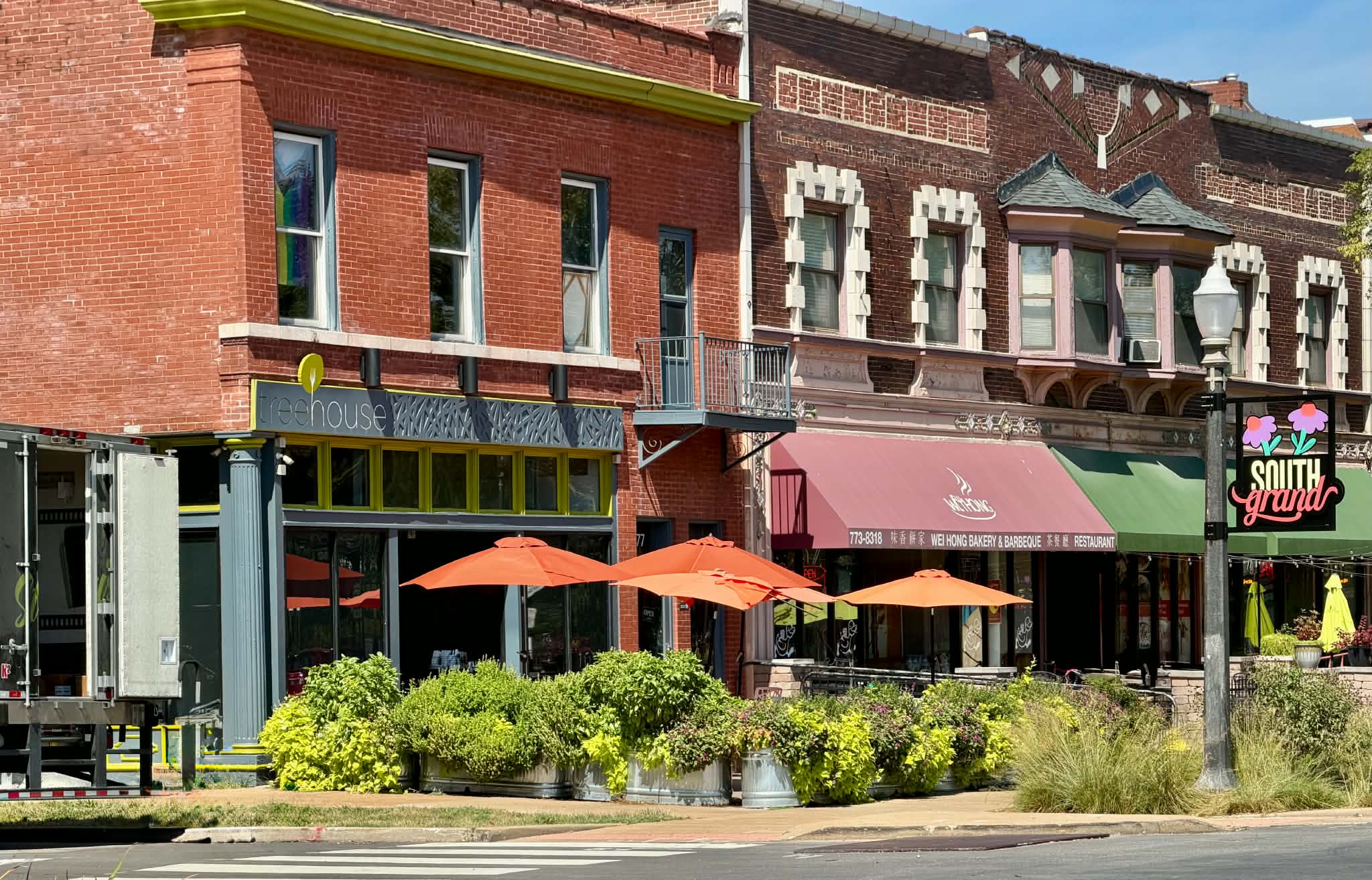
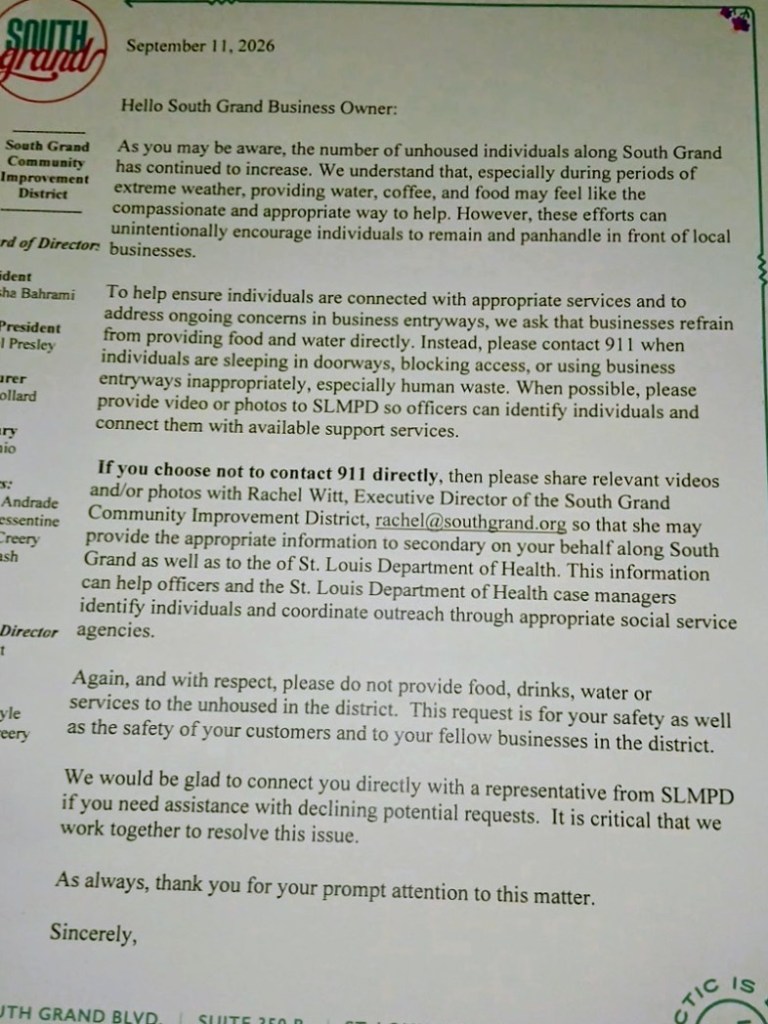
As the nation was focused on the 25th anniversary of 9/11 a letter was distributed to businesses along the South Grand commercial corridor by the South Grand Community Improvement District (CID) this past Friday. The letter requested that businesses refrain from providing food, coffee, and water to unhoused individuals in the district. It indicated that doing so can “unintentionally encourage individuals to remain and panhandle” along Grand Ave. The note mentions that this is even important during “periods of extreme weather”, such as this past August, the hottest on record. Instead, the letter encourages businesses to call 911 to report the presence of unhoused individuals in the district to the St. Louis Metropolitan Police Department (SLMPD).
In the case of businesses owners who don’t want to call the police, the letter asks that they provide videos and photos of unhoused people to South Grand CID Executive Director Rachel Witt. The letter indicates the photos and video would in turn be shared with police and health department contacts. The letter indicates that this will help connect unhoused individuals with potential resources.
KB Doman, a local advocate for the unhoused who lives in Tower Grove East, was very surprised to see the CID issue such a letter to businesses in the district. “I live near South Grand and frequent South Grand businesses. I also volunteer with unhoused street outreach groups Tent Mission STL and St. Louis Winter Outreach. I was horrified by this letter,” said Doman.
Doman went on to note that the resources alluded to in the letter were largely unavailable to people living on the street. Instead, following the instructions in the letter would primarily result in increased interactions with police. “Encouraging business owners to call the police on people asking for a glass of water is sickening, especially during a heat wave. We have not had shelter beds accessible for months. Calling the police on unhoused folks does not help them access services- services are deeply underfunded and full. Calling the police just exposes unhoused neighbors to harm and criminal charges for existing in public. Moreover, harassing unhoused people by photographing them without consent is a despicable move. I am deeply disappointed by this letter from the South Grand CID,” continued Doman.
Questions about the letter and the decision to distribute it were submitted to South Grand CID Executive Director Rachel Witt, including the instruction to deny water during extreme heat and the appropriateness of using the 911 emergency hotline for reporting the presence of unhoused individuals on the street. Witt was also asked if this letter was distributed at the behest of the CID board, which recently met in August. While she did not respond to questions, a member of the CID board wrote back but declined to comment on the record. They did offer to have a subsequent off the record conversation, after which they would potentially be willing to provide some on the record quotes.
When shown the letter and asked for comment Aldermen Sonnier and Velazquez, both of whom represent parts of the district, provided a joint statement. “This letter is the first either of us has seen, and neither of us was included in the discussions, decision making, nor given advance notice before it was distributed. It does not reflect our position,” said the aldermen’s statement. It continued, “We do not support denying food and water as tools to move unhoused neighbors along. We believe 911 should be used intentionally and reserved for situations involving safety or medical concerns, not simply because someone is unhoused or panhandling.” Their response acknowledged the difficulties that small business owners may face when dealing with substance use, mental illness, and being unhoused. The aldermen also acknowledged that the city has a duty to strengthen the systems intended to assist in responding to those in need so that “entrepreneurs can focus on running their businesses while people in crisis can get the help they need to thrive.”
For their part, Doman feels like the CID’s decision to discourage assistance runs at odds with the values of the community surrounding the business district. “I also don’t feel this letter represents the values of most South Grand businesses. One of the most special moments I’ve experienced at CBGBs was when they hosted a funeral for an unhoused man that used to play guitar by their bar. People from all over the neighborhood attended and shared food and memories. That’s the South Grand that is home to me. Unhoused people are our neighbors, whether or not they can afford the rent. During extreme weather, I hope South Grand businesses talk to their neighbors, share water, and push the city for meaningful shelter and housing options – not further criminalize people just trying to survive.”
Update: This article was updated to correct a misspelling.


