Designed to Fail: A Thread Connects the Proposed Armory Data Center to a Murder at Starbucks

By Dan Pate
When the City of St. Louis’s Planning Commission asked for public input on potential regulations for data centers on February 11, 2026, I believe that city planners entirely missed the point.
Just a day before, on February 10, 2026, it was unseasonably warm in the city. It felt different — the sun, the smells, the absence of winter. In the Midwest, when we get that first hint of fake spring, we’re outside like it might be our last day on earth. It was 9:45 a.m. at the Starbucks drive-through on South Grand. It’s a popular location, with the line often barely leaving room for street traffic to pass. That morning, one customer was Sam Linehan.
I did not know Sam Linehan. I write their name with full awareness that they were a whole person — someone’s child, someone’s friend. If anyone who loved them reads this and feels pain or anger at seeing their name here, I understand. My intention is to refuse to let their death become another statistic in a city that has grown too comfortable absorbing its failures. I want to honor Sam by saying plainly: This did not have to happen. Sam had no reason to suspect anything was anything to be afraid of as they pulled into the coffeeshop, and now they are gone.
It’s easy to look at this tragedy and see it as one-dimensional. But I think it’s a tragedy with two victims. The man who robbed and killed Sam did not grow up with that as his life goal. People are shaped — profoundly — by their environment. The environment people experience in the City of St. Louis is not an accident. It is the product of deliberate planning, or the lack thereof. City leaders have had ample opportunity to build a different city. Instead, their choices have stripped critical resources from half the city.
We have witnessed the deliberate destruction of North St. Louis, the mismanagement of the rest, and the consistent practice of blaming everyone who isn’t white for the failures that follow. Services, security, quality of life — we all pay taxes to secure them, but we don’t all receive them. When people are excluded from being able to see a compelling future for their lives, they sometimes stop caring about someone else’s future. That is where society has failed both people in this story.
I do not absolve Keith Lamon Brown of responsibility. He made choices that cost a life. What I am saying is that not everyone experiences choice with the same set of circumstances, the same options, or the same stake in the world around them. This failure goes far deeper than the individual. It was planned — and that plan did exactly what it was designed to do.
St. Louis is one of the United States’ most segregated cities. In 1916, the city mandated racial segregation with a voter-approved law at a 3-to-1 margin. In 1947, Harland Bartholomew, the primary architect of the city’s modern urban planning, created the last truly comprehensive city plan St. Louis ever adopted. A committed racist, he used planning to make violence against non-white people legal, normalized, and expected. That plan was never truly replaced. From my point of view, the 2025 St. Louis Land Use Plan is more of a stopgap document, not a foundation for real change in the direction of our city’s urban planning. The 1947 plan’s underlying logic — built on racism — still survives in the bones of this city’s operations. Bartholomew’s legacy isn’t just a ghost. His plan remains the blueprint for decades of city policy. When we prioritize a windowless, $3 billion data center over the safety and vibrancy of Midtown, we follow Bartholomew’s 1947 blueprint to its logical conclusion.
While our leaders debate the next silver-bullet project, the rest of us are living with the consequences. I don’t mean this in some abstract way, but in a way that leaves some people so desperate they see robbery and violence as their most viable option. Meanwhile, it leaves others wondering whether they need to carry a gun to do something as mundane as using a Starbucks drive-through on a spring morning.
Today, the city’s Planning and Urban Design Agency seems determined to recreate mistakes of the past. St. Louis has shrunk from a peak of 856,796 residents in 1950 to roughly 279,000 today. Instead of reckoning with that, city leaders continue to perpetuate past practices. This is not negligence. It’s intentional. The absence of coherent planning benefits people who already have money, particularly real estate developers. Outdated standards and vague regulations mean developers dictate which projects move forward and receive incentives.
St. Louis has one major pending data center application — a $3.1 billion, 487,000-square-foot facility in Midtown, next to the historic Armory. The proposal drew massive public opposition at three heavily attended town halls last year and residents lined up for more than four hours to comment on the city’s draft zoning framework last month. The overwhelming message: “We don’t want this.”
Data centers are simply the next in a long line of “transformational” projects that are supposed to fix St. Louis, but never do. It will likely be the next debacle allowed to happen because the people with money and power want it to — the same people who fund our local politicians’ campaigns.
It all comes back to the plan. Will we follow the blueprint of the last seventy years? Starve everyone, blame the people made to suffer, and complain about the state legislature. Lather. Rinse. Repeat.
What kind of changes are needed? Stop approving projects that serve money instead of people. Stop pretending that the next “transformational” development will somehow undo seventy years of deliberate harm. In every neighborhood, the people ask you to listen to them instead of campaign funders. The victims of this city’s failures are on both ends of the gun. Continuing to do what we have done does nothing meaningful to help either one.
The City of St. Louis’ Conditional Use Hearing for the proposed Armory Data Center will be held at 8:30 am on March 19, 2026. The hearing will be virtual and held over Zoom.
Zoom Link: https://zoom.us/j/9616100275
Meeting ID: 961 610 0275 Passcode: FDhmG9
Or via phone at: 253-215-8782 with the following:
Meeting ID: 961 610 0275 Passcode: 892471
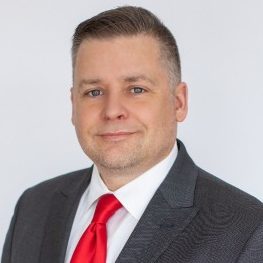
Dan Pate is originally from San Diego, CA and has lived in the St. Louis region since 2015, moving from the county to the Shaw neighborhood in 2021. Dan works as a legal assistant. He is a father, husband and member of the Eco-Socialist party of Eastern Missouri.