
City’s Annual Fiscal Report Card Released
The city’s 2025 Annual Comprehensive Financial Review (ACFR) was released on April 1st. The ACFR serves as the city’s financial report card, giving residents and lawmakers a final look at the city’s revenues and spending in the prior budget year. As the city goes through its annual budgeting process, the ACFR lets decision makers know whether the city’s most recently completed budget year followed the spending and revenue projections that were set out at the beginning of the prior fiscal year. This helps identify areas where the city is spending too much or too little, as well as indicating revenue streams that are seeing improvement or decline. It is also worth noting that, due to spring elections that closely preceded the annual budget season, this past year’s budget was put together largely under the Jones administration.

In many past years, the ACFR has been released in December or January, as it is supposed to be released 6 months after the prior budget year’s July conclusion. This is the second year in a row that the ACFR has been issued at a later date. While the previous year’s delay could be chalked up to political distractions, the newest ACFR was not released during a time of heightened campaigning and other distractions. Unlike last year, this is the first ACFR that has been prepared and released completely under the supervision of Comptroller Donna Baringer. When asked about “The Comptroller’s Office has released the City’s Annual Comprehensive Financial Report (ACFR), reaffirming our commitment to transparency and accountability. Last year’s process presented a number of challenges that delayed the report’s release, but this year those issues were addressed and the ACFR was completed accurately and in accordance with proper standards. While the report was issued later than anticipated, it was still released earlier than last year, marking meaningful progress in improving the City’s financial reporting practices,” stated the Comptroller’s spokesperson Mekenzie Looney, in response to questions about the delay.
A somewhat notable change is that the yearly report has moved to CliftonLarsonAllen LLP, following many years of being completed by KPMG. It is unclear why Comptroller Baringer decided to make the change to a new auditing firm. Her office was also asked for comment on the change in vendor, but did not respond to this question.
City Finances Continue to Steadily Improve
The new ACFR shows that the city’s net position, the sum of the city’s assets and obligations, continues to improve. Over FY25, the city has seen an increase in its net position. In FY24, the city ended the year with a net position of $1.5B, while FY25 closed with an increase to $1.8B. This shows continued growth in the city’s net position, which ended FY23 at $1.2B.
A number of categories showed increasing revenues. One of the largest increases came from Intergovernmental revenues. Much of this increase is due to timing related to various forms of state and federal aid that the city receives. Recent strength in the stock market also saw a significant increase in revenues related to the city’s investments. Looking at tax revenues, property and earnings taxes both showed an improvement, while sales taxes showed a slight decline. On the other hand, the city has seen significant savings in recent years that are due to unfilled positions that were budgeted for in the previous year. The mayor’s office notes that the number of unfilled positions is currently declining, with the mayor’s spokesperson stating that “In July 2025, the City of St. Louis had 1,594 job vacancies. We currently have 1,440 vacancies.” As the number of unfilled positions declines, the city will naturally see increased payroll costs.

Expenditure Changes and Bond Repayment Projections
The newest ACFR shows that public safety and community development spending saw significant increases over the previous fiscal year. Percentage-wise, the largest gains went to community development spending, which saw an increase of over a third. On the other side of the coin, FY25 saw significant cuts to spending on the streets department and general government. It also shows that the city spent less of its savings, compared to the prior budget year. This is likely due to the impasse over how to spend money from the Rams settlement.

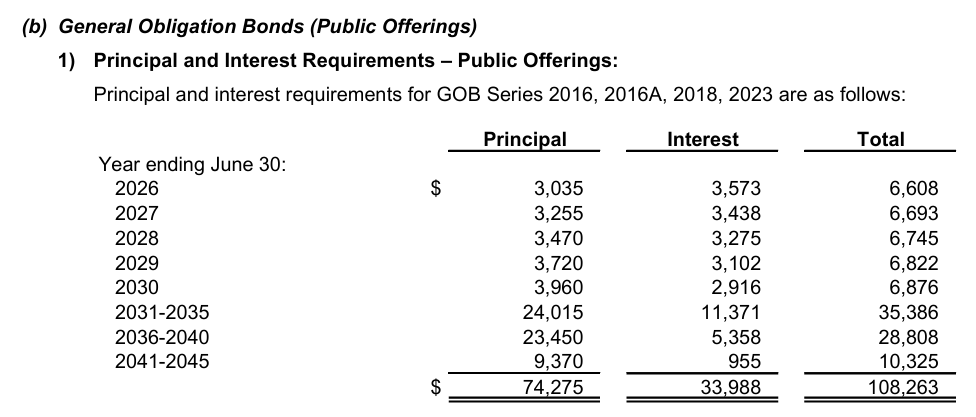
The city also projects a steady increase in General Obligation bonds’ principal, while it expects the interest paid on the bonds to steadily decrease over the coming years. This would indicate that the firm preparing the report expects the interest rates paid by the city to decrease, even though total bond debt is projected to increase. The report mentions that much of the savings that is being seen on the city’s debt is due to debt being restructured at lower rates.
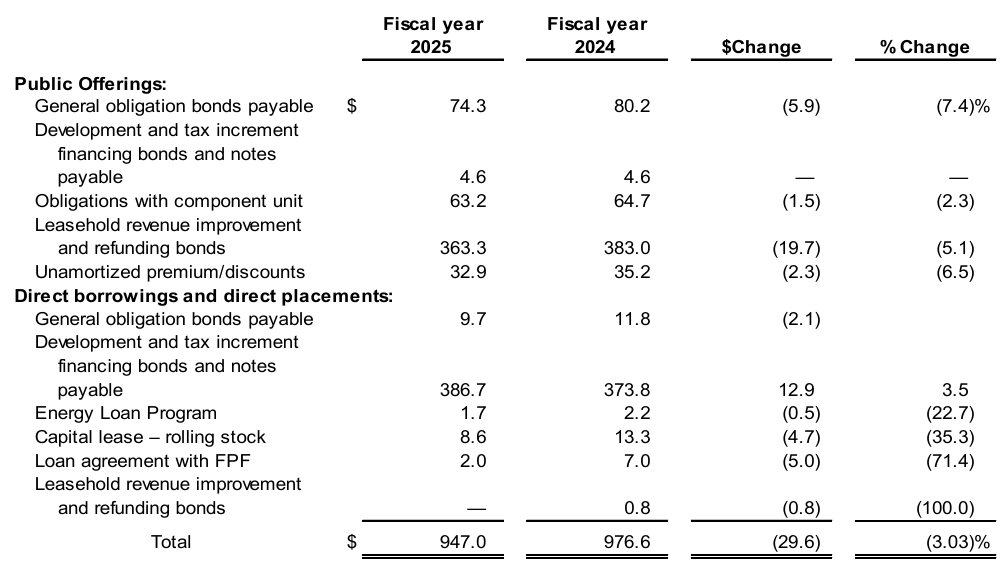
Looking at the city’s projections for debt related to Tax Increment Financing (TIF), the city expects that debt related to the heavily used real estate development incentives will decline. The ACFR indicates that the city expects a significant decline in principal over the next three years, with a more gradual decline taking place in the following years. Whether this proves accurate will largely depend on the city’s decision to grant additional TIFs to developers in upcoming years. The pace of new development announcements has slowed in recent years, reducing the speed by which the city’s TIF obligations are growing.

Pensions See Improving Numbers
The report also indicates that healthy performance for investments has helped put the city’s pensions on stronger footing. These are the highlights from the ACFR’s examination of pension fund health:
- Police Retirement System: Funded ratio 79.45% (FY2025) vs. 70.97% (FY2024); net liability down ~28%.
- Firemen’s Retirement System: 94.72% vs. 87.65%; net liability down ~58%.
- Firefighters’ Retirement Plan: 83.40% vs. 74.60%; net liability down ~26%.
- Employees Retirement System: 58.32% vs. 52.27%; proportionate share of net liability down ~20%
Note: All of the above graphics are found in the ACFR.
Update: This story was updated with a statement from the Comptroller’s office.


