THE OUTSIDERS Musical Stays Gold
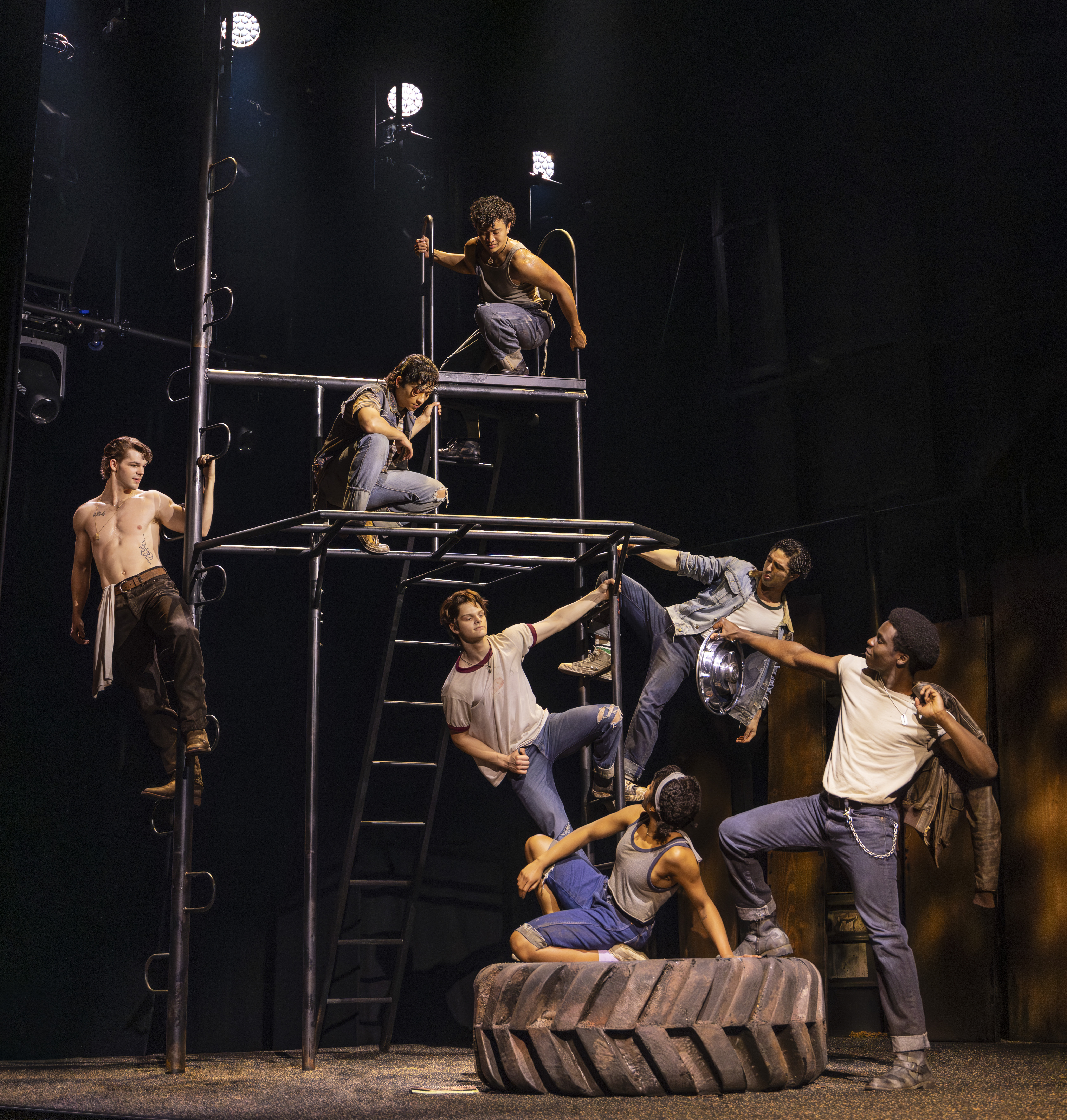
The Outsiders, a new musical with book by Adam Rapp and Justin Levine and music and lyrics by Jamestown Revival and Levine, captures the inequities of social status, classism, and prejudice in story and song. A fantastic cast delivers the satisfying, if bittersweet, story of Ponyboy Curtis, his brothers and friends, and the love and mutual support they depend on to survive. You may want to bring a tissue, but if coming of age tales tug on your heart strings, this show hits all the right notes.
Ponyboy, a bright 14-year-old orphan living with his brothers in Tulsa, Oklahoma in 1967, loves movies, Paul Newman, and reading. One afternoon, he sneaks off to the only cinema showing Newman’s latest release and, as soon as the movie is over, moves as quickly as he can to get out of the neighborhood. He’s a poor “Greaser” from the west side of the tracks, and the cinema is on the east side of the tracks, where the affluent “Socs” live and roam. Tensions between the two groups run high, fights are frequent, and come to a head shortly after Ponyboy and Cherry Valance, queen of the Soc girls, strike up a conversation at the drive-in. In this story of trial and self-discovery, Ponyboy and his best friend Johnny Cade go from bullied victims to fugitives on the run to lauded heroes in an eventful week.

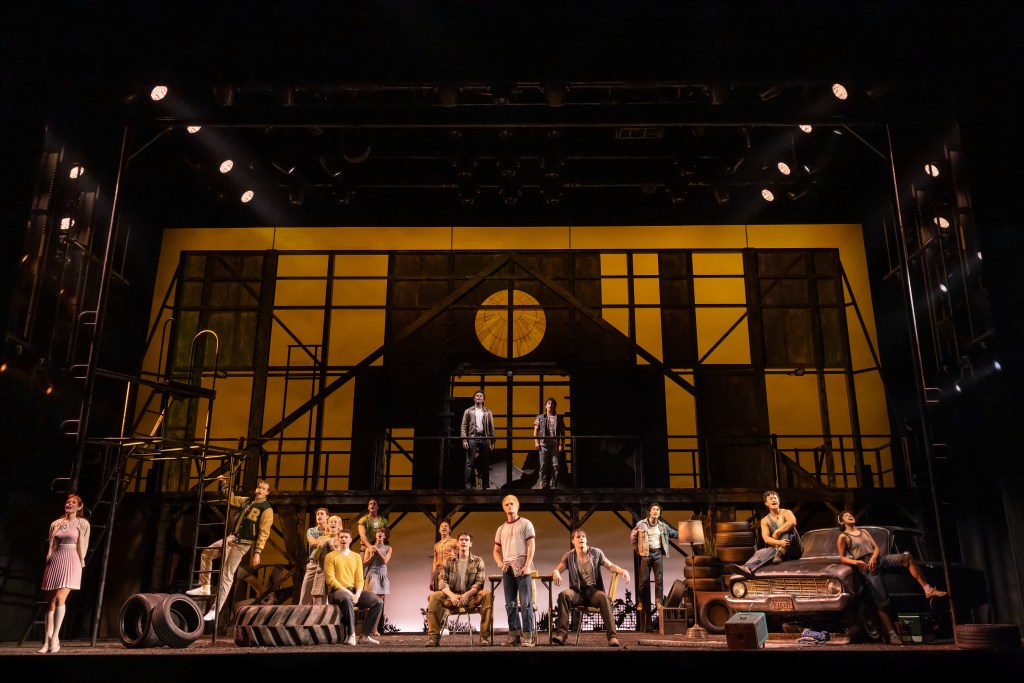
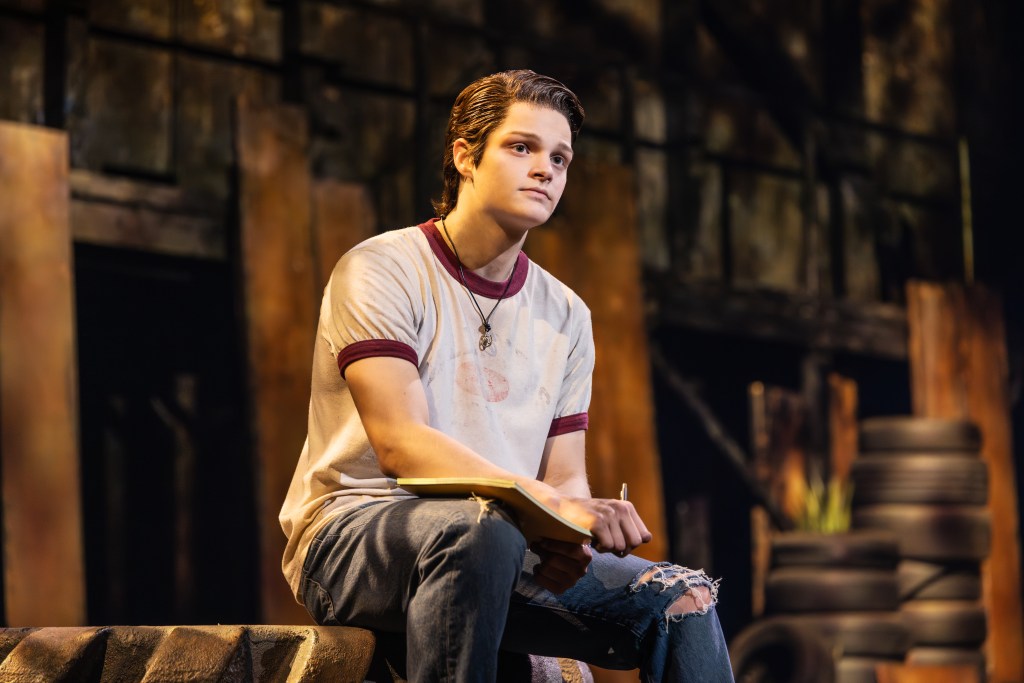
Engaging performances, skillfully directed by Danya Taymor, reflect Ponyboy’s perspective as well as the divide between the privileged and the struggling working class. Nolan White, as Ponyboy, reveals vulnerability, fear, and insecurity, as well as a deeply thoughtful and poetic intelligence. White’s voice moves between lead vocals and harmonies with ease and control. As Johnny Cade, Bonale Fambrini complements White in character and vocals. The two create natural chemistry, and their bond is central to the plot, conveying a friendship that eclipses the satisfying but ephemeral spark between Ponyboy and Cherry Valance, performed by Emma Hearn. The juxtaposition of Valance’s demure, always calm speaking voice, which comes across in a purring lilt, and Hearn’s expressive and varied vocals emphasize the distance between the two social groups.
Travis Roy Rogers and Corbin Drew Ross are amiable and sympathetic as Ponyboy’s older brothers, Darrel and Sodapop. Rogers has a warm, rich voice that suits the character’s commitment and love for his younger brothers. There’s a sense of comfort in every note and care in every word. Always a peacemaker, Ross exudes pure middle brother energy as Sodapop, with excellent harmonies and a pleasantly bright tone. Tyler Jordan Wesley, as Dallas Winston, is strong, dependable, and quick to act, with deep vocals and a surprisingly protective instinct. The ensemble is equally strong, with moments that shine a light on several supporting performers, including Mikhi Payne as Two-Bit (replacing Jaydon Nget in this performance), Katie Riedel as Marcia, Jackson Reagin as Paul, and Mark Doyle as Bob.

The band, conducted by Remy Kurs, deftly navigates through a variety of musical styles – upbeat pop, tender ballads, soulful love songs, and aching blues. Notable numbers include the premise-setting “Tulsa 67,” “Great Expectations,” “I Could Talk to You All Night,” “Far Away from Tulsa,” the trio of brothers’ songs “Death’s at My Doo,” “Throwing in the Towel,” and “Soda’s Letter,” the sad but affirming “Little Brother,” and the hopeful, anthemic “Stay Gold.” An effectively visceral combination of video, lighting, and sound when Ponyboy is held underwater is one example of the way the set design, lighting, and visual effects connect and enhance the show. Rick and Jeff Kuperman’s choreography, with nods to West Side Story and the late 1960s, is spectacular. Explosive, expressive, and complex, each number reflects the scene’s emotion and tone while captivating the audience, particularly high-stakes numbers like Ponyboy and Johnny Cade hopping trains and making their escape and the final turf war in the park.
For many public-school students since the 1970s, S.E. Hinton’s novel is required reading. Emotionally resonant and dramatically captivating, the story remains relatable and connects across generations. It is important to note that, true to the story, the musical includes references to and scenes of violence, including domestic violence, and trauma; additionally, self-harm, suicidal ideation, and death are part of the story arc, and some persons may be triggered by these scenes.
The current production at the Fabulous Fox soars, supported by strong, believable performances, evocative songs, stunning choreography, and effective, sometimes jarring, special effects. The storytelling, characters, and delivery strike all the right chords, moving through the plotline while creating space for an invested audience to connect with each emotion and moment. If you remember the novel or are a fan of near-contemporary coming of age musicals, you won’t want to miss The Outsiders.