
Post-Dispatch Changes Tune on Downtown for a Week
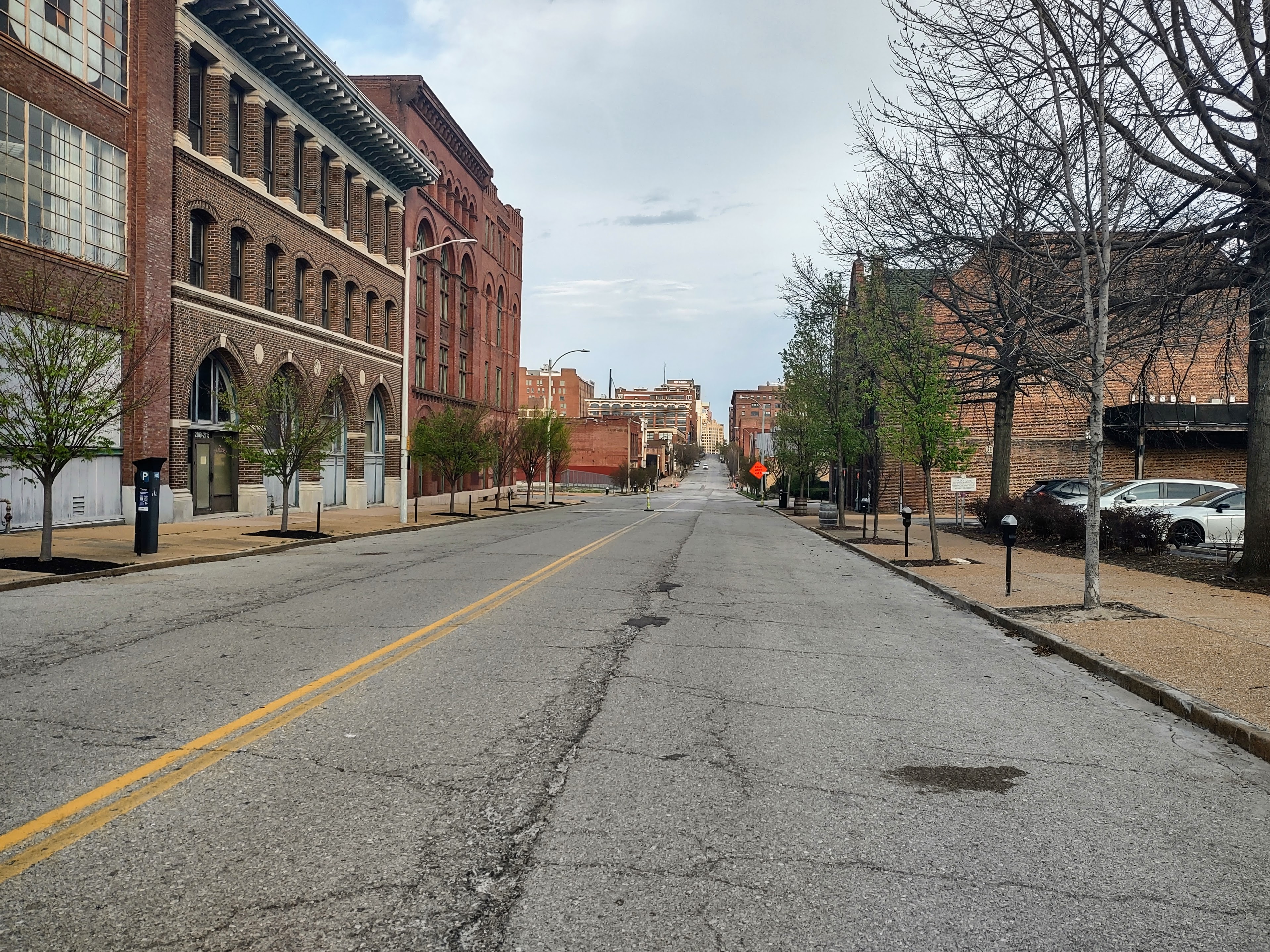
The Post-Dispatch’s editorial board has decided that the past week would be a fitting time to run a series of editorials boosting downtown. The series began by letting readers know that downtown St. Louis isn’t actually an especially dangerous place. In fact, they even hope that residential growth will take the place of businesses that have continued to close offices in the central business district. It even went so far as to suggest that people should be paid to move downtown. It is nice to see that the local paper of record can acknowledge the reality that downtown’s emptiness, not uncontrolled violence, is the biggest problem plaguing the city’s central business district. It would be nice if the paper took this lesson to heart and changed its policy of using every incident downtown as an excuse to portray the area as out of control and in need of ever more police and other armed security. Otherwise, it will continue its active role, contributing to downtown’s ongoing decline.
The truth is that the Post-Dispatch is one of the primary peddlers of the idea that downtown is an unsafe zone that is best avoided. Beyond the empty streets that follow such unrelenting bad advertising, the paper’s near-constant fearmongering has also played into the state police board’s outlandish budget request, something the paper’s editorial board says is detrimental to the city’s future. If the editorial board wants to change perceptions driving both an empty downtown and the state police board’s budget request, it should take a hard look at its own publishing decisions.
After spending years selling the narrative that downtown is too unsafe for businesses to operate, the paper’s push for more residential development also strikes a dissonant chord. If downtown is too unsafe for businesses, why should potential residents believe that it is safe enough for their families? Not only this, but why is downtown so special that people moving to the area should be compensated for the choice, which the paper has suggested? Why isn’t this the case with north city neighborhoods that have become depopulated by decades of neglect? Given the ongoing impacts of last year’s historic tornado, how is downtown more deserving of limited public assistance to preserve and rebuild population? The truth is simple: downtown is home to massive buildings owned by the wealthy. Mark Twain and Penrose aren’t. There’s no reason to overthink this situation.
The city also bears a giant share of the responsibility for moribund streets downtown. Anyone walking downtown blocks will notice the number of empty storefronts and signs advertising spaces for lease. These vacancies can’t all be blamed on bad press. Instead of the city’s usual strategy of focusing on larger, “silver bullet” developments to turn the tide in downtown, Mayor Spencer would be well-served to look to her past as an alderman representing much of the Cherokee St. business district. While the Cherokee business district still faces challenges, not the least of which is a massive vacant hospital complex to its south, it seems to suffer from less vacancy than downtown. That’s not to say that every storefront is filled, but Cherokee St. often seems significantly more vibrant than Washington Ave., despite having received a fraction of the tax incentives to which central corridor neighborhoods have become accustomed. Instead, creativity, diversity, and a willingness to experiment helped the district become a dining and entertainment destination. Given the limitations that the city faces, some of that same outside-the-box thinking will likely be needed to turn the tide of downtown’s emptiness. The city has given downtown developers almost everything they have asked for over the past few decades. It hasn’t worked.
Although the city government has much it can do to encourage commercial activity in the central business district, the Post-Dispatch still deserves much credit for downtown’s current sluggishness. While larger trends toward working from home and other factors have exacerbated downtown’s vacancy issues, it certainly hasn’t helped that the city’s main paper spent recent years acting as though its mission was to maximize fearmongering about the area. One would also be remiss not to note that the change in tone about downtown’s safety has occurred under a mayor whom the paper’s leadership prefers to former mayor Tishaura Jones. It was under Jones that city crime began its significant downtrend, though it was difficult to tell, given the paper’s coverage of public safety under her tenure. Only now does the paper deign to acknowledge the decline in crime shown in police crime statistics. This makes it plain that there is more than a kernel of truth to the paper’s detractors, who have long said the paper’s leadership cares more about pursuing political aims than the truth.
It is good that the Post-Dispatch has decided that downtown isn’t the fearsome warzone that it has often portrayed to its readers, but I will not hold my breath waiting for the paper to support anything more than whatever tax incentives developers request. Their history has shown that the paper’s editorial board will always value the promise of economic development above St. Louis Public Schools’ students. That this strategy has failed for decades is a subject the region’s paper of record faithfully ignores. This is highly unfortunate, because we’ve tried all the silver bullets, yet we have failed to slay the monster of urban decline. Continuing down this well-trod path promises more of the same.


