
Analysis of SLDC’s Tornado Recovery Proposals: Winners & Losers

A public information request to St. Louis Development Corporation (SLDC) has yielded copies of the proposals submitted in response to its request for tornado recovery coordination and planning services. This included the winning and losing proposals, as well as the signed contract with Kea Point Solutions, LLC. While many of the firms that submitted proposals are locally based, the winning firm is not. Key Point’s proposal does show that almost all of the people involved will work for local firms, despite the company not being based in St. Louis. Russell Halliday, Kea Point’s Managing Principal, has also committed to living in St. Louis for the contract’s duration.
Asked about the selection process and the decision to award the contract to Key Point, SLDC’s Vice President of Communications & Public Affairs Deion Broxton responded, “Out of 12 respondents the Selection Committee identified the top four firms by score (Kirkpatrick Industries, H3 Studio, Kea, O’Brian and Associates).” Broxton continued, “All four firms were interviewed by the Selection Committee. The Selection Committee reconvened to discuss the four firms and voted to recommend Kea Point Solutions, LLC, whose principal worked as a consultant for a firm that served as the primary manager for the Next NGA West project. Halliday served as a Senior Project Manager for the recovery efforts following the Christchurch (New Zealand) earthquake in 2011, leading the repair and rebuild efforts of more than 14,000 homes.”
The Winning Team

Key Point Solutions, LLC was recently incorporated in Harrisonville, MO, a town of just over 10,000 residents located southeast of Kansas City. Its proposal indicates Halliday is the firm’s sole employee. As mentioned by SLDC staff, Key Point’s Halliday is no stranger to redevelopment projects in north St. Louis. He was previously retained to work on Project Connect, which coordinated outreach to the neighborhoods within Paul McKee’s Northside Regeneration footprint. Their work was largely focused on the soon-to-open NGA West facility that is nearing completion just north of Downtown. Asked about his specific role on the new contract, Halliday responded, “My role will be similar to that of the NGA redevelopment and Project Connect establishment. I managed both while working largely in SLDC offices collaboratively with staff and northside residents. My team managed the land acquisition, demolition, abatement, ground remediation across the NGA site while employed by a large consulting engineering firm.”
The public information request revealed details of Kea Point’s proposal and the local players who will be tasked with executing the majority of the contract. The two largest players are PGAV and Lockmueller Group. The two companies have distinct portfolios, with PGAV focusing more on neighborhood planning, while Lochmueller’s work centers more on infrastructure changes.
PGAV is one of the region’s largest urban planning firms and offers a broad portfolio of services. The firm is often tasked with planning for major projects, with Ballpark Village and Cortex being two of the firm’s most prominent planning efforts in the city. The firm has deep connections to the city’s political sphere. Prior to her term as mayor, Lyda Krewson was a part of the firm’s leadership for many years. PGAV’s work is not confined to the St. Louis metropolitan area. Their website features projects in Idaho, North Carolina, and other states. In recent years, PGAV has been tasked with planning efforts in communities that comprise the Normandy School District. In the city, Key Point’s proposal states that PGAV has been leading community development planning in the Walnut Park East, Walnut Park West, and Mark Twain neighborhoods. In the proposal and contract, it is apparent that PGAV will lead the neighborhood outreach and planning portions of the work.
The proposal notes that PGAV President Andy Struckoff played a role in Joplin’s post-tornado planning effort, but it does not give much information on specific work that was done. It states that Struckoff’s role was “supporting the City of Joplin following the catastrophic EF5 tornado in 2011, helping local leaders shape a long-term recovery vision and align it with realistic funding pathways.” This could be a clue about one of PGAV’s potential roles in the redevelopment plan, as PGAV is also a provider of the “blight” studies that are used to begin the process needed to pass ordinances enabling Tax Increment Financing (TIF) and real estate property tax abatements. While PGAV’s staff is mostly white, their website appears to show that two members of the firm’s planning staff are Black. The signed contract indicates that both will be assigned to the project.
For their part, Lochmueller Group’s website highlights extensive work on road and other infrastructure projects. Like PGAV, it is an established firm that works both locally and outside of the St. Louis metro area. Their website indicates that they are part of the team working on the Cortex-Tower Grove Connector. When asked about their role, Kea Point’s Halliday stated, “Lochmueller Group were a part of my team on the NGA project and have urban design and cultural resources teams but at this point no specific work plans have been deployed.” It is possible that bond issuance will play a role in financing these infrastructure improvements. Kea Point’s Halliday mentioned bond issuances as part of his previous NGA experience. “Along with the NGA site there were infrastructure planning and bond financing as two other critical elements. We supported SLDC with leveraged bonds to fund $140 million in infrastructure improvements including a new interchange at I-64 at Jefferson and city streets including Jefferson, Market, 20th, and Cass Avenue,“ stated Halliday.
Firms with Experience in Joplin Not Selected
Following the historic tornado, many St. Louisans couldn’t help but compare the federal government’s response to what happened following Joplin, MO’s historic tornado. Observers pointed to the difference in FEMA’s response to the two tornadoes as a clear indication that the Trump administration is abdicating responsibility for major disaster response. States and localities have long depended on the federal government for disaster response, while the Trump administration has publicly indicated that it views disaster response as a responsibility that should be left to state governments.
Two of the non-winning proposals were led by firms with varying levels of experience in Joplin’s recovery. O’Brian & Associates, LLC is headed by Brian “Rob” O’Brian III and advanced to the finalist round. The firm’s proposal highlights Mr. O’Brian’s experience as the president of the Joplin Area Chamber of Commerce at the time of the storm. The proposal highlights a team with disaster response experience that spans numerous states and territories. Like Kea Point’s proposal, O’Brian’s proposal also called for a core of three companies. In this case, consultants from Moberly, MO’s Goldstone Consulting Group and Baton Rouge, LA’s Universal Recovery & Resilience Services would be joining the effort. It also prominently highlights Joplin’s decision to add a TIF district covering the areas affected by the tornado. “I was personally engaged in working with the City staff to determine the best entity we had for property redevelopment and assisted in negotiating a TIF across the path of the storm, the geographically largest TIF in our state at that point,” states the proposal’s transmittal letter. Mr. O’Brian was contacted about concerns surrounding the usage of TIF in Joplin’s redevelopment. He indicated that the city was sensitive to the potential loss of revenue to the local school district but that the eventual increased assessed value of the new construction was considered attractive enough to utilize the public financing tool.
Likewise, Reston, VA’s High Street Consulting, LLC’s proposal highlighted the firm’s experience in Joplin’s recovery. High Street’s team would have been led by Christian Montz. The firm’s transmittal letter specifically mentions that, “His experience includes serving as the project manager for the recovery following the 2011 Joplin Tornado and coordinating with local, state, and federal agencies and stakeholders in large-scale disaster recovery projects.” The firm’s application also mentions that it is veteran-owned. Unlike O’Brian and Kea Point, High Street’s proposal appears to have envisioned recovery planning services being provided by in-house staff, rather than a team of multiple firms.
Minority-Owned Firms Passed Over
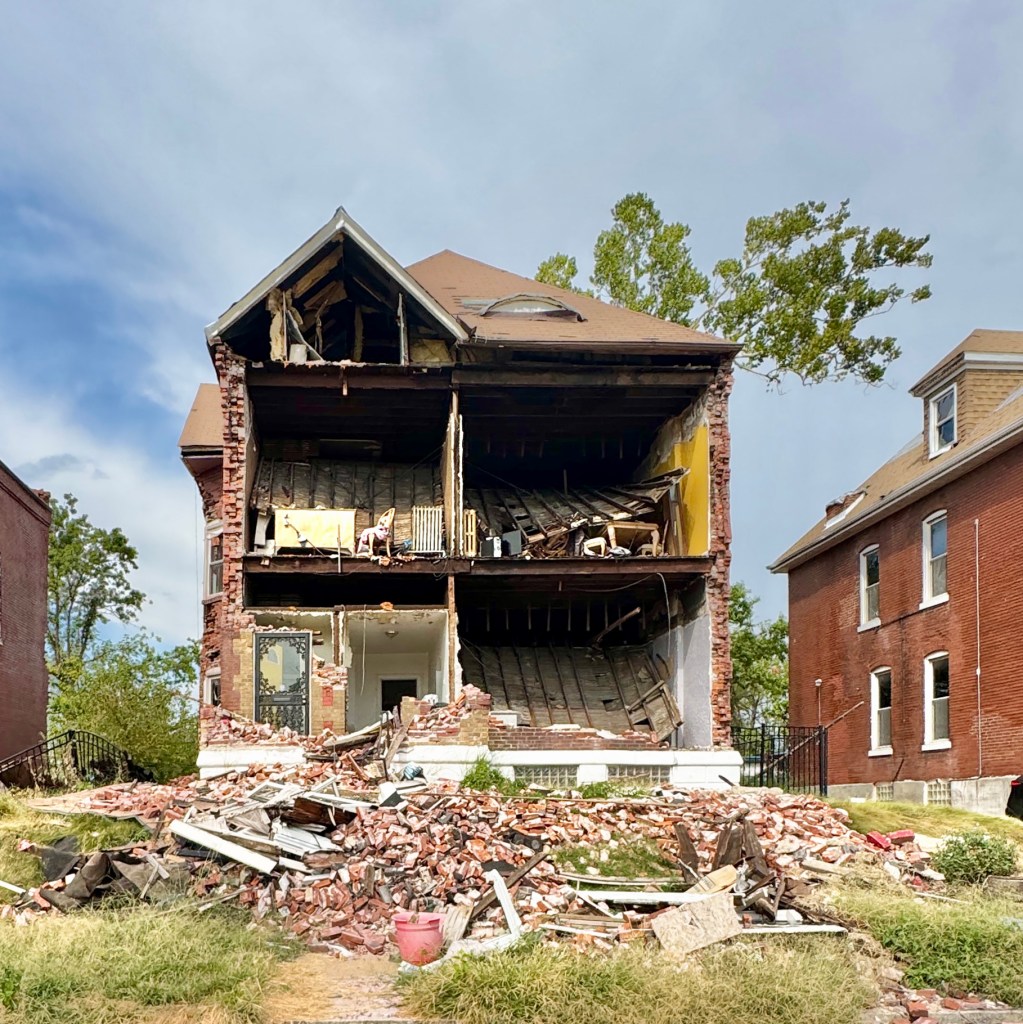
Given the demographic makeup of the neighborhoods most impacted by the tornado, it is no surprise that numerous minority-owned firms applied to lead the recovery planning effort. Proposals from Major 360, LLC, The Bourne Group, LLC, and Bynum Consulting, LLC all indicate that they are all minority-owned. The firms’ proposals indicate varying levels of experience and capacity.
Major 360’s proposal indicates that the firm’s principal lives in the city. The firm’s proposal highlights its experience providing “property preservation” services. It also notes contracts with Coldwell Banker and various entities connected to the military. The proposal also indicates that the firm is based in Downtown’s T-Rex business incubator and only has a single employee. Despite mentioning little in the way of disaster recovery experience, the firm’s proposal expressed confidence in its ability to deliver for the city, stating, “After reviewing the RFP, and particularly the scope of services, we believe we have the knowledge and experience to assist SLDC and bring results of the highest quality, value, and efficiency.” The proposal notes that the company was formerly known as Major League Building Group, Inc.
Lake St. Louis’s Bynum Consulting has numerous similarities to Major 360’s proposal. Like Major 360, it states that the firm only has a single employee. The firm’s principal points to his experience contracting with the federal government, specifically the U.S. Army, and the proposal states that “Bynum Consulting brings a unique combination of military precision, entrepreneurial innovation, and civic responsibility to every engagement. Our mission is to deliver results through clarity, collaboration, and execution.” The proposal doesn’t indicate that the firm has extensive community planning or development experience. Rather, it highlights the firm’s connections to the startup space, with an emphasis on defense-related businesses.
Bourne Group’s application paints a picture of a more mature firm. “Over a 35-year career devoted to disaster recovery, I have managed twelve major events—including the 3 Category 5 multi-year hurricane recovery effort, coordinating with FEMA and local resources while balancing community priorities. Additionally, I have served in a national leadership capacity for the AIA Disaster and Resilience Committee, organizing a wealth of resources and toolkits for our members across the country for various types of disasters,” states the proposal’s transmittal letter. It says that the firm’s primary office is located on Lindell Blvd. The proposal also highlights the firm’s leadership having a personal connection to the disaster, stating, “I have volunteered services along North Taylor Avenue and St. Louis Avenue, helping overwhelmed residents make decisions about emergency repairs, code guidance, and neighborhood clean-ups, so I understand the social fabric of the hardest-hit blocks and can convene trusted voices quickly. Family members also reside in these hardest hit areas.” The proposal indicates that while most of the staff involved would be based in St. Louis, there would be assistance from staff based in New Orleans, LA, and the Virgin Islands.
Notably, none of the minority-owned firms were included in the group of four finalists. When asked for comment on the decision to hire primarily-white firms to coordinate rebuilding in neighborhoods whose populations are overwhelmingly Black, SLDC’s Broxton responded, “We will be sure to include minority subcontractors with experience in North City.”
Incentive Usage Concerns
Given the level of destruction and past practice, SLDC will likely pursue a blight designation, opening the door for real estate tax incentive usage across the impacted area. One wrinkle in this effort will be the existence of the Kingsway Development Corporation. The community development organization was granted development rights that cover most of the Fountain Park area, which is already blighted and has a TIF zone covering the commercial corridors of Delmar and Kingshighway, while the residential areas are already eligible for tax abatement. Kingsway has struggled to live up to early promises and had a public squabble with former mayor Tishaura Jones. When contacted and asked if Kingsway had been approached by city officials about potential changes to development rights or the existing TIF district, Kingsway’s Kevin Bryant indicated that he had not heard about any upcoming changes.
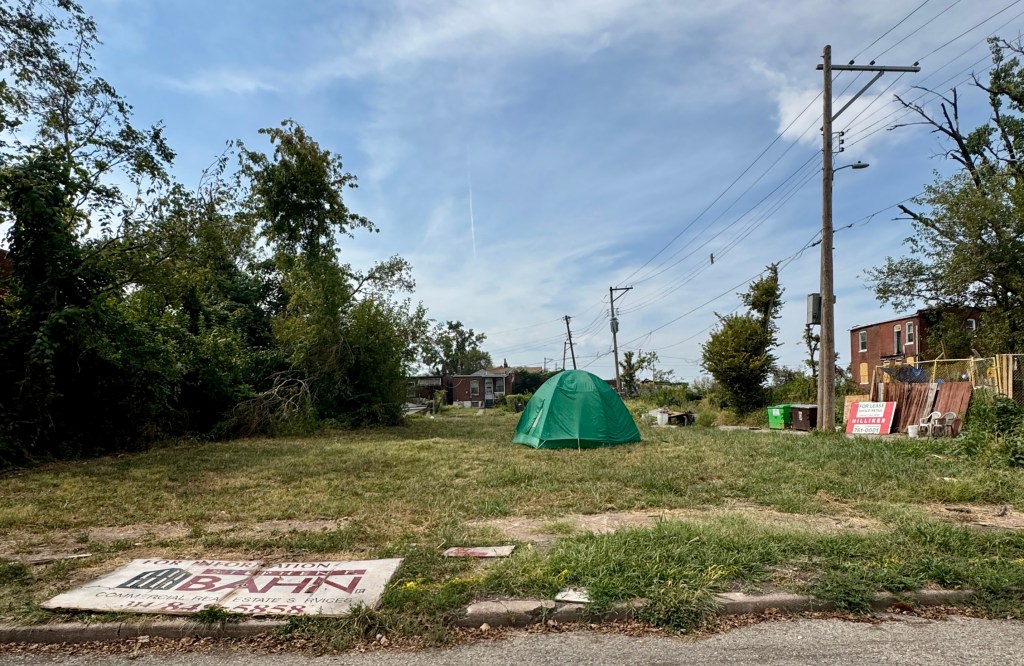
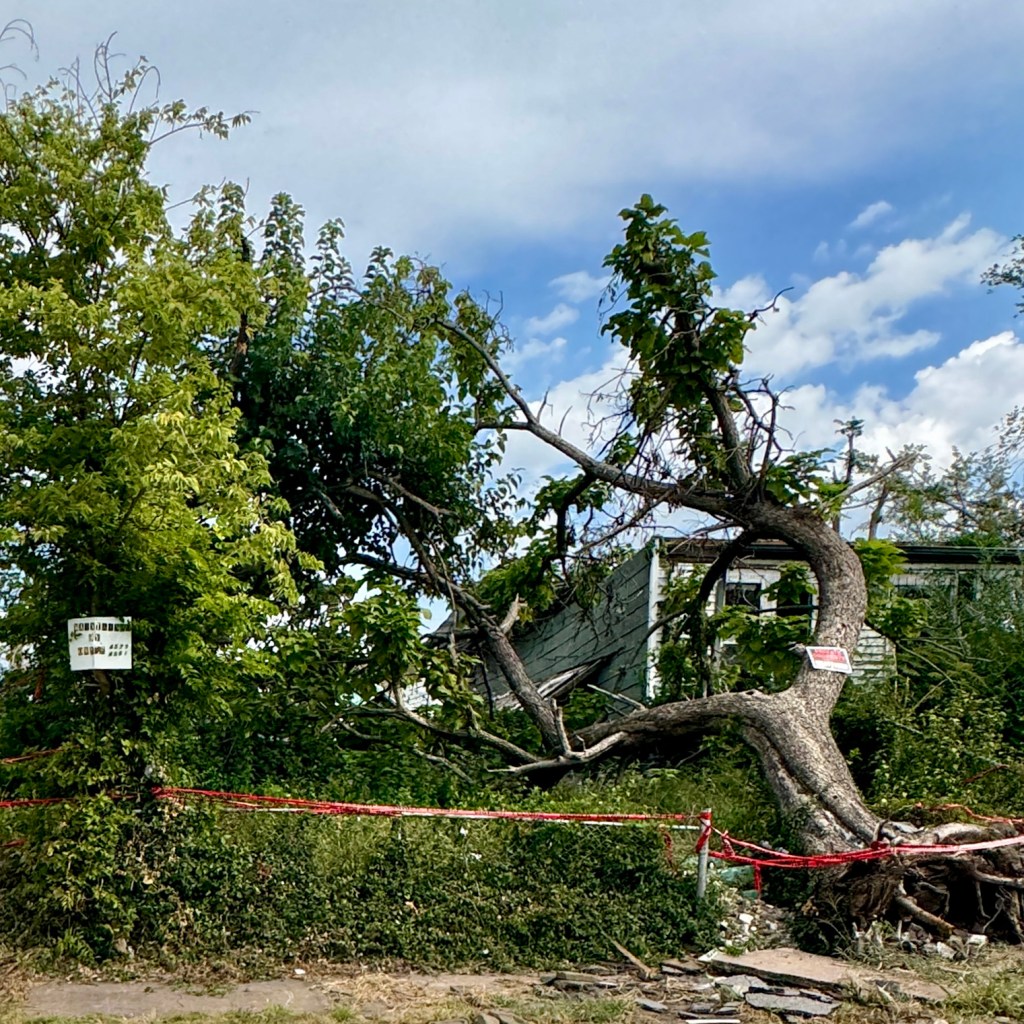
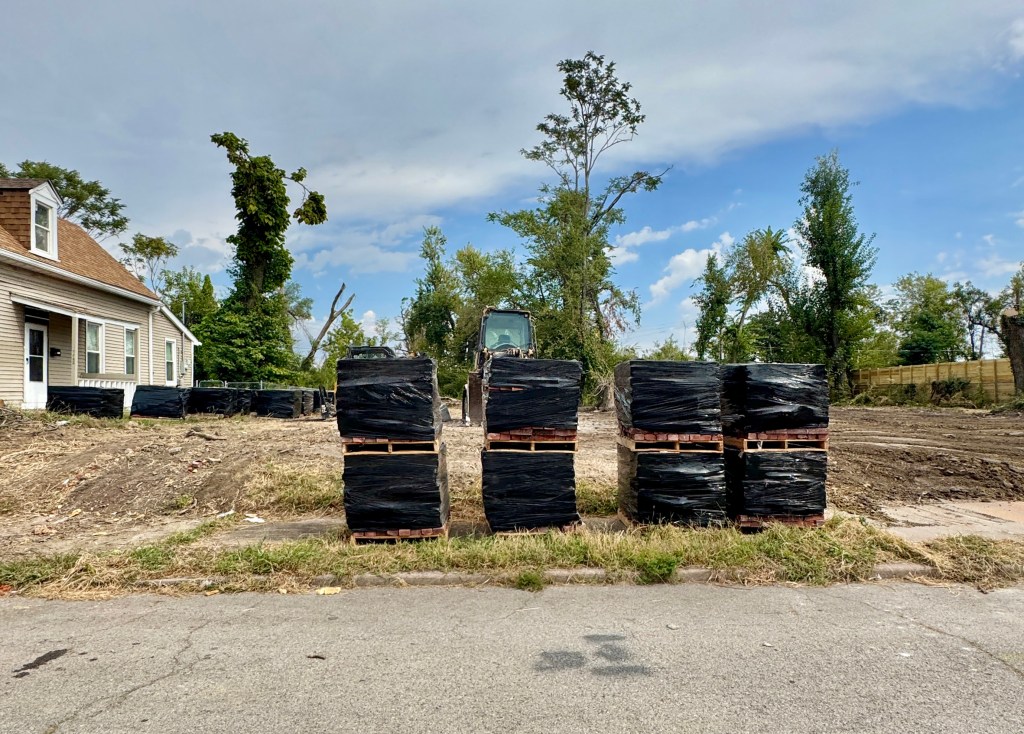
When contacted about the potential usage of TIF or other incentives in the reconstruction effort, American Federation of Teachers Local 420 (AFT 420) indicated openness to using tax incentives, despite the potential long-term impact on school district finances. “If the city of St. Louis would propose a TIF district covering tornado-damaged St. Louis, we would not necessarily be opposed. But the details would be important,” said union spokesperson Byron Clemens. Clemens also indicated that monies for affordable housing and reopening the schools that were damaged and forced to close would be key to winning the union’s support.
For its part, SLDC is keeping all financing options on the table. “All financing tools and incentives will be considered. It is premature to predict which approach(es) make the most sense right now,” said Broxton.
Signed Contract Indicates a Focus on Infrastructure Changes
The signed contract’s exhibits provide a window into what staff are being retained from Kea Point’s partners in this effort. Given the public’s focus on the damage to homes and residential displacement, one thing that might catch some by surprise is that the number of Lochmueller Group staffers dedicated to road and other infrastructure work appears to outnumber the PGAV staff hired to do the community development and planning portion of work by almost two-to-one. This could indicate that the city is planning major changes to the roads and other infrastructure in the impacted area. It is unclear why this work is being done as part of the tornado recovery effort. Lockmueller Group also has experience working with Great Rivers Greenways on projects. With the Brickline Greenway in process on North Grand, it is possible that a similar effort or even an expansion of the Brickline Greenway will be part of redevelopment planning.
Copies of the submitted proposals, the scoring rubric used in the selection process, and the signed contract between SLDC and Kea Point Solutions, LLC, can be found here.


