
Book Review: Adam Lemp and the Western Brewery
Due to be available on July 9th, Christian Naffziger’s new book Adam Lemp and the Western Brewery will remind St. Louisans of the outsized role that entrepreneurial immigrants have played in shaping the former Fourth City while deepening their understanding of the illustrious Lemp family that left their mark on 19th and early 20th century brewing. Naffziger concerns himself with the founder of the brewing enterprise, Johann Adam Lemp, whose life began between 1793 and 1798 in Eswege, Hesse (now Germany). Both this leap far back in time and the approximation of known birth dates set up quite a tale. Lemp’s life begins just after the US adopted its Constitution, and many of the major events in the book precede the later Civil War. The lack of a decisive birth year is the first of many uncertainties or outright mysteries that Naffziger details.
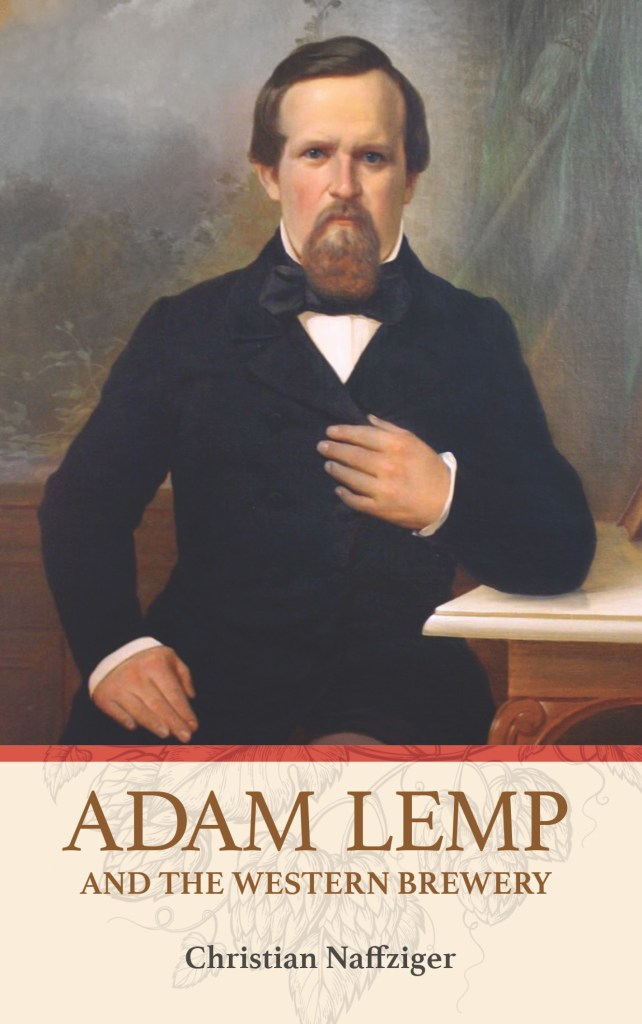
Some readers may be familiar with Stephen Walker’s Lemp: The Haunting History (1989), which was self-published just like Naffziger’s book. As someone who worked for many years in the realm of local history in St. Louis, I was delighted to see that Walker is a contributor to Naffziger’s work – and even designed the cover image. Small feuds and even smaller egos often prevent such collaboration between people working on the same subjects. It is refreshing to see the Lemp aficionados in concert, not the least of all because Naffziger shows us how many mysteries still remain in the rise of the family.
Driven from a failed tavern enterprise in Hesse, Lemp chose to abandon his wife and (for a time) his son. The son would go on to be the more famous William J. Lemp, Sr., which is chronicled well in Walker’s book. Lemp’s circuitous immigration, remarriages and eventual relocation of his son set up a wave of liberties taken and facts obscured that would be completely impossible under the current US immigration system. Reading Naffziger’s meticulously-documented account, one marvels at the freedoms enjoyed by immigrants in the mid-19th century, when paper trails could be manipulated simply by signing something as significant as a marriage license with a false or partially-false name.
Lemp’s creation of the Western Brewery on Second Street (where the Gateway Arch now stands) is testimony to how immigrants could take advantage of the fairly unstructured mid-19th century immigration laws to infuse cities with new ideas. Lemp was at the forefront of lagering beer, scaling up over decades from what could be made in the limited confines of his original location to the vast potential of the cave network under the land he purchased near present-day Cherokee Street at Broadway in 1841. The backdrop of German-American contributions to political culture before and during the Civil War are highlighted, including the shifting loyalties between the Democratic and Republican parties.

The tale of Adam Lemp’s involvement with the then-remote parcel of land holding the vast cave system is a key strength of this book. Naffziger narrates the ways in which speculative investments pushed the outgrowth of St. Louis, but is careful not to engage in his own narrative building. Lemp purchased the site of his cave on Cherokee Street to develop a garden-like setting for drinking the beer that was brewing at his downtown location. Lemp certainly wanted to own the cave, and use it for lagering, but his enterprise was firmly rooted downtown for the next two decades. The eventual construction of the vast Lemp Brewery here was not the original intent, although the author shows us how the concept did eventually arise.
Thus Naffziger leaves a worthy document of how the industrialists’ entanglements with remote sites led to eventual capitalization of those sites – either through the development of new facilities and their own homes or through subdivision and sale. Yet there was no plan or certain outcome, and distances in a walking city mattered a lot. I applaud the careful telling of how the brewery came to be at its most famous site, as it shines light on how St. Louis expanded without overstating the destiny of the city.
Naffziger’s epilogue could well be a prologue, because the tangle of people buried at Lemp and Lemp-related family plots in Bellefontaine Cemetery illustrates the human stories that drive the author. Lemp may be the patriarch, but his very open-ended mentality about constructing family led to many people being key members of the Lemp family elite. Some of their lives are tortured, others more hallowed – and Naffziger may be at his most persuasive when he is assessing the documents he has channeled to speed their tales. It is clear that he has an affinity for people almost forgotten from literary history.
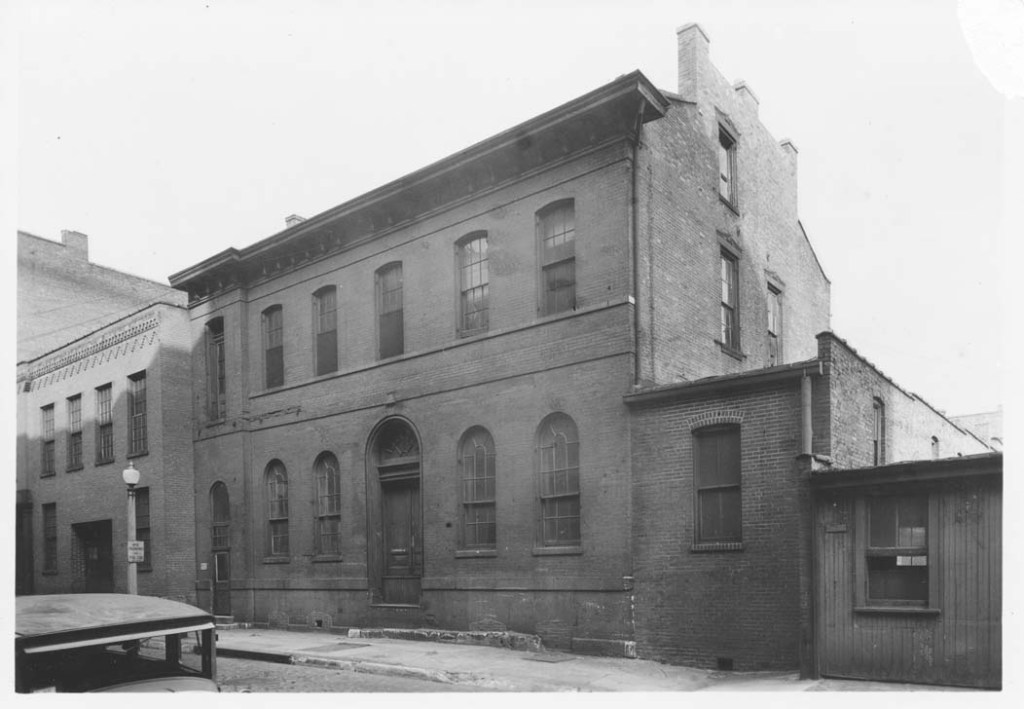
As a historian, I offer just one complaint – I would have loved more maps, site plans and images to support the story. Perhaps this one one complaint will be alleviated when the author’s upcoming book website thelempstory.com launches with its promised virtual models. Perhaps other readers will want more information about Lemp and his coterie of family members, wives and ex-wives, business partners and associates. Either way, a local history title that leaves any reader wanting more is a good thing. Perhaps Naffziger or one of his readers will write yet another volume on the fascinating Lemp family.
Adam Lemp and Western Brewery can be ordered online at Editwright starting July 9th.


