
Leonor K. Sullivan: A St. Louis Kind of Democrat
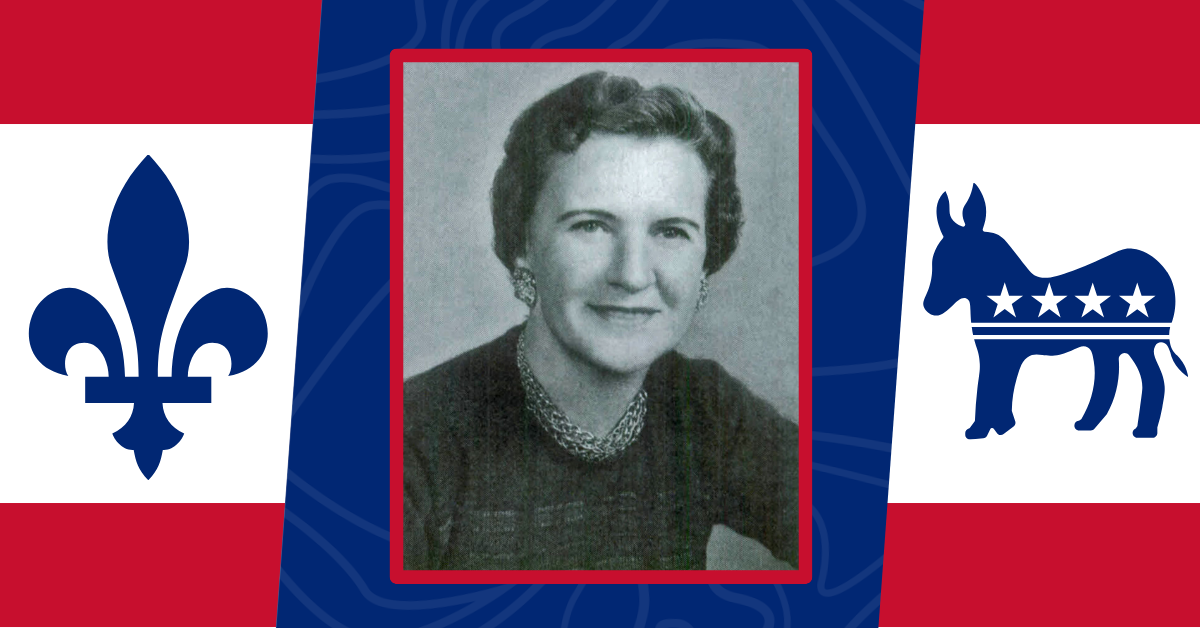
With intermittent attention to the condition of the St. Louis riverfront and its trail system, some people may genuinely wonder after whom the Leonor K. Sullivan Boulevard, the section of the city’s historic Wharf Street that runs in front of the Gateway Arch, is named. As with many of the city’s named places, the condition of the street – often closed off with gates and barricades and many signs of neglect –hardly conjures the gravity of the human subject.
In fact, Leonor K. Sullivan was a powerful political leader who blazed trails in both St. Louis and Missouri for other women seeking careers in politics. A twelve-term US Representative from Missouri’s Third District from 1953-1977, Democrat Sullivan represented the kind of long-running, stable leadership that seems to have eluded the city since the four-term administration of Mayor Francis Slay ended in 2017. Yet Sullivan’s ideological profile—left on most issues, but anti-abortion and somewhat conservative on social issues—marks a tendency in local politics that has endured all the way through the career of State Representative Steve Butz.
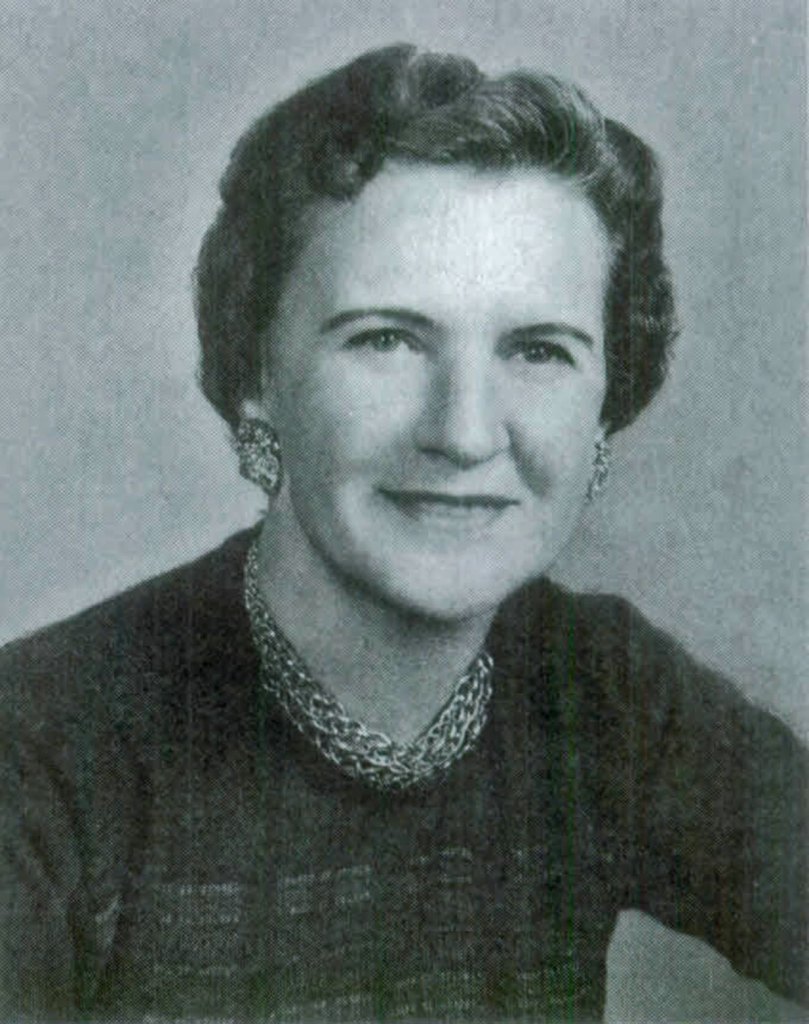
Born Leonor Kretzer in 1948, the future Congresswoman attended Washington University and later settled in St. Louis’ Clifton Heights neighborhood. Sullivan came to office succeeding her husband, US Representative John B. Sullivan. John Sullivan had served City Hall as Associate City Counselor and secretary to Mayor Bernard F. Dickmann – a real estate broker who was embroiled in now-documented vote-rigging for the 1935 bond issue funding the construction of the Gateway Arch whose construction ribbon Leonor Sullivan would help cut. With machine patronage, John Sullivan became the US Representative from 1945 through 1947, when he faced defeat at the ballot box. He staged a comeback and continued his stay in Washington from 1949 through 1951 when he died.
Leonor worked in another Congressional office for a while before deciding to run for her husband’s seat. Her rise to power is different than many stories of other women who were appointed to serve a husband’s term, often just until it expired. Leonor Sullivan ran because she wanted to push for a federal policy agenda, and she quickly proved herself to be a capable legislator with strong agendas around consumer protection, expansion of food benefits for poor people, and support for civil rights.
As right-wing legislators raised the still-running trope of welfare programs as a mechanism for government dependency rather than real relief, Sullivan retorted that some Americans were actually just hungry due to poverty. She called on the federal government to resume experimental food stamp programs that were rolled out as part of the New Deal, and led efforts for a 1959 law that revived the concept on a short-term basis. Sullivan’s advocacy culminated in President Lyndon B. Johnson’s 1964 signing of the Food Stamp Act. Sullivan was still in office when the program became a permanent, needs-based program in 1974.
Sullivan was a supporter of organized labor and freedom of speech, joining more clearly left members of Congress in condemning the antics of Senator Joseph McCarthy’s Red Scare. Coming from Missouri, Sullivan was a notable and long-term supporter of civil rights legislation. She refused to sign the 1956 Southern Manifesto and voted for the 1957, 1960, 1964 and 1968 civil rights acts as well as the 1965 Voting Rights Act. Yet Sullivan’s language sometimes repeated racist tropes, as when she told a reporter in the 1970s on the subject of St. Louis’ Pruitt-Igoe housing development that “this kind of jungle should never be repeated.” Sullivan opposed future high-rise public housing in the 1970s, but rejected right-wing calls for abolishing public housing outright.
Sullivan’s concern for consumer protections led to her tenure as chair of the US House Consumer Affairs Committee. A major achievement was the Truth in Lending Act of 1967 that Sullivan authored with Senator William Proxmire (D-WI), a leading voice of the Democratic Party’s left wing. The law began the requirements that lenders must disclose the percentage of the interest rate and the finance charge for loans in the US. A year later, Sullivan was a big player in the passage of the Consumer Protection Act. She also pressed for expanded federal food inspection and cosmetics and drug regulations. Sullivan’s attention to ordinary people was also exemplified in her habit of replying to years of constituent letters with personal replies.


Sullivan surprised some supporters by her support in the 1970s for various versions of the Human Life Amendment which would add a constitutional prohibition on abortion and her opposition to the Equal Rights Amendment (ERA), which would have created explicit constitutional equal rights for women. In fact, Sullivan was the only female member of Congress to vote against the passage of the ERA in 1972. Sullivan demurred on charges of being anti-feminist by stating that she believed that the 14th Amendment had already settled the question of equal rights and that the ERA would remove alimony benefits from divorces. In her opposition, she aligned with St. Louis-based right-wing activist Phyllis Schlafly but sparred with the Republican governor of Missouri, Christopher “Kit” Bond, who took office as a moderate in 1973. Bond pushed for Missouri ratification of the ERA with Schlafly and Sullivan in opposition.
By the end of Sullivan’s tenure, she had amassed significant power in the Democratic House Caucus as Conference Secretary between 1965 and 1975. Sullivan’s power and perch on the Merchant Marine and Fisheries Committee was a key source of Congressional inaction on safety rules that would have placed the wood-superstructure Mississippi River cruise ship the Delta Queen out of commission. Sullivan also was an opponent of US cessation of ownership of the Panama Canal. She contested her last Democratic President, Jimmy Carter, when his successful Torrijos–Carter Treaties came to Congressional votes.
After office, Sullivan joined the Consumer Advisory Council of the Federal Reserve Bank in 1977 and then became president of the nonprofit Arch advocacy group the Jefferson National Expansion Memorial Association in 1980. Sullivan was a leading critic of the condition of Wharf Street in the early 1980s, opining in 1984 that the floating fast-food restaurants on the riverfront made it look like a “junky place.” One year earlier, the St. Louis Board of Aldermen passed and Mayor Vincent C. Schoemehl Jr. signed a resolution renaming Wharf Street in front of the Arch for Leonor K. Sullivan to honor her advocacy.
Sullivan’s ideological position is reflected in her 1974 ratings: 64 from the left-leaning Americans for Democratic Action and 24 from the right-leaning American Conservative Union. Yet Sullivan did not fit into the old “Yellow Dog” Democrat wing in the South because she was a progressive on civil rights. It was also in 1974 that an 8th grade teacher at St. Louis’ Woerner School named Marie Nowak ran as an independent challenging Sullivan for the congressional seat. Nowak championed the ERA and reproductive freedoms, and accused Sullivan of being out of step with many of her constituents. In 1976, Nowak entered the Democratic primary with an unsuccessful challenge to Sullivan. Nowak’s critiques of Sullivan are interesting precedents for this year’s successful Democratic primary campaign by Gina Mitten against Steve Butz for a State Senate seat in far south St. Louis. Butz’s loss seems to have ended Sullivan’s strand of politics as a major force in south St. Louis.
After Sullivan’s retirement, her successor would be neither Nowak nor any like-minded progressive left-winger. Instead, Alderman Richard Gephardt captured Sullivan’s seat with a similar platform: pro-labor, pro-consumer, pro-welfare and anti-abortion. Gephardt held the seat a touch longer – 14 terms – and served as majority and minority leader with the Speaker’s gavel just out of reach before his 2005 retirement. Yet no St. Louisan goes to see a riverfront circus, meanders between July 4th food trucks or bikes along the Mississippi on any street named for him. That honor goes to Leonor K. Sullivan.


