
APPROPRIATE Spills Family Secrets with a Southern Gothic Twist
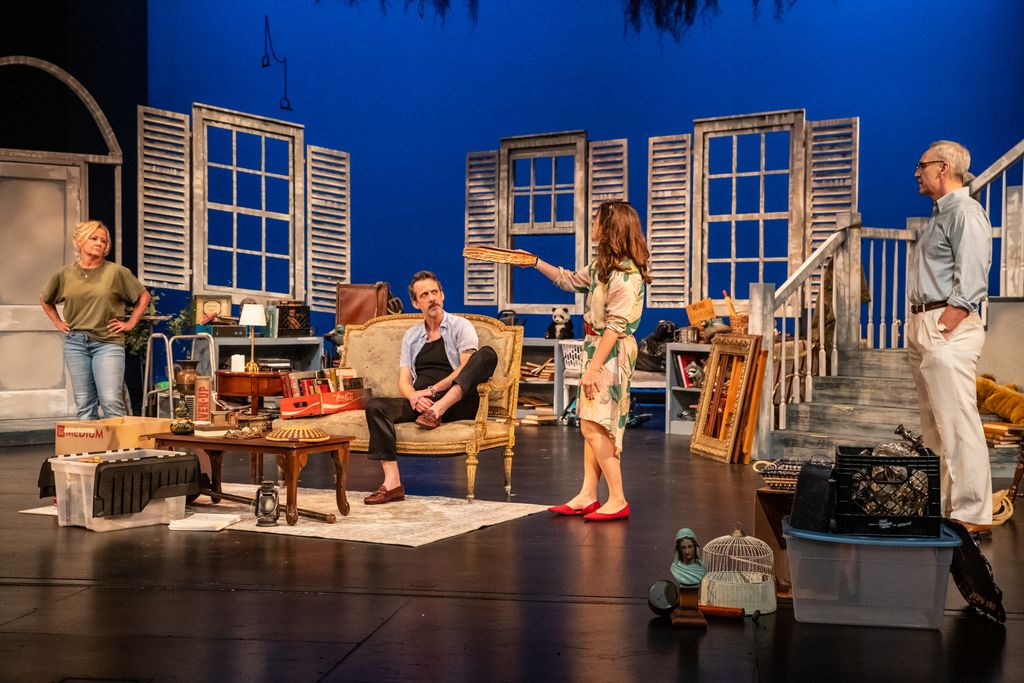
The St. Louis premiere of Appropriate, by Branden Jacobs-Jenkins, is a darkly comic play written in a southern gothic style and rife with tension. Directed with intention and clarity by Benny Sato-Ambush, the Tennessee Williams Festival St. Louis production captivates with engrossing storytelling, convincing performances, and a closing video montage that reinforces uneasy truths and lingering prejudice.
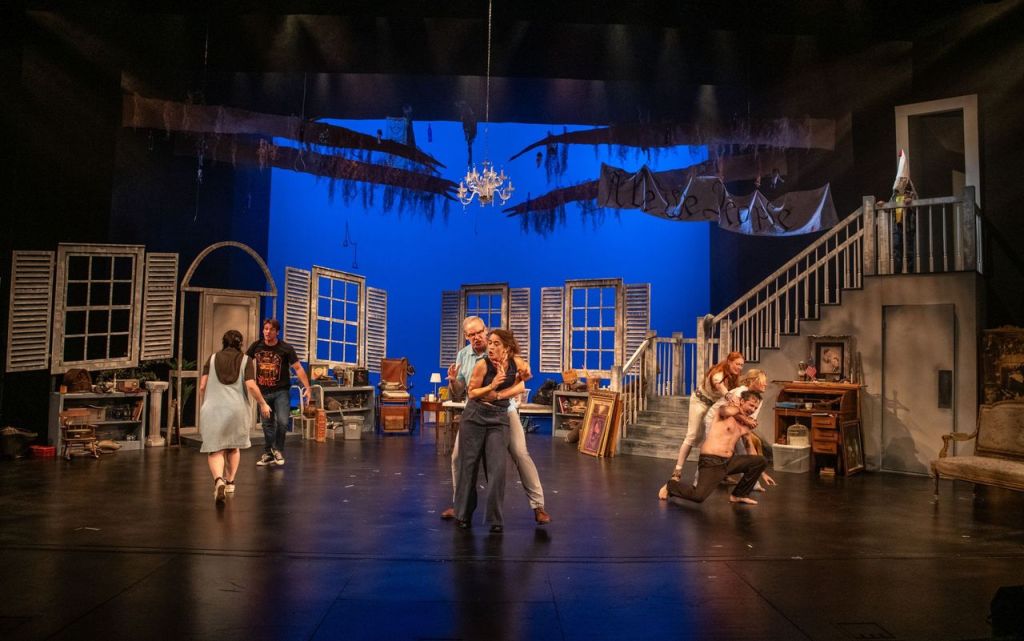
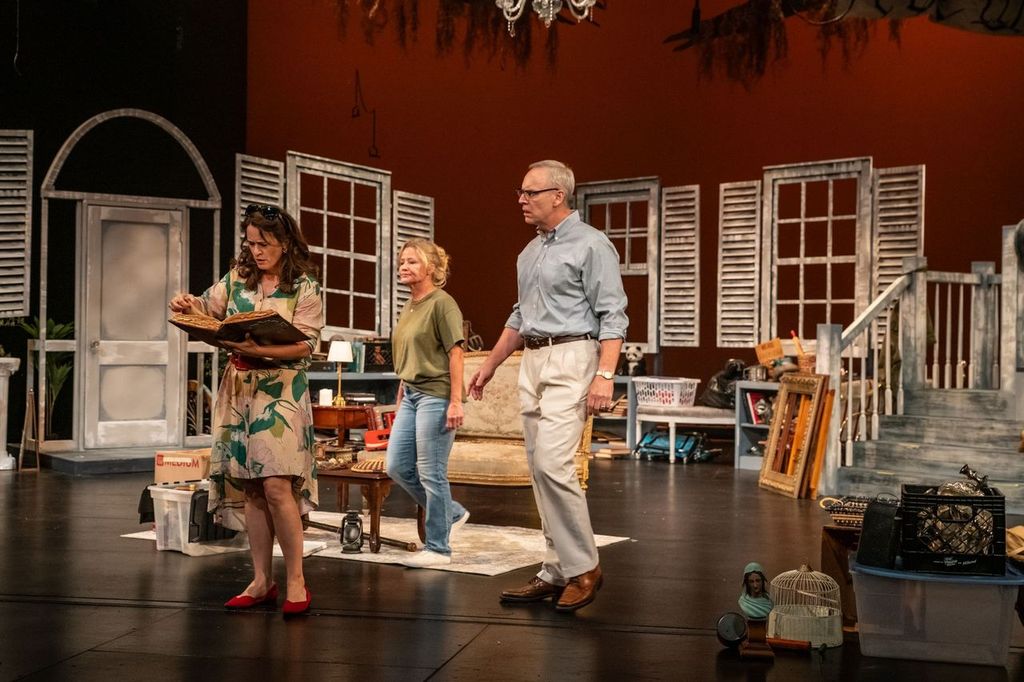
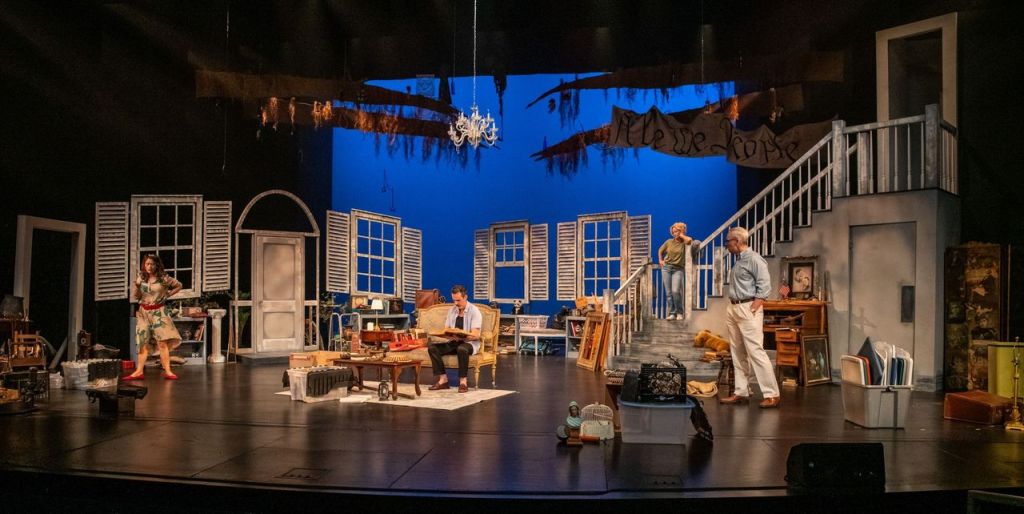
Several months after their father’s death, the LaFayette children have gathered at the family home – a former plantation in Alabama with a deep connection to slavery in the United States. Toni, the sister, arrived several days before her younger brothers to begin cleaning and sorting their father’s many belongings. Frank (who now calls himself Franz), the youngest sibling, crawls through a window in the middle of the night with his significantly younger fiancée, River, only to discover Toni’s son Rhys sleeping on the couch. Accusations, insinuations, and a lot of cursing are exchanged while the pair wait for the arrival of Bo, the sensible and ostensibly practical, well-adjusted, and successful middle sibling. The relationship between the three is strained at best and actively hostile at its worst, and tensions ratchet up when Bo’s youngest child, Ainsley, finds a photo album with disturbing images of deceased Black people. And that’s not the only secret surfacing during the siblings’ reunion. Can this generation finally confront their (and their family’s) past and move forward with hope?
Jilanne Marie Klaus is a force of nature as Toni. Self-righteous, constantly aggrieved, and rigid in her belief in her father’s goodness and her youngest brother’s evil, Toni’s hard to like, but Klaus ensures she’s loyal and harder to dismiss or discredit. Michael James Reed is buttoned up, rational, and financially preoccupied as Bo. He’s the steady calm in the center of hurricane Toni and Frank. Bo’s not without his flaws and insecurities; he just digs in his heels with stoic resolve. Then there’s Joel Moses, as Frank, a recovering addict and alcoholic with 10 years’ sobriety, a thief, and much worse. Moses finds a thread of dignity and humility in a seriously flawed human, making it hard to entirely dislike Frank. The character is emotionally raw and makes questionable choices. Moses shows he’s also earnest, vulnerable, and desperately seeking the forgiveness he needs to move forward.
Maggie Newstead-Adams, as River, conveys kindness and curiosity before revealing more strength and acumen than expected. Lizi Watts is tightly controlled, biting her tongue to remain polite as Rachael, Bo’s Jewish wife from New York. Though she never felt welcomed or liked by her father-in-law or his daughter, she shows compassion and tenderness when Bo most needs it. In my opinion, the last scene between Bo and Rachael, just after she embraces him, should end the live performance in silence – the moment hits hard and feels achingly honest.
Braden Phillips ensures Rhys holds on to kindness and empathy even as his experience encourages the antisemitic, racist, and misogynistic traits he expresses with increasing ease. Ainsley Hammond captures the awkward, precocious moments of a smart and preternaturally wise 13-year-old as Cassidy, and Aviv Giancola-Poremba is engaging and understated as the very curious Ainsley. The interplay between the characters and generations reflects the length and depth of their relationships in ways that are authentically derived and emotionally resonant.
The stagecraft is equally satisfying and well-executed. Matthew McCarthy’s scenic and lighting design evokes the past, a once grand home in disrepair topped by Spanish moss and the heaviness of hate, oppression, and violence. The costumes, by Abby Pastorello, subtly but effectively convey status. The casual jeans and t-shirt worn by Toni clash with Rachael’s more polished style as clearly as their personalities. The expensive and well-appointed looks worn by River quietly convey class and education. Bo looks like a serious businessman with tailored suits and an unquiet mind who never stops working; Frank looks like an aging rockstar with a superior sneer, waning bad boy charm, and a touch of manic anxiety. The sound design, by Mary Robinson, is filled with nature; the persistent song of the cicadas creating an unexpected symphony – sometimes menacing, other times comforting.
Entering its second decade, the Festival wisely moves from remembrance to reverberation, showcasing a play saturated with Williams’ influence that tells an original and timely story. Playwright Jacobs-Jenkins, director Sato-Ambush, and an exceptionally well-tuned ensemble artfully merge the specific and horrible truth of the white enslaver and ongoing racism with the personal and familial struggles of contemporary Americans.
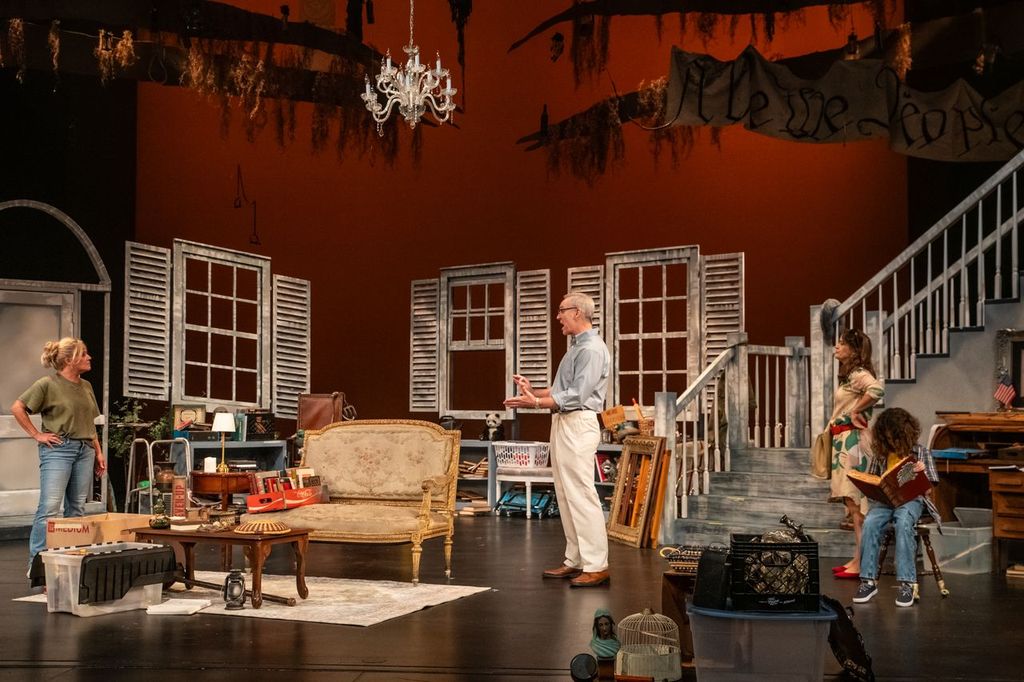
Appropriate is intended for mature audiences and may be triggering for some. Racism is discussed and demonstrated in several scenes, including the use of antisemitic slurs and descriptions of pictures showing the violent abuse of Black people. These scenes frankly and effectively delve into the plantation’s role in slavery, their father, and their upbringing, intermixed with addiction and sexual abuse in a moody and evocative script that propels itself towards repetition and tragedy.
The tense family tale is a darkly comic and, at times, uncomfortably intimate look behind a white curtain with a southern gothic flare for the dramatic. If you’re a fan of compelling, thoughtful theater with well-developed characters and powerfully affecting performances, you don’t want to miss Appropriate, produced by the Tennessee Williams Festival St. Louis in the Catherine B. Berges Theatre at COCA.


