
DANCE ON WIDOW’S ROW Flirts with the Outrageous

For its first show of 2026, The Black Rep revisits Dance on Widow’s Row, a thoroughly entertaining dark comedy by Samm-Art Williams about love, death, aging, and marriage. Directed with an emphasis on maximum laughs by Ron Himes and featuring an engaging cast of familiar faces, the quick-moving production is suitable for all but the youngest theater goers.
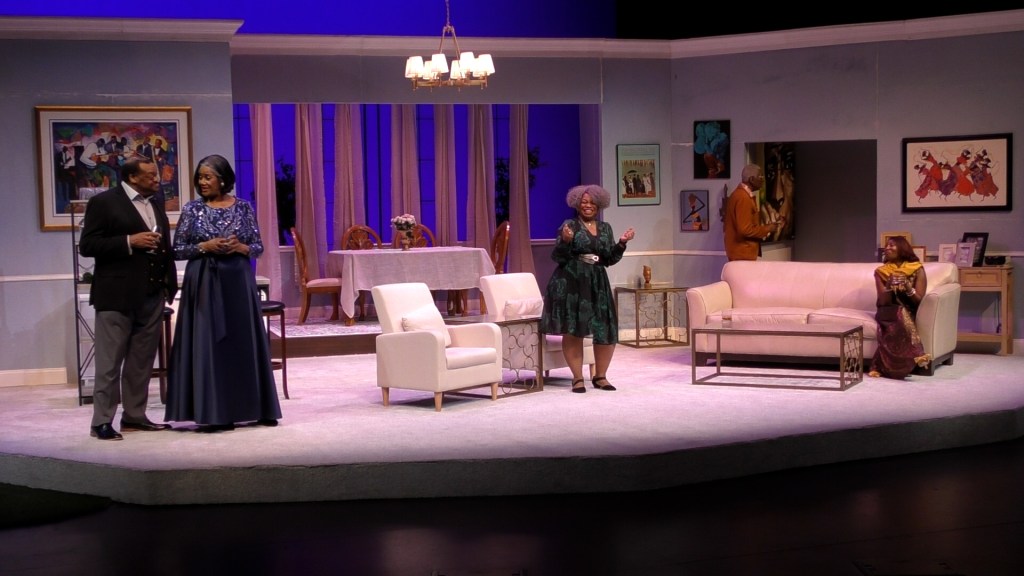
Magnolia Ellis, a widow living in comfort and surrounded by friends, nonetheless feels that something is missing in her life – a husband. She has, in fact, already chosen her intended, Deacon Hudson. To speed up the process, she’s invited fellow widows Simone, Lois, and Anne, and four of the town’s most eligible mature bachelors over for an evening of conversation and dancing. Simone questions if the invited gentlemen will show up, as all the women in attendance have outlived at least one husband. Lois is feeling single and ready to mingle. Anne clutches her Bible and scowls in judgment at the other women’s intentions. Deacon Hudson and the very hesitant Newly Benson are the first gentlemen to arrive, followed a bit later by the flashy, and quite wealthy, Randolph Spears, and the matchmaking is on. Will sparks ignite into love for any of the attendees and, more importantly, will everyone make it home alive?
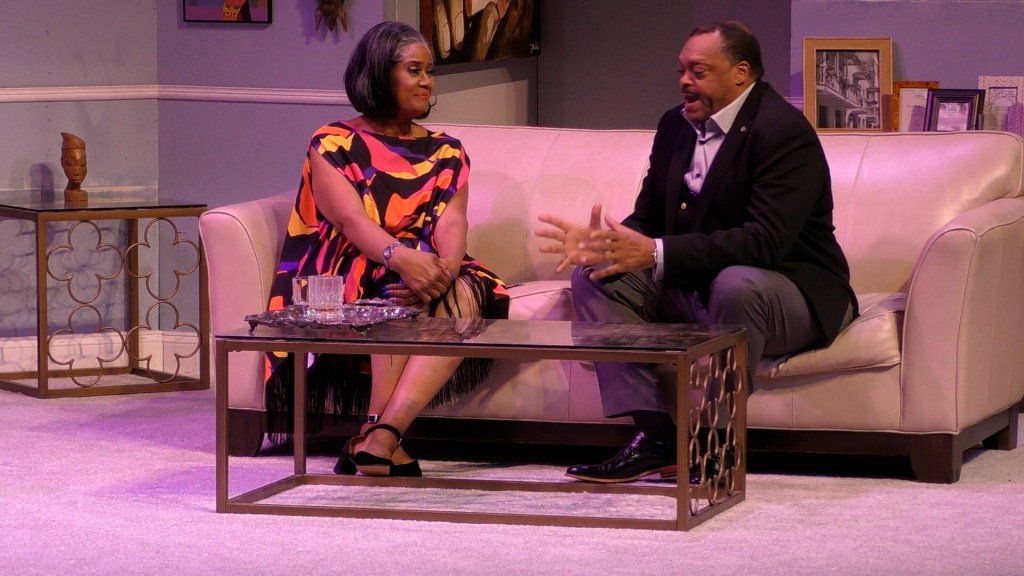
Denise Thimes is statuesque and regal as Magnolia Ellis and determined to strike a match with A. C. Smith’s Deacon Hudson. She knows what – and who – she wants, and she’s not afraid to make that clear, but she also wants the other widows to find a match and to remove the town’s belief that the widows’ street is either cursed or inhabited by murderers. Thimes comes across a bit stiff; more vocal variation, expression, and movement could help audiences empathize with Magnolia, but the performance is likable and compelling. Smith, as Deacon, is a perfect complement to Thimes, saying much with a glance or gesture, and proves himself to be steadfast, loyal, and equally interested. The attraction between the two is clear, and their final scenes are surprisingly tender, even amongst the outrageous and funny chaos and insinuation.
Tiffany Tenille is a study in comedic contradiction as Anne, Magnolia’s unexpected rival for the Deacon’s affection. Her churchgoing and judgmental demeanor undergo a radical change after just a few words of encouragement from the Deacon, who is being polite to lighten the mood and ease the tension between the women. Velma Austin gives Simone Jackson a sophisticated, often sarcastic edge and a healthy ego; her flirtation with Newly Benson (director Himes stepping in for J. Samuel Davis) is initially dismissive, but her increasing interest is revealed with genuine charm and a touch of sweetness. Himes plays the nervous, easily startled Newly for maximum effect that stretches credibility in laugh out loud funny ways. Margery Handy makes her Black Rep debut as Lois Miller. Open to finding a new partner or just a little fun, she can’t seem to stop herself from referencing death, substantially and comically increasing Newly’s discomfort. Lois is also the most suspect of the widows – both her husbands died of food poisoning, which elicits hilarious conjecture after Isaiah Di Lorenzo’s flashy, robust, and lusty Richard Spears experiences a health issue. Though the plot and reactions are exaggerated and occasionally incredulous, each character is distinctly funny and filled with personality.
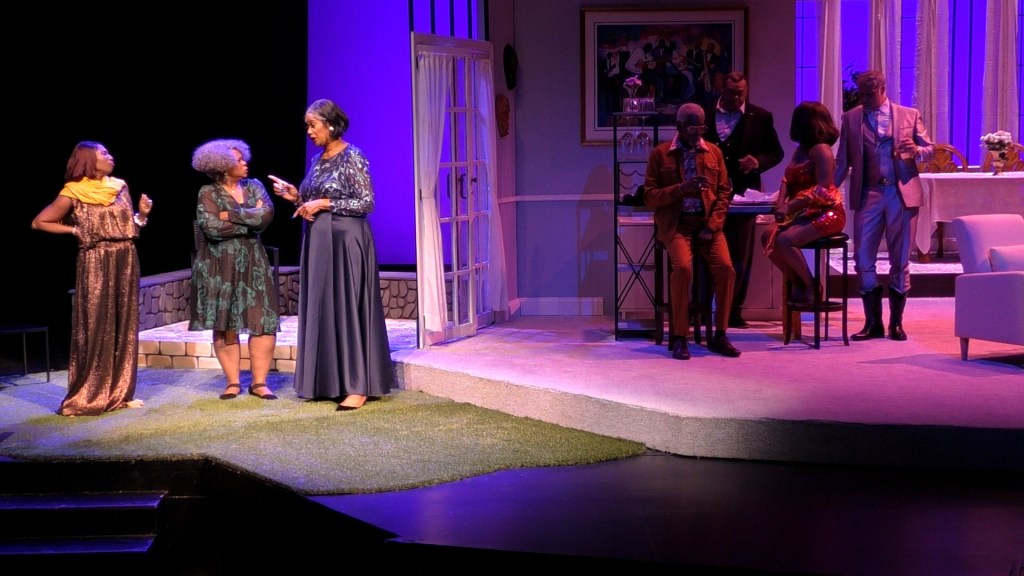

In addition to filling in as Newly late in the rehearsal process, Himes’ capable direction keeps the story moving forward in ways that encourage suspension of disbelief. Set designer Tim J. Jones shows a flare for well-appointed, late mid-modern style, while lighting designer Sean Savoie, sound designer Kareem Deans, and costume designer Brandin Vaughn fill in the details. The characters are clearly cultured, educated, and financially comfortable, even as the mish-mash of references spanning the second half of the twentieth century defies easy categorization, which, honestly, seems appropriate since the mature characters have had decades to develop their tastes. And, frankly, it’s nice to see the representation on stage.
The pacing was a little off opening night, likely due to the last-minute change in performers, but the humor remains smart, sympathetic, and continuous, filling most of the gaps with laughs. Attention to diction and projection are needed in the cavernous Edison Theater; although I had no issues, I heard some grumbling from a few patrons seated nearby. Still, The Black Rep’s production is thoroughly entertaining, surprisingly uplifting, and a laugh-filled reminder that, like a good comedy, love has no age limit. Suitable for all ages, and most appealing to fans of romantic comedies, Dance on Widow’s Row will keep you laughing as it warms your heart.


