
Michael Allen Discusses Mayoral Campaign, Expectations For Spencer Administration Pt. 2/2
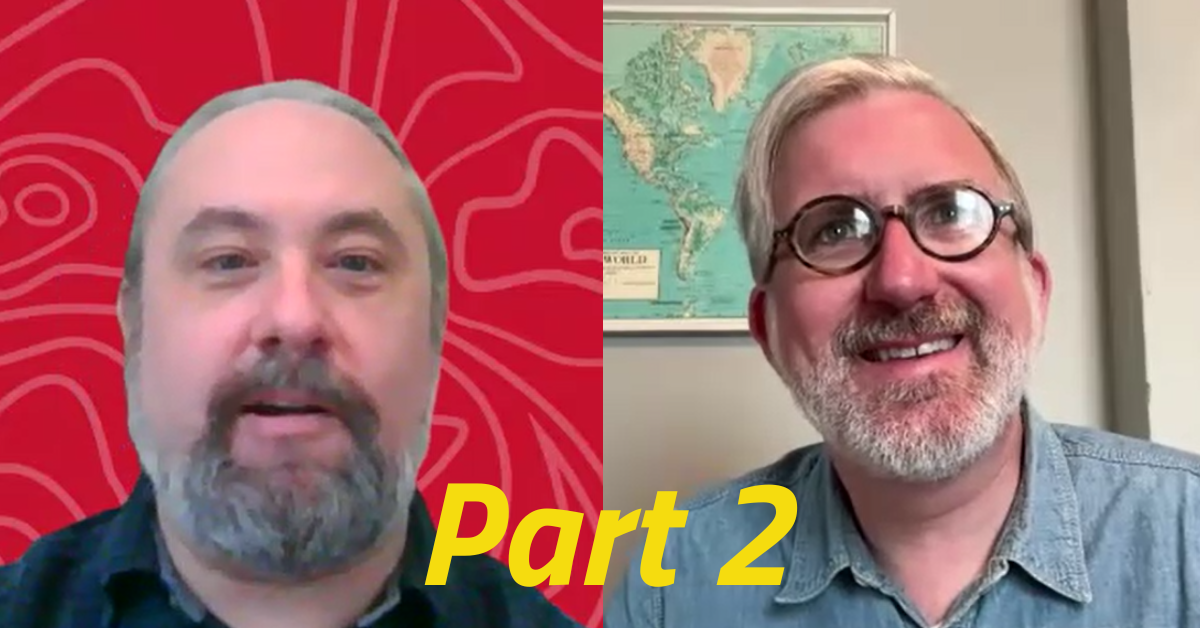
In the second part of our discussion, Michael and I discuss topics ranging from the relative absence of nonprofit activity in our most recent election to northside depopulation to his continuing ties to St. Louis. Our discussion was edited for length and readability.
GB: So, switching back to local politics, what do you think were the top two or three things that you think really the “nails in the coffin” for the Jones administration? She came in riding a huge wave of support, right? And there was more money than any mayor in recent history had to play with, too. Four years later, she loses by a large margin.
Kind of like you were saying earlier, when you’re talking about how we’ve been electing these people that are projecting these things, right? Like when Tishaura won like She had a lot of support, you know, and not just at the grassroots level. She had support, you know, from business leaders and stuff as well, right?
MA: I guess maybe it’s number zero, but it could be number one is just the complete spatial concentration and the dilution of black voting. I mean, look at those voting maps from Paul Fehler.
It’s like there’s just no real base in black politics, anymore. Then you look at southwest city and Tower Grove, and that’s the action. Basically, the margin is like you have to get either southwest city or Tower Grove Spencer got both. How Jones won last time was that she got the more affluent Tower Grove progressive wards… The Webster Groves of the city, if you will.
GB: I think she also took the old 24th ward.
MA: Yeah, she did. She did. So it’s like, that’s key there. I mean, you just can’t run on the disaffected north side as your base. I guess second… I would say is just the attitude of people in her government and her defending them. Sheena Hamilton the city councilor was like backstopping what was happening in the Justice Center. You know, stonewalling activist attorneys and activist groups with basic sunshine requests. I think that’s a significant reason why so many progressives swung away from her. In the Tower Grove area, it’s like they saw, wow, a major part of her platform is her partnership with the anti-carcerial left. Yet we’re getting something even maybe worse than what happened under Krewson and Slay.
GB: Well, but the organizations all stayed with her. Right? Like Action St. Louis and others did not leave her side in this election.
MA: That was surprising. Action got quiet and then rallied back in the second phase of this election. I was very surprised because I’m like, well… The Workhouse is being demolished, but on criminal justice issues we, again, it’s almost like we’ve lapsed backwards. It’s not better, so why not hold her really accountable on that issue? I was excited about Action being part of her coalition, because I] thought they were going to hold her accountable. It’s not because I think Tishaura actually is likely to stay straight on this issue, but she’s created a coalition that’s going to keep pushing her that way, right? Instead, these groups just… it’s the same thing with the Board of Aldermen members too. They don’t challenge these elected officials. Once they ride in with them, it’s like baseball teams. We’re just wearing your jersey, no matter what you do. I think that’s a huge blunder on the part of the Jones administration. While those organizations might stay true, their constituents, who actually go out and vote, are smart. These nonprofits don’t necessarily control a huge voting bloc. These activist leaders can’t just make people vote for Jones or whoever.
GB: It’s important to note that most of these groups, these nonprofits… they’re not really democratically-based. They don’t have dues paying memberships, etc. They’re normal nonprofit corporations with a board and a paid executive director, etc. When we talk about them, I think it’s different than talking about a union that has an actual membership base. That’s not to say that Action can’t be effective, but it is to say that they don’t necessarily come to the table with a certain amount of votes. They can provide a lot of support as far as field and phones. I actually thought that was one of the big stories of the campaign that didn’t get much attention, until the very end, was absences of these groups from her coalition. There were all these nonprofits that very much supported Jones, the last time around. Many of them connected to Maxine Clark and Teach for America. But they didn’t really roll out this time the way they did in 2021. There was also a false start in that effort. They released the People’s Plan 2.0. And then nothing happened with it. They sent out press release that they were going to be doing these things and then kind of nothing happened. I don’t know if the grant fell through on that, because, last time, that was a grant funded activity.
MA: Yeah, that’s right.
GB: So I’m not sure what drove that, but there was there was a weird absence, up until the end stretch. And Abortion Action Missouri and Action St. Louis definitely both swung into action, but it appears to have been too little, too late. I think the nonprofits’ efforts were a big deal in the last election. These groups were providing significant assistance to campaigns, essentially in turnout and other work motivation their base voters. That was a lot of money that is not going to show up in the campaign’s official spending, right? But it was money going into the race.
MA: You’re right. The get out the vote for Jones was noticeably lacking. It was like you have lip service, you have Facebook posts, you send out things to your email lists, but that’s all like weak performative stuff. I mean, are you actually getting people to the polls? You know, those northside wards… are you helping boost turnout? It’s like somebody dropped the ball. I also wonder if some of the nonprofit funders, like Maxine Clark and others, are perfectly fine doing business with Cara, making them not super invested in the outcome. I also wonder if some of the activists, in the first were round, maybe captivated a little bit by Butler and thinking, well, you know… if he squeaks through… that wouldn’t be the worst thing. I don’t know.
I just think Jones’s messaging was just really inscrutable this time, too. Which is very strange because it was she ran a really pretty solid campaign, as you’ve pointed out, with like a coalition who’s actually delivering the votes in 2021. And this time it’s just like wait, what? You know, it’s not as epic as Clarence Harmon in 2001 getting 5% of the vote, but it’s It’s a pretty big stumble for somebody who’s the incumbent mayor and has these people, at least online, saying they’re for her. But then they’re not delivering.
GB: Yeah. I mean, in the last month of campaigning, social media became just like a daily trauma machine of people screaming about the mayor’s race. It didn’t matter. It really doesn’t seem to have mattered at all to the final election result.
MA: No, it was already decided. I don’t know. It was almost like all of her friends, who didn’t do anything, felt sorry and decided to endorse Jones at the last minute… but like in ways that aren’t actually votes. And then the supposed proxy of values that some people were trying to insert… they’re both pretty mainstream liberal Democrats.
GB: Watching my Facebook feed try to morph Cara Spencer into a MAGA person, you know, it was just bizarre, right? Like I’ve known Cara Spencer for a long time. I think it is safe to say she is a business-friendly, fairly center-left Democrat, right? She’s worked at a bank, blah, blah, blah. Trying to turn her into a Trumper was, I thought… that really says more about how little they have in differences. People have to make these mountain out of all these molehills that tie into all this other stuff, because they can’t actually point to that many differences between the candidates on policy stuff, on things that they can actually control. So, then they try and make them part of other, scarier things to increase the drama. It is so they can get out their vote, right? As somebody that ran campaigns, I’m cognizant of the fact that a part of winning is that you have to polarize the voters and you have to drive your people out. Right? So it is built into the electoral system.
MA: Right. And the cyber campaigning is like… I think about all the people in north city. It’s like none of this was for them. I mean, they’re not in this loop. This is like a battle of mostly white, but some non-white, progressives. They mostly live in south city, screaming at each other. This whole like MAGA ruse was like a last-minute effort to peel some of those voters back. Again, it’s like, I don’t know, maybe the difference that could have been seen if somebody actually has would have issued a detailed platform, which neither candidate did. It’s like, what is your actual platform? And then the debate I moderated… there was so much agreement you know among the candidates, especially Spencer and Jones. On incentives they were “Oh, we want to use them sometimes, but not all the time.” Then Butler was the one who was like “Never. They’re not right. They steal money from the school district.” And I’m like, well, maybe if Jones had said that, it would have been a meaningful difference with Spencer, you know. But her track record has been a sort of moderate approach to incentives, which I think Spencer will maintain. I don’t think Cara’s going to give it all away, like Slay was doing, but I think she won’t do what I would do, which is to really hold the line. I was so surprised to hear both of them support incentives for the Millennium Hotel. What they’re seeking there is ludicrous in a low demand downtown that has a Railway Exchange building and an AT&T tower to fill. I mean, the Millennium is something to deal with, but this is a high-dollar, unrealistic scheme to demolish an existing high-rise and build an even bigger high-rise at a moment when Downtown is not growing. The city’s not growing. And they want to throw all these tax dollars into the the kitty.
GB: Well, I do think that, just because of the amazing amount of telegraphing that’s been done by St. Louis Magazine and others, we’re going to see a bunch of incentives go back into Washington Avenue. There’s just been so many articles about that person that’s buying up all the properties and preparing for a big push. So, I think we’re going to see another generation’s kids’ educations go towards paying to redo buildings that their parents’ education funding went to rehabbing. To me, I think that is part of the stuff that I find just amazing. We don’t deal with a lot of questions in serious ways, especially when we’re talking about this tax incentive stuff. How that further ties into the education things is that a lot of these new charter schools get paired with other projects’ incentives, when they’re rolling out development in a new area. I’m a public education advocate, and I think one thing that we just don’t talk about, but that we should, is that, for the most part, people in the region don’t seem to care about our charter schools. I mean, they’re not keeping people in the city. Folks continue to move to high performing public school districts, right? That is if you looked at the data, as far as where are people are voting with their feet. People were saying I want high quality public schools. You know, the charter schools, there are some successful ones that are, you know, in higher income, whiter enclaves, but, on balance, they haven’t really done all that great. If the idea was that we were going to create this parallel system that was going to keep residents and draw new people into the city. The population numbers show it’s not working. It is not working.
MA: And the same election that gave us Spencer gave us the three most anti-charter candidates prevailing in the school board race. So I thought that was interesting. Although, correct me if that perception of their… I know Ryan Marston, certainly.
GB: I think it was… I think the public school advocates were happy about two and less happy about one, but I’m not sure. You’d probably need to talk to like the teachers union about that.
MA: Right. It does look like even the city voters, Jones or Spencer alike… whoever they support… they still would like to see public schools do well. There doesn’t seem to be much of a constituency for charter schools among parents with children. it’s like it’s this insidious industry that has just like normalized itself. And among elites who make these decisions and press that gives it outsized fawning coverage, despite all the failures of charter schools.
GB: Well, and you got to also remember that the press has a financial interest in this. If you go to the Post-Dispatch’s website, you will almost always see paid content for Confluence Academy or other charter schools. Opportunity Trust has ads running on the St. Louis Public Radio website. You know, as an underwriter or whatever. So the papers or the outlets themselves have a financial interest in supporting the charter schools that they don’t really have from the public schools.
All right, Mike. So we got another like 10 minutes or so here. Anything on top of your head that we haven’t talked about that you want to?
MA: I don’t know. I think the mayor’s race is kind of an exhausted subject in a lot of people’s minds, but I do wish some of that energy could be translated into a real effort to think about what we are really talking about when we talk about Jones and Spencer. What are the real goals and features of this city? I mean, so many of these second-tier cities are in crisis. I now live an hour and a half south of Pittsburgh. I just took my students on an excellent tour yesterday of East Liberty led by Adrian Jones, who’s developed this app called Looking Glass, where you can see all of the black history that’s been erased. In this neighborhood, and this is a majority black neighborhood by the 1950s… there was a freedom center there. It was real hotbed of civil rights activism. It had the biggest hip hop venue. All that’s now gone. We started our tour at Whole Foods. We went past a Target. Duolingo is headquartered in the neighborhood. They have their own Duo Tacos taqueria.
It’s like Pittsburgh was in St. Louis’s boat and then Google arrived and Duolingo and all the tech industry. That hardly seems like a desirable turn of events. One version of St. Louis just continues to shuffle its feet, throwing these mayors out, whatever… and then something big like a major corporation comes. Then it’s just hypergentrification game on. And that’s what Pittsburgh has seen. Oh, we’re successful now, and Pittsburgh has the lines at brunch places and the hipster bars. It has the tokens of success that St. Louis sometimes aspires to, but it didn’t really set a vision or set parameters around growth. You know, one thing is maybe St. Louis just keeps waiting for a miracle to happen. I think a lot of people thought it was going to be Square/Block coming to downtown. Then the pandemic hit. The other version of a future is where there is actually a movement to create the kind of platform Action was promising and that a people’s political party would have. And I don’t know what you think is what realistic at this point. And I should say, I don’t want to point the finger specifically at St. Louis. St. Louis is very good at thinking it’s the only place with these problems, or with these successes, or with these triumphs, and we’re really in the same boat with a lot of places. Vision is not in ample supply. There aren’t great models out there for a city like St. Louis to chart a democratic, pro-working class kind of course.
GB: Yeah, I don’t know. The town has shifted so dramatically. When we talk about population loss and the loss of votes in north city. I mean, some of that is a lack of organization, but a lot of that’s just there’s way less people there. A few years ago, I started talking about how we were going into an era of pretty rapid decline in Black political power, based on the numbers. At the time, all three members of E&A were Black, and it may have sounded crazy to a lot of people. They were like, what are you talking about? You know… just look. And I’m like, well, yeah, I see that. But, again, if the victories are powered by white voters in Tower Grove and Fox Park, then having a Black person win does not necessarily mean there’s an increase in Black political power. So, as Black population numbers were continuing to drop, it was setting the stage for an all-white board of E&A, for the first time in decades. Weirdly, the era was bookended by Virvus Jones becoming Comptroller and then the day his daughter Tishaura left was the end of that era.
I don’t know what a platform would really look like, you know, to rally people behind and to build working class alternative. There’s going to have to be a lot of education and stuff that would come first, right? Because, right now, when you talk about Tishaura and Spencer… you know the administrations will be fairly similar on incentives and stuff. And that’s because you know there is a consensus, where everyone basically agrees on what we’re doing. They believe that they’re going to do it in a smart way. Organizations like DSA and stuff will back candidates that take this position, right? So, you know, there’s not really a left alternative in thought. Like the idea that we’re going to fight for even base-level things is not really on the horizon.
I think that there’s going to have to be some other structure built. The Democratic Party does have a function in that it generates people that believe a certain set of things. So, I think that there will have to be some other structure built. I don’t think the Board of Aldermen went through major changes over the last decade. We were going through a generational change. We were not going through any significant ideological change. I just think that it’s going to be tough to really build an alternative, until people say that we need an alternative. If people are happy to continue putting their energy into these aldermanic races, then this will just keep continuing. Until people say, you know what, we really need to have our own real alternative, where the movement’s leadership isn’t nonprofits funded by the ultra wealthy. I think that building democratic organizations where folks have memberships and votes is a necessary prerequisite to building a real alternative. as long as pretty much all of the “alternative” or “opposition” is just nonprofits that are beholden to the Clarks or the Sinquefields of the world. You know, whoever, the Kransbergs, right? Until we get away from that into a more democratic version of things. I think we’re going to be stuck on this trend.
MA: Once again, I’m almost nostalgic for the old Democratic ward organizations. Ideologically, you know in the in the Slay heyday, they were pretty monolithically against a lot of left voices. But they brought people together for bingo nights and kept people involved to the point where everybody would go vote if the ward’s the committee people were driving people out to vote. Maybe we think that’s just going to happen on its own, but I think the stats are showing it really isn’t. We need those organizations to be effective to be as a building block of an effective state party. We need those organizations to help get people like lobbying the reps in DC. I mean, it all starts with these local parties. To me, it’s very neoliberal. Again, I’m not a fan of the Democratic Party, but to take that apparatus, which was almost completely irrelevant to this election, and now you’re just voting on people based on the supposed personal merits. It’s like this is what’s happened to employment without unions. It’s just, I’m for Spencer. I’m for Jones. It’s not like “I’m a member of this party and I believe these things and that’s why I’m voting this way.” And I’m getting my neighbors to join me, right? It’s like nope… I’m going to leave something on Facebook saying something snarky about the candidate I don’t like, and then I’m going to go on my own and vote individually. I feel like there’s a malaise, but I do think you’re right. People have to demand a change and consciousness is something that is readable in what the Marxist Scholar Raymond Williams called “structures of feeling.” Like before there’s an official call, there is an unofficial sort of dialogue, and I don’t hear it yet. I want to hear it. I want it, but it’s like I don’t see masses in St. Louis eager, yet. I think there would have to be a lot of education and cultivation of those discussions. In the absence of that, I think people who do want things to change will just vote for the candidate who says they’re going to change things. I don’t want to just be completely passive, right? So we’ll see. I hope Cara Spencer fixes more than potholes. I hope she does well, as well as she can, given this.
GB: So closing out here. Do you have a prediction as to what Spencer will finally push for with the Rams money? This was essentially punted to her administration.
MA: I don’t know. I mean, I could see her joining the group of aldermen who are pushing investment under Schweitzer’s proposal. Schweitzer wants to invest some of that money in utilities… the water system. I think given Spencer’s emphasis on those
irritants of daily life. I could see her say we need to we need to really invest this in basic infrastructure, which I don’t actually think is a bad idea.
GB: I think this is a thing where the voters’ feedback was very clear. People were were surveyed and said that we need functional water and sewer and stuff like that.
MA: I mean, there’s still lead mains feeding houses in the city. We don’t want lead in our drinking water. There are still wooden sewers in the city. That’s MSD, so it’s a different entity.
GB: So do I. I hope she spends a good amount on infrastructure. One thing that I’m curious as to see, and I think it could be one of Jones’s real legacies, or not, depending on what goes on from here… is the investment around Martin Luther King, right? The Jones administration did give far more attention to Martin Luther King Ave., compared than any administration during my time here in St. Louis. Now, not all of it was popular. The fixing buildings and then sending you a bill thing has definitely rubbed a number of people the wrong way, but Jones and SLDC, really did invest in the area. They bought that electrical business that they’re going to have an outpost at. There was really quite a bit of investment driven over there, and I’m interested as to what we will or won’t see from the Spencer administration, as far as continuing that and seeing if it actually gets to fruition. That was one thing where I thought that the Jones message of “I need some more time to finish this” was apt.
MA: Yes. Well. The northside needs… I mean, four years is not going to fix those issues, right? So, I think on those issues Jones was spot on. This is long-term change. Sort of really David versus Goliath there. It was a sympathetic moment for her campaign, but it didn’t get articulated in the way that would draw people around it, or maybe it’s just simply like southside voters don’t care. Most don’t go north.
GB: Yeah, I don’t know. So I think there’s some of that for sure. But I also don’t think that the Jones administration ever effectively communicated their strategy around that, right? They said we’re investing in North St. Louis and people can see that some money’s flowing here. But I mean, even my friends that live on the north side… I don’t think saw a coherent message of “here’s the vision, here’s here’s what’s coming.” You know?
MA: Yeah, that’s a good point. Yeah, it’s like… show us that’s as urgent and as materially necessary as all of Spencer’s promises about potholes and city services. I think a functioning north side is essential to the city. And I think you could sell people on that vision. In fact, even Paul McKee was able to sell bankers and politicians on that in his weird way. So yeah, but it wasn’t well articulated. Jones seemed very defensive, when SLDC came under fire with those grants. It was not like, “wait, here’s our process. It’s not corruption. There’s a big vision happening here. This is a mistake. We’re going to fix it.” But the real prize is what’s going to happen to transform MLK and the neighborhoods around it. Like The Ville, you know? Instead, it’s just like a bunch of spokespeople kind of playing swat the reporter away, which is not a good look for any politician. We’ll see what Cara does with communications. Who her team’s going to be, etc. I think in this day and age, you have to really play offense effectively.
GB: I think she’ll do all right on that. I think having run in now two fairly nasty elections for mayor… I think Spencer is very cognizant of the need to have effective communications and messaging.
Alright, so Mike, it has been good talking to you. Do you have anything you want to close us out with or are we done?
MA: No, and we didn’t even get to KDHX, but that’s fine with me.
GB: Yeah, that’s a totally separate one, man. That’s a whole ‘nother hour. Yeah, but any work coming up that folks in St. Louis should keep an eye out for?
MA: Well, I guess it looks very likely I’ll be back in town on May 24th for a screening of the film The Encampments at Arkadin Cinema. That’s about the Columbia University encampments. It’s always good to be back. Even if I don’t show up. I think I will, though. People should go see it. I also just got appointed research fellow at National Building Arts Center, which will enable me to look for more grant funding to come back and do more programming there in St. Louis. Maybe I’ll continue to be tethered to the old river city for some time to come. It’s always fun to come back as a visitor… to the point where like some people don’t even think I left. It’s like they see me so frequently. I will say to all of our conversation about change and education… what you’re doing with Mountain City Messenger shouldn’t be overlooked as a big part of what’s needed to raise consciousness. I mean, we have to have a press. We don’t have the RFT, anymore. We’re going to lose KDHX and whatever talk shows… in the past, DJ Wilson’s used to be a civic mainstay, and we have to build the infrastructure that continues to allow people to think publicly about these issues and you’re doing that.
GB: Yeah, we’re trying. Right now, you get a very corporate friendly viewpoint, kind of no matter what outlet you go to, right?
MA: Yeah. I was hoping for more with Sarah Fenske at St. Louis Magazine, her return. I thought, well, maybe some of that RFT spirit will be in there. And there’s occasional Ryan Krull piece, but It doesn’t sound like St. Louis Magazine thinks it can survive on, you know, being politically daring or visionary. I guess she’s keeping Ryan and others employed in journalism in St. Louis, which is no easy feat these days either.
GB: Yeah, there’s hardly anybody left really. Well, let’s end it with that and have a good rest of your Sunday.
MA: Yep. You, too.


