
Mayoral Campaign Fundraising And Spending Significantly Lower Than Slay Era
Despite headlines about big spending in this year’s mayoral contest, the election is actually a relatively low-cost affair, at least compared to the Slay era. Mayor Jones and Ald. Spencer have raised a combined total of approximately $2 million. While their totals are close, Ald. Spencer holds the edge with a little over a million raised. While this is a lot of money, it pales in comparison to races from former Mayor Slay’s tenure. To put this in context, Slay’s 2013 campaign raised almost $3.5 million and spent close to $3.3 million. Mayor Slay’s 2013 competitor, Lewis Reed, raised slightly over $700,000 and spent most of it. Combined, that campaign cost over $4 million.
To get a clearer picture of the current cycle’s total campaign spending, it is important to account for the money raised and spent by Political Action Committees (PACs) allied with the candidates. Over the past decade, this non-candidate spending has increased. In this cycle, A Brighter Future For St. Louis PAC, which is aligned with the Spencer campaign, has raised a bit over $580,000 and spent $528,000. 314 Forward, which is the PAC supporting Mayor Jones, has raised $232,000 and spent almost all of it.
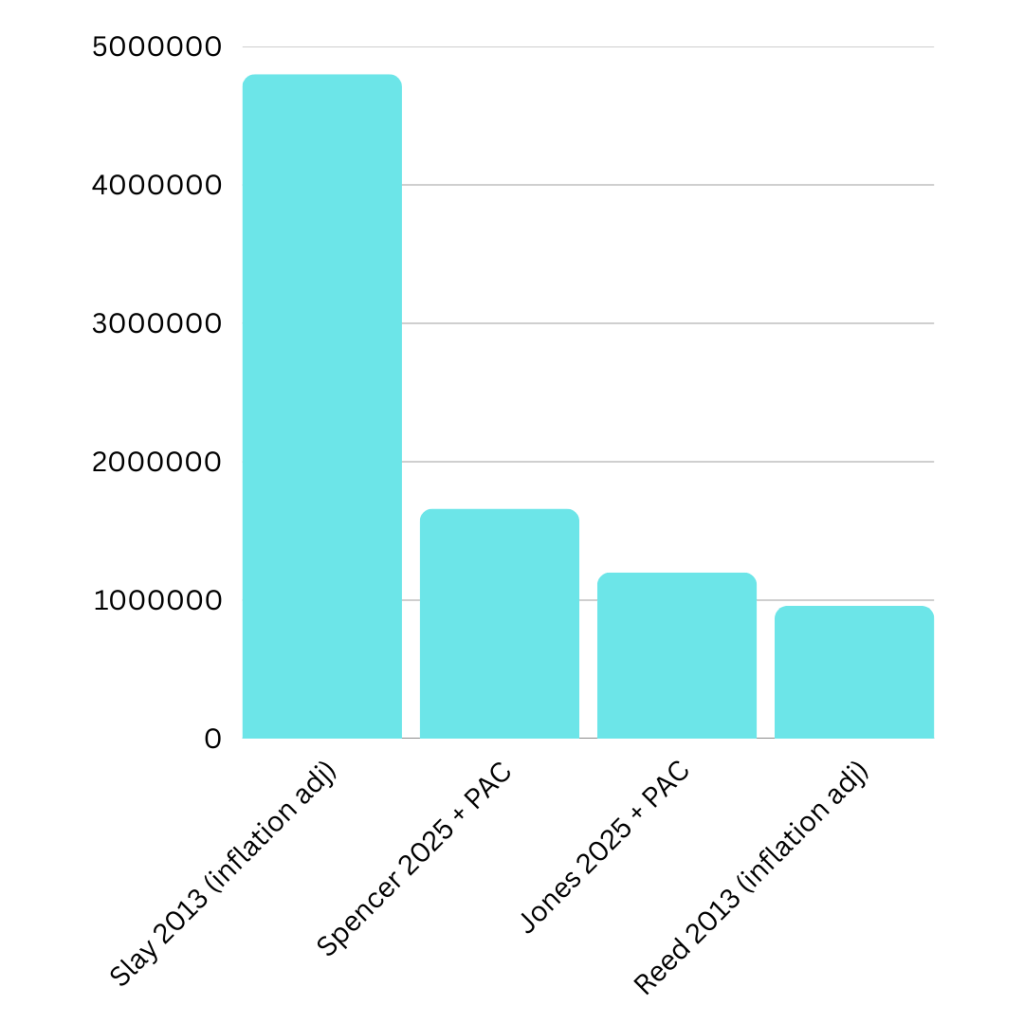
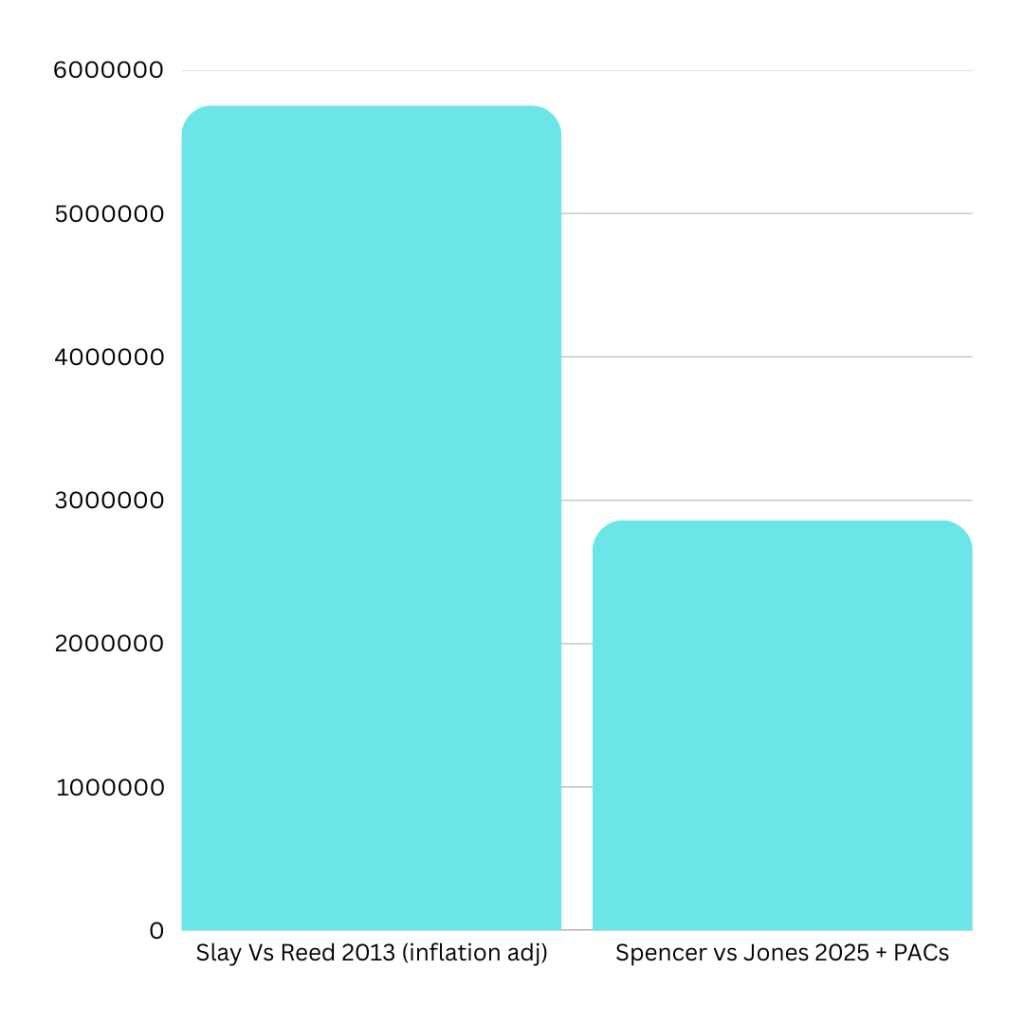
In total candidates and their allied PACs have raised about $2,835,000 during this election. Combined spending on this year’s race, both candidate campaigns and PACs, is less than Slay’s 2013 campaign spending and a bit under three-quarters the combined cost of both major contenders’ 2013 campaigns. That kind of dollar-to-dollar comparison doesn’t truly give a clear picture of the difference in spending. To better understand today’s mayoral campaign spending, it is best to factor in inflation. The past twelve years have seen the Consumer Price Index increase by 37%. When inflation is taken into account, this cycle’s mayoral campaign spending has fallen even more than the raw dollar numbers would indicate. The roughly $4 million spent on the 2013 race would be closer to $6 million in today’s dollars, which would be nearly double this cycle’s spending.
It is also worth noting that the city’s shift to a wealthier, higher-educated voter pool means that the declining city population hasn’t reduced the number of municipal election voters. The March 2013 Democratic primary, then the main election, drew 44,000 voters to the polls. This year’s nonpartisan primary drew just under 35,000 voters. Under the new “approval voting” system, the April election has become the main contest, and most expect turnout to exceed March’s primary. The 2021 runoff election drew almost 59,000 voters to the polls. It is unclear if this year’s runoff will match the most recent mayoral election’s turnout. If voters equal to half of those who sat out the 2021 primary and waited for that year’s general election were to come out in next week’s election, turnout would be around 47,000. This would exceed the final Slay/Reed campaign’s highest turnout election.
Between smaller spending totals, the impact of twelve years’ inflation, and continued voter turnout in municipal elections, it is clear that running for mayor has become a relatively cheaper affair. Spending per voter was almost $91 in 2013. If 47,000 voters turn out in this year’s general election, this figure would fall to about $60 per vote. If next Tuesday’s turnout matches 2021’s almost 59,000 voters, the amount spent per vote falls further to $47 per voter. In either scenario, it is clear that overall spending in the city’s mayoral elections has declined.
Disclosure: Author has worked for former President of the Board of Alderman Lewis Reed and Ald. Cara Spencer on campaigns.
UPDATED: At time of publication, one of the graphs was incorrect, due to spreadsheet error. It has been replaced.


