
Mayoral Contenders Want Safer Streets, But The Path Isn’t Clear
By Evie Hemphill
Everyday St. Louisans, including me, showed up to Paraquad’s headquarters in droves Monday evening to hear the four mayoral candidates take up a single issue of increasing regional concern: the pressing need for safer streets.
None of the candidates left the event having solved the complicated crisis of traffic violence, of course. But the packed house illustrated just how urgent this topic has become for so many St. Louis-area residents — and that itself felt hopeful and noteworthy.
Like many local commuters, I continue to feel grief, anger, and fear over the topic of road safety. As more and more people around me are affected by (and even lost to) this crisis, being part of a large crowd all quietly insisting on better mobility outcomes was extremely affirming. St. Louisans often focus a lot on homicide rates, which have gone down of late. But what about the increasing number of people losing their lives or having them forever changed while just trying to get where they need to go?
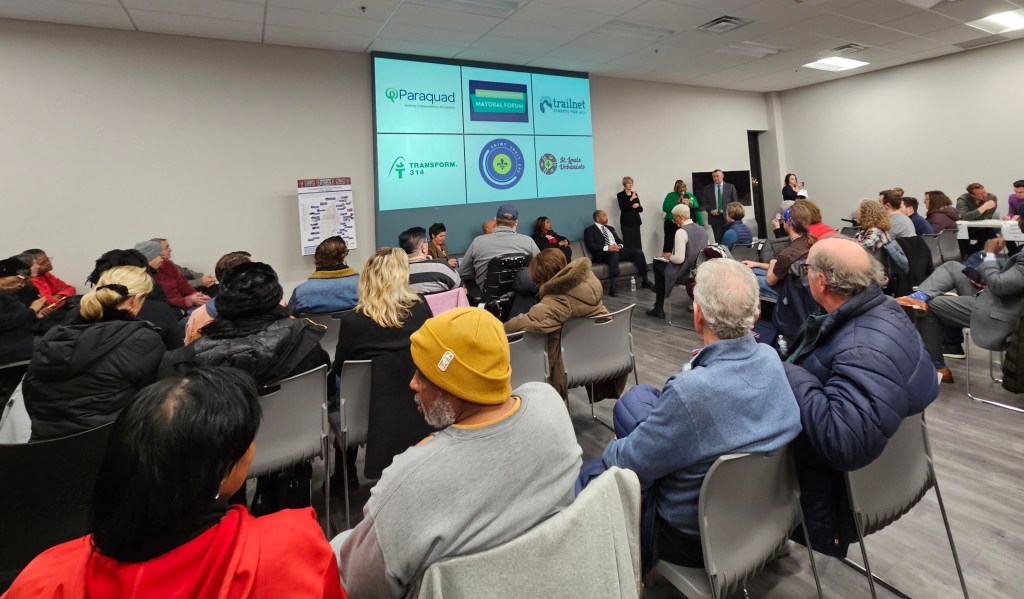
– Photo by Evie Hemphill
That unspoken, larger question seemed to hang in the air throughout Monday’s forum, which was organized by Trailnet, Paraquad, the St. Louis Coalition to Protect Cyclists & Pedestrians, the St. Louis Urbanists, and Transform 314.
I headed homeward with the following takeaways on my mind.
1. All three Democrats vying to lead St. Louis for the next four years point to long term funding as the biggest key, and the main barrier, to potential positive change. It remains unclear what a sustainable funding stream could look like — and that’s a problem. At several points during her remarks, Mayor Tishaura Jones highlighted a total of $300 million in mobility infrastructure upgrades planned in the city between last year and 2027, according to the Friendly Streets website her administration launched this past summer. The funding is touted as an “unprecedented investment in how we all get around,” and includes repaving and redesign of about 30 miles’ worth of major arterials among other projects such as the Tower Grove Connector and Brickline Greenway. Still, she suggested to the audience that the city should “look at ward capital” among other budget areas when it comes to capital planning long term. This was a clear point of contention with 8th Ward Alderwoman Cara Spencer, the mayor’s leading challenger in the race, who was quick to push back on the idea of using individual ward-capital funds. Spencer instead suggested using revenue collected from parking fees be invested into street improvements, saying that the city collects “over $10 million a year in parking fines” that could become “an annual, reliable funding source” for streets. Speaking as a layperson myself, each of the four candidates’ comments on funding, taken together, definitely left me feeling like we may not be able to count on sustainable funding for adequate infrastructure maintenance or improvement once the city’s recent windfalls (e.g. ARPA and Rams settlement funds) are exhausted. Given the rate at which infrastructure seems to be crumbling and people are dying, it was unsettling to hear.
2. Consensus around the proposal to develop the Green Line — a MetroLink light rail alignment envisioned to run north and south along Jefferson Avenue — doesn’t seem to be a thing. Candidate and Recorder of Deeds Michael Butler brought this up early on in the evening. He said that in his conversations with a variety of organizations, he’s found that some nearby Black residents “don’t want the Green Line.” What may have seemed like a good idea 10 years ago, he said, “doesn’t seem to be a feasible and good idea today.” Mayor Jones, meanwhile, touted the proposed project as an important investment that is now 30% designed.
3. Twenty pedestrians were killed by drivers in the city last year alone. All of St. Louis needs to sit with this horror (and slow down). Spencer opened her remarks with this statistic (although she said “killed by vehicles”). As an attendee, I appreciated her focus on victims. I believe that any real progress toward curbing these increasingly common and violent injuries and deaths starts with recognizing the urgency of the crisis at hand — and centering victims and victim resources. “We are killing our citizens,” Spencer said. “We are injuring our citizens on a regular basis.” All too often in our region it can feel like street, road, and highway deaths are shrugged off as the cost of doing business. That is unacceptable.
4. St. Louis does a lot of planning and studying, and it’s not working. We need action. Butler may have said it best Monday night on this front: “We don’t always need a plan to act; we can move forward with our existing knowledge. … I’m ready to get to working, and I’m ready to make our plans action.” Butler cited the long pattern of death and injury by Ted Drewes along Chippewa, along with the long wait for new safety upgrades. I feel him on this. The needed changes often feel obvious, and yet we hear about study after study. We’ve waited far too long for sustained, urgent action.
5. There’s so much more we could be discussing when it comes to enforcement as we push for safe streets. It’s the elephant in the room. While every candidate touched on enforcement needs in some form (Mayor Jones mentioned red light cameras; Spencer the need to enforce the law, especially since cars are now being used as weapons; Butler that the best traffic calming is knowing you could get a ticket; and Republican Andrew Jones the idea that “high-performing police” will solve everything), I was frustrated by the overall seeming lack of will, creativity and specifics on the enforcement front. It’s no exaggeration to say that most St. Louisans are fed up with the dangerous lawlessness we have to navigate every day. It concerns me to have not heard more clarity and thoughtful ideas on improved enforcement. If we’re actually serious about saving lives, real progress on the enforcement front is critical.
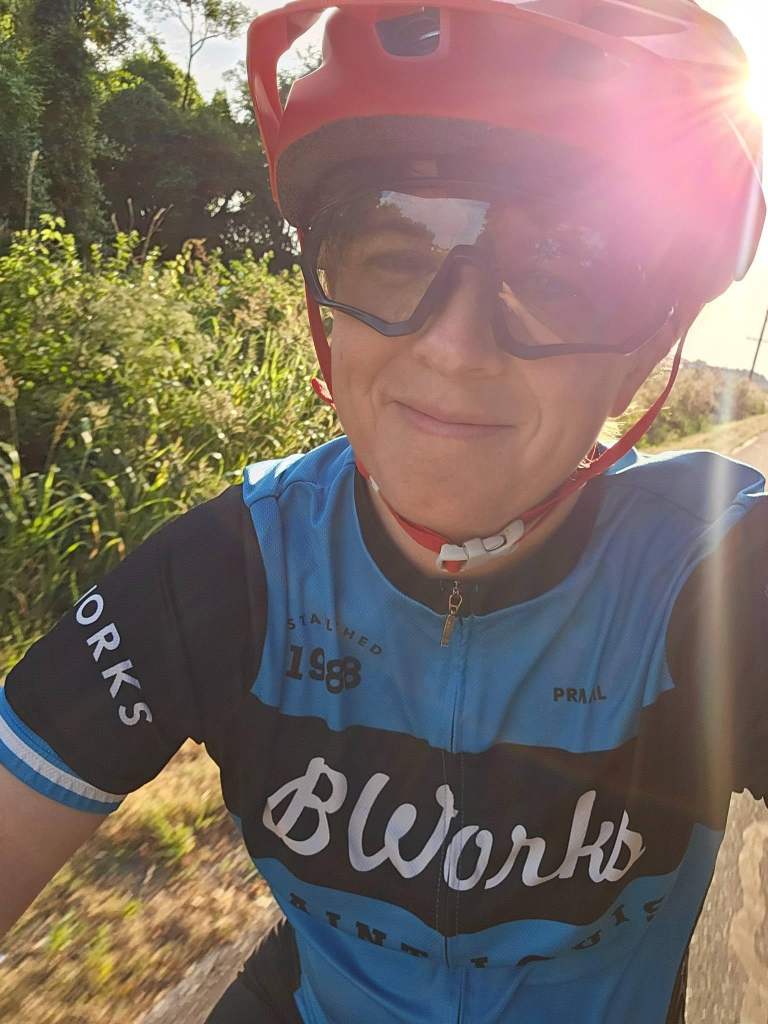
Evie Hemphill has lived and commuted to work in the St. Louis area since 2010. A former talk show producer for St. Louis Public Radio, she now works for local nonprofit St. Louis BWorks, directing its free Earn-A-Bike, Learn-To-Ride and Earn-A-Computer programs that serve hundreds of local children and teens each year.


