
Remembering Preservationist Bill Hart

Sad news from the winter holidays included the sudden death of long-time historic preservationist, historic rehab developer, and architectural historian Bill Hart, who died just before New Year’s Eve. Since 2020, Bill had been working in the world of local history in his hometown of Perryville, Missouri, where he was serving as Executive Director of the Perry County Historical Society. Too rare are historical societies that have full-time professional leaders, and ever rarer are those who hire someone with as much devotion and experience in cultural heritage work as Bill brought.
Bill Hart came to St. Louis in the 1970s and jumped into historic preservation efforts, helping to establish a neighborhood housing corporation and rehabilitating several of his own residences. It took me a few years of knowing Bill before I realized that he was the same William M. Hart whose name appeared in many documents as an organizer with Market Preservation, the citizen activist organization founded in 1981 to stop the demolition of historic buildings in the path of the proposed Gateway Mall’s watered-down “half-mall” plan. (The Peabody Building at 7th and Market Streets is the only part of this tragic Reagan-era perversion of public space planning and utter failure of urban design to be built.)
In 1983, Market Preservation submitted over 16,000 signatures to place a referendum on the ballot, allowing the public to vote on whether to stop the “half-mall” demolition and preserve historic buildings. The Board of Aldermen balked at revising the redevelopment agreement with Pride Redevelopment Corporation, the front set up by downtown business leaders to build the “half-mall”. Then Mayor Vincent Schoemehl defended the Pride plan.
Hart went on to pen an impassioned letter to the editor of the St. Louis Post-Dispatch in favor of the referendum, which appeared in the March 29, 1983, edition. The conclusion was a strong call to the consciences of the aldermen: “The aldermen have been granted a second chance to prove that they represent their real constituents by passing their amendment. It is by doing this that they will live up to their duties as representatives and their titles as ‘honorable.’”
Unfortunately, Market Preservation failed to prevail – a judge required a bond amount to sustain its lawsuit against the Board of Aldermen beyond what the group could raise – and the historic buildings fell for the glittering mediocrity that remains a monument to the middling aspirations of St. Louis civic leadership. Thankfully, Hart emerged from the Market Preservation cause with more devotion for historic preservation. He earned a Bachelor of Arts in Historic Preservation from Southeast Missouri State University and then a Master of Arts in Historic Preservation from the Savannah College of Art and Design. In 2000, he became a Board member of the Chatillon-DeMenil House Foundation, which maintains the eponymous mansion on Cherokee Street, a role in which he served until his death. I never attended a single event at the Chatillon-DeMenil House where Bill was not present, greeting friends and strangers to encourage return visits.
After the Missouri state historic rehabilitation tax credit passed in 1998, Bill opened his own historic rehabilitation company, Janus Building Renovation Company, in 2000. By then, he was living around Benton Park, and many of his firm’s projects were on the eastern end of the state streets. Bill’s approach to quality contrasted with the rival flippers who entered the scene, many of whose overpriced flips ended up caught up in the mortgage crisis that fed into the 2008 financial crisis. Bill’s company closed up shop around then, and he jumped into a new role through which many of his more recent colleagues and friends met him.
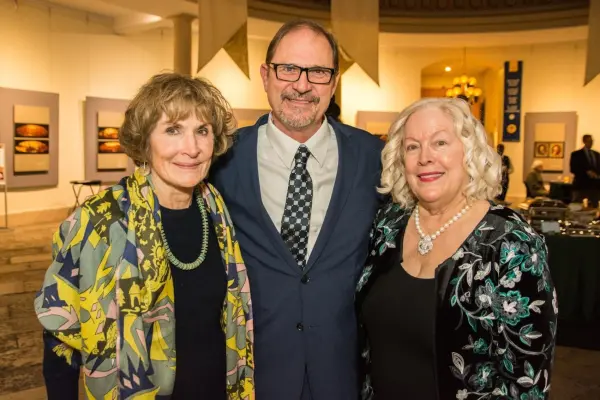
In 2008, Missouri Preservation, the statewide advocate for historic preservation of the built environment, received funding through the National Trust for Historic Preservation’s Partners in the Field program to create a state field officer. This person would drive around the state and respond to on-the-ground needs. Partners in the Field aimed to help preservation go beyond its often-cloistered networks and reach ordinary people, especially where historic preservationists were rarely found. Missouri Preservation hired Bill, who soon visited 114 different Missouri counties. Bill connected property owners and preservation enthusiasts to expert advice, helped elevate preservation battles through the statewide endangered building list, and educated local communities on using historic preservation tools – including historic rehabilitation tax credits – to their advantage.
One of Bill’s early projects around this work was the formation of the state’s first rural historic preservation initiative, Missouri Barn Alliance and Rural Network (MOBARN). Bill also used his experiences to create the book Missouri Roadsides: An Illustrated Tour of the Show-Me State (Reedy Press, 2015), which focused solely on the sometimes-vanishing built heritage of Missouri’s two-lane roads. The book was so popular that it sold out and received a second edition in 2020. Bill received a promotion in 2014, when he became Executive Director of Missouri Preservation. Bill continued his networking and advocacy, reshaping a younger, more active Board of Directors for the organization. He was a skilled fundraiser and a clear-voiced spokesperson for the movement across television, radio, podcasts, and speaking engagements.
In 2017, Bill decided to host the “Unhappy Hour” event in which the organization unveiled its annual most endangered buildings list. It took place at the National Building Arts Center (NBAC), the then-fledgling museum of architecture located in a former steel foundry in Sauget, Illinois. Bill’s imagination was on display as he did not care that the location was just a nudge across the state line. He also saw the event as a chance to draw more preservationists to see what was then a very under-construction project led by salvager Larry Giles. Bill even split the proceeds raised with NBAC.
One of my last engagements with Bill was when he facilitated my nomination of all Land Reutilization Authority (LRA)-owned buildings to the statewide most endangered buildings list in 2018. It was a symbolic call to action, and served as a way to get preservationists more concerned about north St. Louis in particular. Bill pushed me to nominate all LRA buildings to make the point as emphatic as possible, rather than picking a building or neighborhood with a concentration of LRA buildings. Clearly, LRA reform was as important as “saving” any single building owned by the agency.
Bill’s leadership left Missouri Preservation in a strong position, and he seemed to delight in working back in his hometown. I wish our paths had crossed more often in later years, but I know that he inspired hundreds, if not thousands, of Missourians to take the fate of their heritage – especially architecture – seriously. Missouri became a better place because of Bill Hart and his life’s work.


