
The LaBute New Theater Festival Offers Compelling New Work
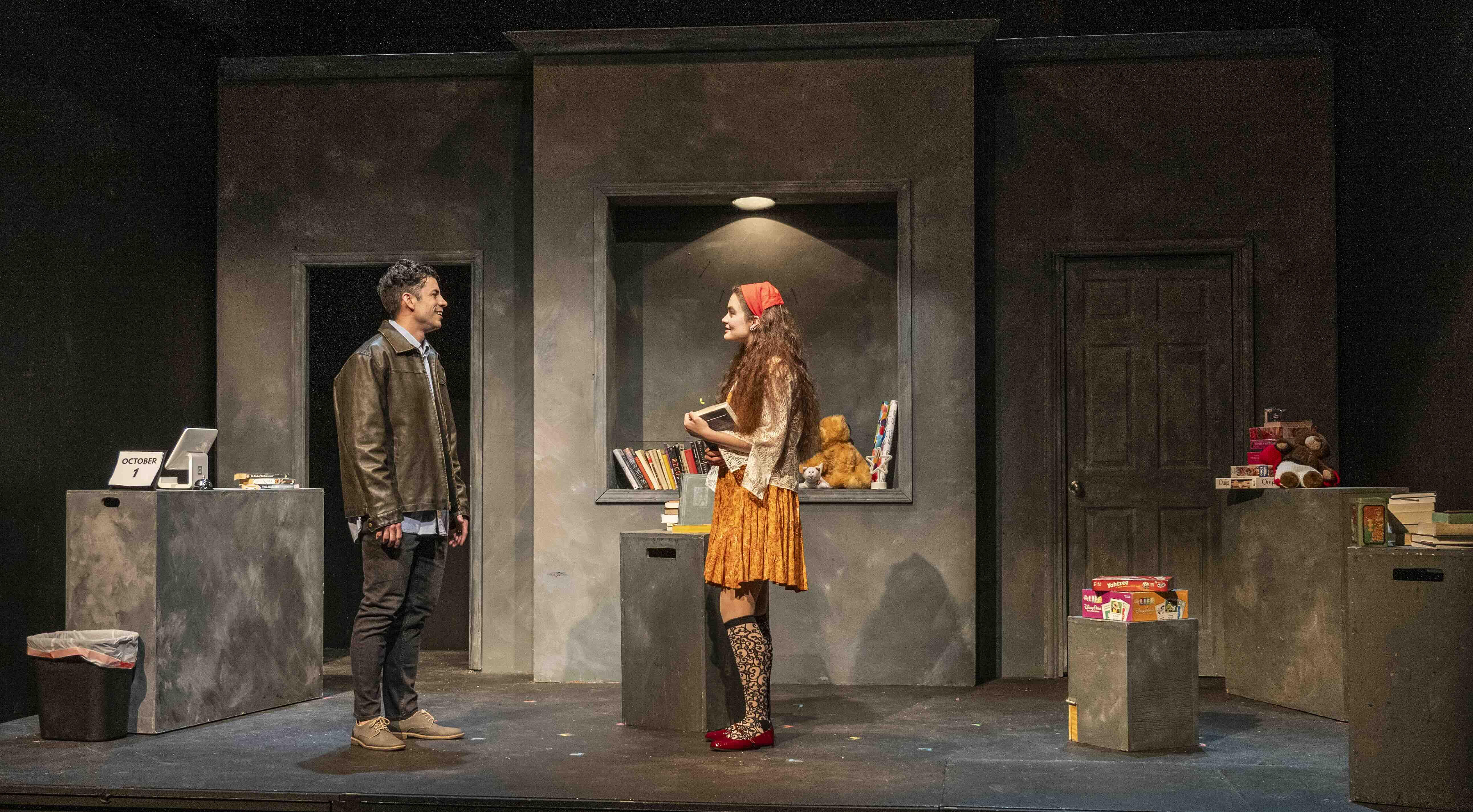
Fans of new plays and emerging theater may not be aware, but the St. Louis theater community has been championing their cause for years – you can, in fact, find premiere productions and commissioned original work in almost every company’s season. With its 11th Annual LaBute New Theater Festival, St. Louis Actors’ Studio reminds us that they are one of the originators of the new play revival in our region. This year’s edition features six varied and very interesting short plays, directed by Bryn McLaughlin and Avery Harrison with a talented young cast featuring: Maclean Blanner, Claire Coffey, Tyler Crandall, Xander Huber, Reagan Posey-Mank, and Sarah Wilkinson.
Teotwawki, by Aleks Merilo, directed by McLaughlin, presents a dystopian future in which groups are pitted against each other in an ongoing battle to gain goods and supplies needed to survive. A young woman broadcasts on short-wave radio, trying to get a response from anyone who may be close enough to pick up her signal. Initially coming across as lonely and frightened, we soon learn that her helplessness may be a ruse intended to lure others into a trap. Wilkinson gives a riveting performance, quickly changing emotion, tone, and intention to achieve her goal. I was left wanting to know the next chapter in this story.


Poor Me, by Tracy Carns, directed by McLaughlin, features Coffey and Huber as former roommates trying to negotiate the end of their lease and vacating the premises. Huber’s character and his girlfriend moved out months ago, but job struggles, and other challenges have kept Coffey in the apartment, unable to move. Privilege and fidelity both weigh heavy in this relatable, contemporary short and strong performances hold interest even when the play’s all-to-familiar plot twist is revealed.
Hungry Women, by Melissa Maney, directed by Harrison, is the most surprising and strikingly different play of the festival. A period piece of an imprecise era, the play features a group of women struggling to survive after all the men in their community die suddenly. The women try to maintain appearances and some semblance of normalcy by meeting for tea, but they are all famished with hunger and uncertainty. That is until Wilkinson’s character, who has taken to wearing her deceased husband’s clothes and swagger, proposes an outrageous but potentially liberating solution. You can feel where the story is heading, but the performances and lively script still manage to draw you in with eager anticipation. This one also left me hungry for more.
A Modest Proposal, by David MacGregor, directed by Harrison, is the most thematically daring and divisive script in the show, as well as the most complete story told in a single scene. In order to cut costs and increase profits, successful consultant Wilkinson proposes that the company implement a truly radical, if decidedly unoriginal, labor structure. Clever dialogue plays in the grey, ambiguous areas of language and syntax though the idea itself is plainly, and enthusiastically, named. There’s more than a hint of currency in the sub-context of this quick moving and biting script, and its potential may leave you a little unsettled upon reflection.
Carpool, by Dave Carley, directed by Harrison, is a quirky little piece that feels a bit more like a sketch than a fully developed story arc but is nonetheless highly entertaining. Blanner and Coffey are executives carpooling with the humorously awkward company intern Huber. They remark about the men they see in the turnip field day after day, noting their changing numbers and attitude with a sense of potential danger that they can’t quite fully articulate. The staging captures the motion of a long car ride and there’s a sense of mystery in the redundancy that surrounds the story, creating a vaguely unsettling feeling that remains curiously unresolved.
Scenes from a Bookstore, by Neil LaBute, directed by McLaughlin, deals with relationships and temptation in a series of micro scenes spanning the life of an affair, or at least a momentary dalliance with the possibility of full-blown, relationship-destroying affair written all over it. There’s palpable attraction and tension between the young woman and the man she runs into unexpectedly in a quaint little out-of-the-way bookstore, telegraphing the potential destruction of their current relationships, particularly when the man’s instinctively and accurately wary wife enters the picture. The story is familiar and the short play feels more like an outline for a deeper dive, which would most certainly reveal more interesting motivations and varied character action. This is a good start and, as with several of the short plays presented, I’m curious to know what happens next.
Presented on a flexible, easily reconfigured set designed by Patrick Huber, with costume and wig design by Abby Pastorello, lighting design by Huber, and props design by Emma Glose, the 11th Annual LaBute New Theater Festival keeps the staging simple and effective, allowing the audience to focus on the performances and storytelling. While not every short play may hit the mark for you, the St. Louis Actors’ Studio production is thoughtfully paced and well-executed, with at least one show that will grab your interest, ensuring there’s something for almost every audience member to enjoy.


