
New City Financial Report Card Gets Quiet Release

The city’s FY2024 Annual Comprehensive Financial Report (ACFR) has been released. The ACFR serves as a report to enable residents and decision-makers to see the outcome of the previous budget year, before making decisions about the next year’s budget. It also serves as a fiscal report card, allowing taxpayers to track the city’s debt levels and revenues. In most years, the ACFR is released in early winter. This has not been true for the past two years. The new ACFR appears to have been released without press outreach from the Comptroller’s office on May 31st. The city’s page dedicated to the most recently released ACFR is still outdated and features the previous report.
The document shows that the city closed out the previous fiscal year in a solid position, reversing last year’s deficit and ending the fiscal year with a positive net position for city operations. As usual, the report was prepared by accounting firm KPMG LLP, and was completed during the tenure of Comptroller Baringer’s predecessor Darlene Green. The report notes that the city’s revenue exceeded estimates, largely based on the strength of city earnings tax revenue, which was 6.3% higher than the budget estimate. Sales, use, and property tax revenues also exceeded the budget’s expectations. For example, the city initially estimated just over $50 million in use tax revenue, while the year’s final total was $62 million. This is likely the result of the continued popularity of online shopping. The report notes that the general fund ended the fiscal year with an operating surplus of $49.8 million.
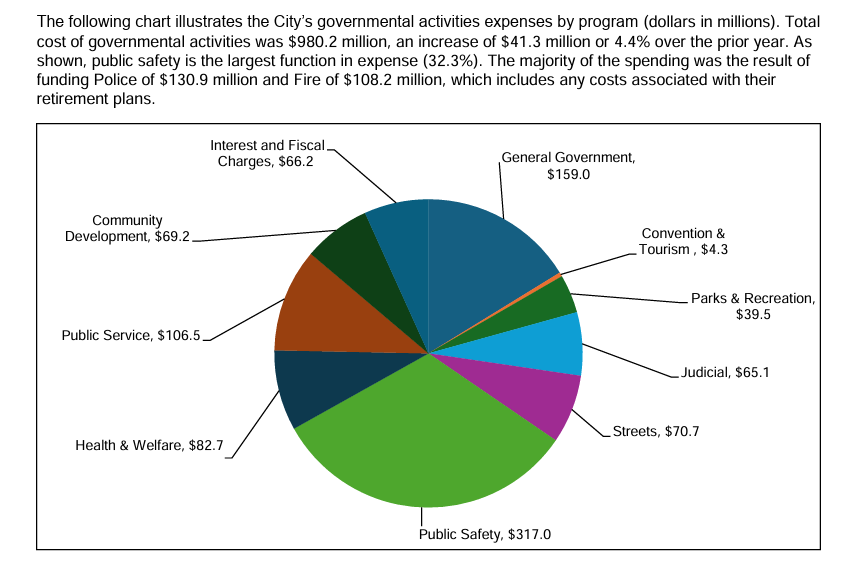
Not every revenue stream exceeded expectations. Motor vehicle and franchise taxes came in below budget estimates, while the largest miss in projected revenue came from the building division. With a slow real estate market still providing a drag on permitting, the department missed estimates by almost 34%. The streets department also shows that it missed revenue estimates by over 40%.
Elsewhere in the report, one hint as to why street conditions have deteriorated can be found among the expenditures data. It shows that the city budgeted $17.6 million in capital project fund expenditures for streets, while less than a third of that sum was expended. The ACFR shows that this typical for capital project fund expenditures in FY2024. The final revised budget called for $116.5 million in spending, while only $38 million was spent.
In general, the city’s long-term debt levels declined. Long-term obligations declined by 3.21%. Exceptions to the trend were for General Obligation bond debt and debt related to TIFs and other development incentives. The latter saw a very small increase, while the former is the only category that saw a significant increase.
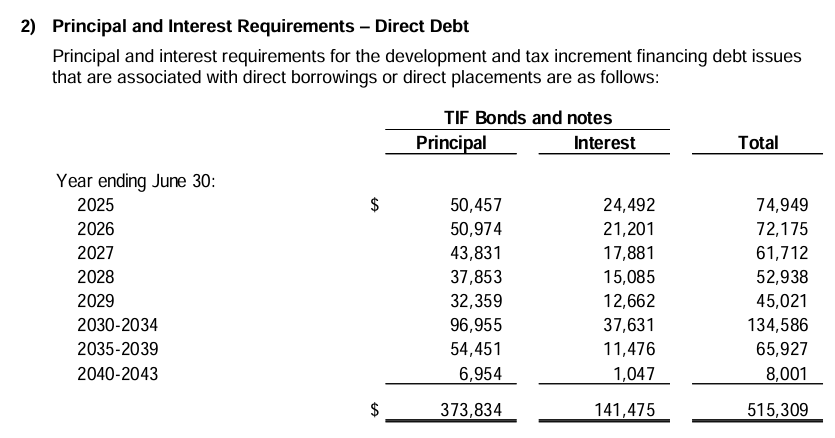
The report also estimates revenues lost to tax abatement and other tax incentives. The four primary types of residential tax abatement cost taxing districts $15.1 million, of which $3 million would have gone to the city’s coffers. The other lost revenue would have gone to the school district and other jurisdictions. Meanwhile, non-Enterprise Zone commercial property tax abatement programs cost local jurisdictions $16.3 million and the city budget $2.9 million, respectively. Incentives in the city’s federal Enterprise Zone cost jurisdictions an additional $1.4 million in revenue. For their part TIFs cost local jurisdictions $38.2 million in real estate, sales, and other tax revenues. The city’s portion of revenue lost to TIFs amounted to $19.4 million.
When looking at pension health, the city’s employee pensions do not have any major change in in their levels of funding. One point of concern is that the Employees Retirement System (ERS) pension appears to be continuing a long slide in health. The ERS is the city’s pension system that covers general employees, who aren’t covered by the police or firefighter pension systems. In 2015, the ERS pension’s net position as a percentage of total liability stood at 71%, while it has now declined to just over 52%.
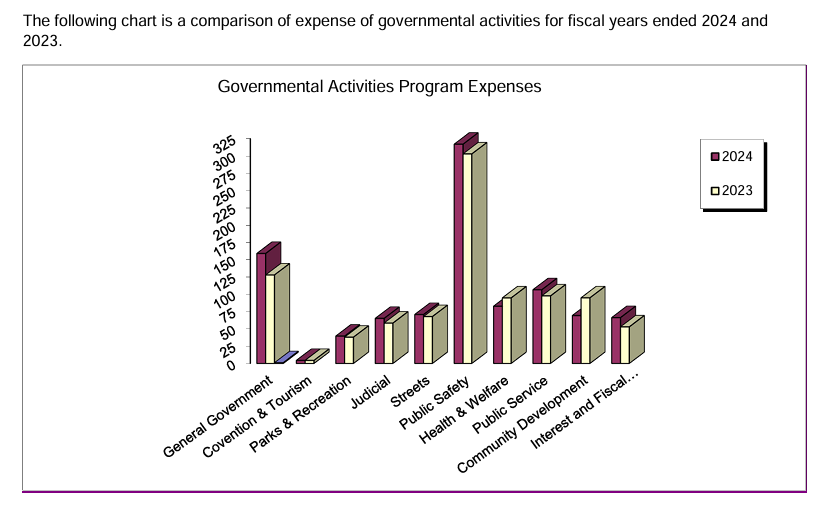
In total, the city’s overall net position shows that it ended FY2024 still flush with ARPA and Rams settlement money. As of this report, the city is showing a net position of $1.5 billion, which is three times the city’s pre-pandemic net position. In FY2021, the city’s net position stood at over $428 million.


