
Michael Allen Discusses Mayoral Campaign, Expectations For Spencer Administration Pt. 1/2
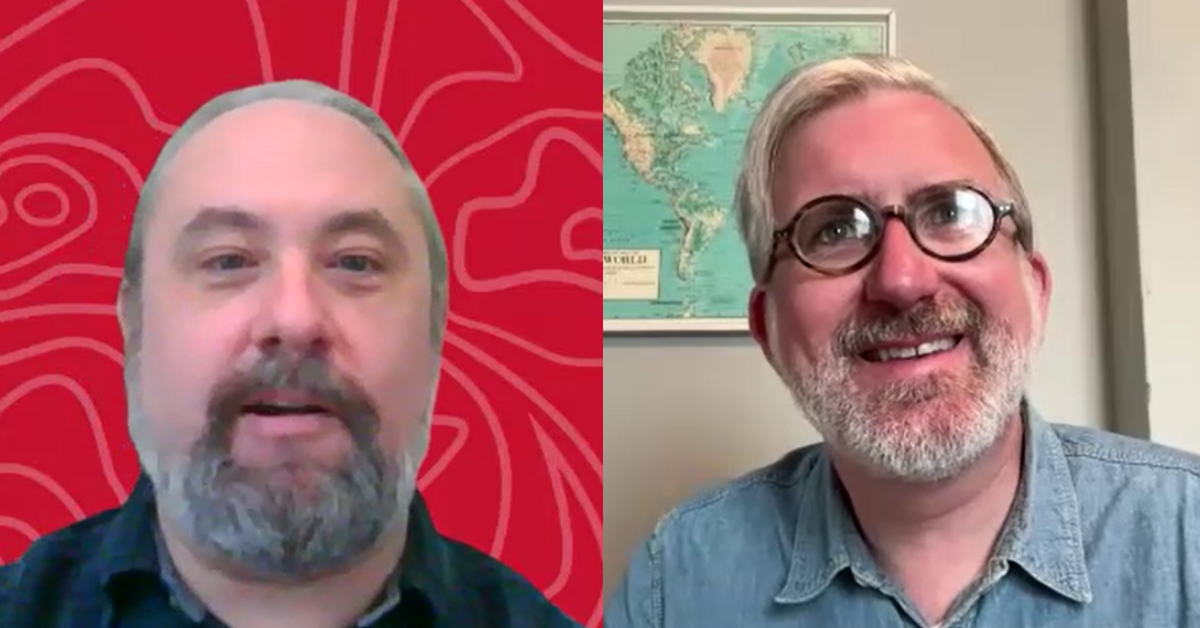
As editor of Mound City Messenger, I was lucky enough to have the opportunity to spend part of last Sunday morning debriefing the recent mayoral campaign with MCM contributor Michael Allen. Though he has moved to West Virginia, Michael is regularly in the St. Louis area and emceed the mayoral primary debate. The conversation is wide-ranging, touching on topics like the recent election results, expectations from the new administration, and how national political issues connect to our local political landscape. Due to the length, we are publishing it in two parts. Our conversation was edited for length and readability.
GB: It’s nice to see you again.
MA: Definitely. Good to continue to have a presence in my old city.
GB: Yeah, you were here quite a bit, it seemed like, during the mayoral campaign, or at least your social media was very engaged with it. And you did the thing at The Royale, right?
MA: I did. I came in for the debate back in February when it was four candidates ahead of the first primary, and I was back in April. Thankfully, that was after the election, but I certainly wasn’t in town to give anyone advice because nobody was going to take it.
GB: Yeah. Well, fair enough. We’re going to debrief the campaign, I guess, a little bit and talk about you know what you’re expecting to see from the Spencer administration, given initial hires and stuff like that. What did you think of the race? I mean, my overall biggest impression is that approval voting continues to not really impact the outcome, from the first to the second round, but it does give everybody an extra month to scream at each other. One of the sides also knows they’re probably going to lose, and so it can go off the charts. I think that was my biggest thing: Prop D continues to just make things crazier.
MA: Wow. I mean, I welcome nonpartisan elections, only because of how hard ballot access is for alternative parties, you know. But this cycle almost makes me miss party politics and a party ballot. Because we have this approval voting process, which leads to just voting based on personality, not on a platform or party. I’m not saying the St. Louis Democratic Central Committee ever lived up to this, but a party ideally has a platform, holds its candidates accountable to that platform, and its constituents hold the party and its candidates accountable. Instead, we just get people endlessly yelling about the pettiest little things. I don’t know… I’m trying to think of a polite word, but like the fired personnel director’s husband making endorsements at the last minute. It’s like none of this has really much to do with policy vision or even what voters want. Apparently, if you look online, voters just really want to scream on behalf of their chosen candidates.
GB: Yeah. Yeah. And that is at all levels of government.
MA: Yeah, we could be talking about anything right now, federal or state. Well, maybe not state because where are the hardcore Missouri Dems that are screaming for candidates? Don’t see those much.
GB: Yeah, but it is really sad that like the Democratic Party in Missouri has become such an afterthought to actual policies, etc. that we get out of Jefferson City. We’re now seeing all these things where the Republicans are going after these ballot initiatives and trying to roll them back. I think a lot of that’s just because they know they don’t have competition at the ballot, right? They’ll have their internal primary thing, but, if it’s a thing that plays to their base anyway. then they’re going to get off scot-free. They know that they don’t have real second party competition at the state level. So, we don’t get as much light and heat out of state that we do out of the local or the feds, I don’t think.
MA: Yeah, I think that might be one of the reasons for the intensity over the mayoral race. I guess people feel like they’re part of something important and impactful. They know that in the city the Democrats will win, so it’s not the uphill battle of state politics in Missouri. It’s like you know either Tishaura or Cara will win. I don’t think in the first round anyone thought Andrew Jones was going to win. I think Michael Butler really rallied in a very interesting and populist sort of fashion toward the end. I think he’s left his mark as a contender in four years, if he so chooses. So, that was my happy surprise was like, wow, there’s there actually is a third point on this scale and it’s not what you would expect. I mean, I’ve only met Michael recently… literally through that debate. Maybe I guess we’ve been online friends for a while, but, you know, I didn’t expect any of that given his kind of lackluster term as leader of the Missouri Democratic Party and the kind of just anonymity of the Recorder of Deeds office being just a quiet patronage machine. I didn’t expect him to be like the candidate who says there should be no tax abatements and TIFs.
GB: You know, I actually ran Mike’s first state rep campaign when I think he was like 24.
MA: Oh, wow.
GB: Yeah, like he was, at the time, I believe he was the youngest elected to the state house. So yeah, I’ve known Mike for a while. And yeah, he has just kind of been chilling out at the recorder of Deeds office. I think that that’s very fair to say. But yeah, I mean, Mike’s an extremely smart guy So, I would not be surprised if he takes another run at it in the future. Spencer won by a large margin, right? But one thing we’ve continue to see is that people want change in the city, right? I would not be surprised if there’s a competitive race again next time, despite Spencer’s fairly overwhelming win this year.
MA: Yeah, if she doesn’t fix the potholes, right? My big fear coming out of this is that we’ve just elected the next one term mayor, given the recent propensity. I know the city’s deep propensity to not reelect an African-American mayor. There’s a lot of reasons for that. And different candidates are different people. So, you know, I don’t know if you can categorically say that’s an impulse although I don’t know, St. Louis can be a pretty racist place.
GB: I do think you’ve got to point out, though, that Bosley was beaten by another African-American, right? So, it wasn’t like that there’s been a white person come in every single time. And, frankly, Harmon didn’t win reelection, first because he did not have the most popular term, but also because Bosley ran again, splitting the Black vote. It’s a bit more nuanced, than a black mayor can’t make it to his second term because St. Louis is too racist.
MA: I think that’s a good point. I do think the mayor has become a proxy for the anxiety about St. Louis’s future in a way that I wouldn’t envy anybody. I mean, I don’t envy Cara Spencer. I didn’t envy Tishaura Jones. There’s no way you can fix the economic circumstances of the region and the city from inside of the mayor’s office. You know, there are policies you can enact that would make people’s lives better and we can talk about that, but it’s like as St. Louis continues to kind of find itself nationally… where does it really fit in? Its population keeps dropping. Its statistics don’t look very good on a lot of measures. It’s easy just to throw out one mayor for the next, and it’s easy to run as the insurgent change candidate in a city with so many problems. There’s always going to be a lane for that kind of politicking. Spencer ran a very smart campaign Because, yeah, these are real problems that she hammered on… things that people experience materially instead of more abstract ideas.
GB: I think that that was really key. I don’t think Jones ever really got her footing, this time around. Spencer’s message was fairly simple, easy to understand, and she stuck to it the entire time. That is what you’re supposed to do, right? If you’re running a competent campaign, you should have a simple, easy to understand message that resonates with voters, and you should just hammer it all the way to the end. That’s what Spencer did, you know, and you know, I think there’s a number of other factors, obviously. We should talk about money. I was really surprised that there was less spending now, in the mayoral race, than there was back during Slay. I think that’s a testament to how powerful Slay was and how much he was able to collect in campaign donations. He was viewed as the only game in town by, you know, a lot of folks. So, for all of the talk of Bob Clark and his money We really are not seeing the kind of spending that we used to see on mayoral campaigns.
MA: I think that’s a definitely a good point. Does that mean it’s just seen as by the region’s corporate elite investor class like this is not an important investment… or is it a testament to some of the reforms that have happened and voters questioning how developers access these incentives. You were more involved in the Team TIF effort than I was. So, I don’t know if you think that’s like a positive legacy. It could just be the lack of discernible machine, right? Like Slay was like this hegemonic force. He had the Post-Dispatch in his side. So, if you went with Slay, you were going to get positive editorials and push there, thanks to Richard Callow and other people who were around Slay. He had all the corporate boardrooms and banks like on speed dial. Riding with Slay meant more than just getting your 25-year tax abatement. It meant this whole network would be rallying for you. That didn’t really exist with Jones, who doesn’t have that kind of an operation. Spencer doesn’t have that, either.
GB: And I think we would be remiss to not bring up Jeff Rainford, Mayor Slay’s strong arm guy for a long time who made those donations flow very efficiently.
MA: Oh, yeah. Rainford. For her part, Krewson just struggled with staffing. I mean, her chiefs of staff were not effective at getting her message out, at fundraising, or doing any of that. I think Jared Boyd was kind of a quiet force that wasn’t really the front for City Hall. I don’t own Nancy Hawes very well, so we’ll see.
GB: Neither do I. Yeah.
MA: If she can be the hammer for Spencer like Rainford was to Slay, but…
GB: Yeah, I mean, I will say that Linda Martinez, who I believe was Lyda’s development czar. I thought she was very effective in the meetings that I attended with her.
MA: Truly. She’s smart, very smart. Very talented.
GB: Definitely not kind of a Rainford-esque figure, though. Jared is an extremely intelligent guy… really on the wonk-ish end of things, I think. At least compared to any of our recent chiefs of staff for the mayor. Like, I can’t think of anybody during Slay that would really be a policy wonk type of person as chief of staff. It’s going to be interesting to see what happens with Spencer and the new hires. I don’t know this Nancy Hawes person. Guenther was not a big surprise as liaison to the board, right?
MA: It’s a smart play. It is interesting though… Spencer’s kind of relationship with this self-styled progressive block. You know, she came in kind of riding that wave, and then had a frostier relationship, even sometimes with people like Dan Guenther. This is a bridge to Megan Green, I think, and to the players there at the board.
GB: Yeah, but I mean, reading the article in today’s Post-Dispatch, it doesn’t sound like it’s going to do much good if Megan’s going to push for the city manager.
MA: That’s a whole kettle of fish. I didn’t even ask that at The Royale debate, but it still seems like kind of a just a real non sequitur idea. Like what is the pressing need at the moment? I mean, obviously charter reform is needed in a lot of ways, but this manager is stuck into the existing system. I mean, I guess it’s a way to claw back some power from the mayor’s office, but the mayor is a pretty weak mayor in our system, anyway. It’s like these progressives sometimes overthink. Like they apply the latest Harvard Kennedy School theories and ideas and concepts, but they don’t think them through, practically.
GB: Well, I just think it’s what the rich people want, so that’s what they’re pushing. I don’t think it’s really that complicated. I think they’re wealthy donors that are constantly looking at a way to “professionalized” things. That always means hiring some technocrat, right? So, it’s being pushed by these folks. The thing that always strikes me about this, is how these changes that promise less accountability almost always come from the younger, “progressive” bloc. The pushes for these technocratic changes… to me… they’re extremely cynical. Instead of actually trying to strengthen democratic institutions, structures and values, they play on the anger that people have at dysfunction at the government. Essentially, these are the folks that go out and talk about defending democracy the most, right? Then they cynically use people’s anger at dysfunction and corruption to weaken democracy and lessen it. I just see that pattern over and over again, so I wouldn’t be surprised if it at least goes to the ballot. Just looking at that article today, I think there’s close to a majority of the board quoted at least sounding fairly positive about it. So, this may be the first big Spencer/Green sort of conflict, right?
MA: I would hope that Spencer would veto this. I think without, again, real strategic reform of the government, it is another layer that really diverts potential responsiveness of public money going to meet the demands of the people of St. Louis. It’s like we’re going to erode anything that’s democratic. Perversely the things in city government that are actually more responsive to the public are often castigated as corrupt, as dysfunctional. Then they replaced with things that are 10 times more corrupt and dysfunctional. You know, the creation of SLDC in the 90s is in that vein. There’s no reason why the development arm couldn’t be directly inside of the government. Why is it this quasi-municipal corporation? Obviously, that’s to make it less responsive to voters and to the public. And even to the legislative branch, which is still supposed to be the voice of the people.
GB: One of the things I find kind of odd about a lot of these proposed changes, and it was the same thing with reduction of the Board of Aldermen… is that there’s always this messaging that, well, once we do this, we’re going to be able to get to the really important things At the end of the day, the aldermen for the most part approve traffic changes and tax abatements… where a new stop sign goes in… they don’t really do very important things all the time. And I don’t think that’s because there’s much in the way of bigger stuff that they’re not getting to. I think, for the most part, people need to remember that it’s a city council. It’s a very low level of government. You can’t expect your city council and your city government to fix everything. Especially within a state where the legislature is hostile to many of your values, right? And so I kind of going back to one of the things you were saying earlier, it’s like. I feel like there’s people that have mentally imbued the alders with powers that they don’t really have. And it’s because they otherwise feel powerless, since they can’t really get things done at the state or federal levels. They’ve mentally and emotionally wished powers on the alders that they just don’t have.
MA: It’s like they’re proxies. It’s like, oh, you know we can imagine a perfect progressive world by voting in these people to the St. Louis Board of Aldermen because We have no power in Jeff City. We have no power nationally. But if we elect a lot of people who supposedly share our values, often on things that they have no power over, like a resolution on a ceasefire in Gaza. I mean, don’t get me wrong. Good. That’s bare minimum but it doesn’t change what’s happening in Gaza. We need Congress to do that so it’s the same thing. I think also then you that builds up this sort of brand identity for these members of the Board of Aldermen where it’s like, wow, you’re only an alderman, but you spent all this time on marketing logos. They’re so active on social media. They jump in on Facebook comments, but most of what they do is decide if you should give part of an alley to a business that needs a loading dock. They’re not you’re not superheroes standing up for the rights of trans athletes and solving world peace, you know. That’s not happening at the Board of Aldermen. They can’t even agree on the big issues. They can’t even agree on how to spend the Rams money, for instance. When something big does come down, this kind of coalescence of supposed like harmonious political values doesn’t yield more efficient and purposeful debate and deliberation and decisions. Yet every tax abatement seems to be passing with only Sharon Tyus voting against them. What they actually do is so mismatch from what you see on their social media, where they are superheroes wearing capes. Then there’s watching them interact with the old school. I mean, it’s funny that to see the allegation of drunkenness with Vollmer and Green. The old game is still the game being played, which is like being an alderman builds social capital that is useful for your post-aldermanic career as a lobbyist or whatever. It’s like the old school and the new school play it the same way, but the new school claims that there’s some kind of virtue to it.
GB: It’s very, very odd to me, the sort of drama where many of the aldermen act like they are low level celebrities. I just find it bizarre because, again, you’re voting to give your contributors tax breaks and put in stop signs. That is what you spend your time doing. Somehow you get a full-time salary with a pension for that, right? It is amazing.
MA: A really good job now that it’s full time you know it’s in St. Louis, that’s $72,000.
GB: It is absolutely a great racket if you can get in on it.
Let’s pivot here. Your former employers at Washington University are sort of back in the news with uh with Trump. And what would you think if Wash U’s nonprofit status got taken away.
MA: Wow. Well, if you asked me last April, I’d be pretty happy. I don’t know. It’s really hard to root for Wash U or for Harvard. But this is a moment of left coalition soul searching. Like how can we leverage this fight to get what we want? Because, you know, these schools… Wash U still won’t apologize. You know, they issued a report to the trustees that justifies what they did and totally omits activities like the police brutality. The chair of the Board of Trustees, Andy Bursky, in comments I read after the report came out, was just still justifying what they did to Dr. Steve Tamari… like almost killing him, you know… as if he almost killed himself by supporting Palestine. Harvard dismantled a lot of Palestinian studies. They that were hunting down the chair of the Islamic Study Center, and they removed that person, just a week before they heroically take on Donald Trump. You’re still you’re still using your power to suppress and silence, even while you finally realize you’ve enabled a dictatorship and you want to draw the line here. I mean, don’t get me wrong. Tactically, yes. I don’t want Trump to dismantle this nonprofit status for every university. I mean, there are not many universities out there that that don’t do that. There’s places like Antioch and Bennington that are historically very supportive of protest movements. There are all kinds of important organizations that enjoy tax exempt benefits. So categorically, yeah, we should defend that, but it’s hard to be sympathetic to these institutions. If they get all their federal money back, they’re still going to censor pro-Palestinian voices on their campuses, right? They just want their federal money back, right? The real issue is their massive endowments. I think these endowments should pay some form of tax. It’s a form of capital accumulation, no different than Jeff Bezos and his wealth, right?
GB: Yeah, well, you know, the critique of a lot of these places, and I think that includes Wash U, is that they’re basically hedge funds with the schools attached to them. Wash U is a major property development company as well, you know. It does a lot of things. Running a school is just one of them.
MA: And that’s an area too. On the local level, this issue is maybe where the local government actually does have some powers, because there’s no reason why the Board of Aldermen couldn’t pass a bill saying that we’re going to tax their non-educational buildings. You know, all that housing they own in Skinker-DeBaliviere. University City could do the same thing, too.
GB: Yeah. All levels of government would basically benefit from the university losing its nonprofit status, because, you know, the county would then get sales taxes. Right now, all the equipment, etc. that Wash U buys, which is I’m sure quite a bit, is tax exempt. So St. Louis County would reap benefits from that.
MA: Right. I mean, it’s interesting. But there are a lot of people adjacent to the left, where I wouldn’t say they’re on the left… they’re still afraid of these kinds of discussions. Not to be all… I don’t know… Joseph Schumpeter-ian, but this is a moment of creative destruction. We should embrace this moment. We want things to change. So Trump’s forcing our hand. I don’t think we should ever look to a fascist dictatorship as the like linchpin of social change. But I don’t think we want, in the end, places like Harvard and Wash U to have these endowments that are structured basically as investment funds. Those are not used for educational purposes. They’re not used for creating free tuition to allow more… you know, poor local people to get into these elite institutions.
GB: You know, Wash U, I believe, does have a program for folks in Missouri that are low income to get in. I do not know how successful it is or how many people are actually able to use it. I mean, the other thing is that if your family doesn’t have a lot of money… even if Wash U gives you free tuition… the housing costs near Wash U are astronomical. You know, if you’re a young person, and your family doesn’t have a lot of mean, then the other option is living in a cheaper neighborhood further away. Even then, you have to maintain a car, which is a significant cost, right? There’s a lot of barriers beyond tuition prices that stop people from going. They have a program, I am just not sure how successful it is or how many students are enrolled through it.
MA: I think it was pretty successful after its inception, like in 2014, under chancellor Wrighton. At least until Wrighton was out, they had really increased local enrollments and had climbed from being the most restrictive, in terms of accepting people with financial aid, to fourth or fifth lowest. So they did make some measurable progress.
We definitely have to preserve and protect things against the Trump onslaught, but I feel like our duty also is to keep pushing for the world we actually want to bring into being.
Part two of this conversation will be published on Thursday.


