Breckenridge Hills And Woodson Terrace Police Attempt To Lynch Je’von Henderson; Rely On Courts To Finish Job
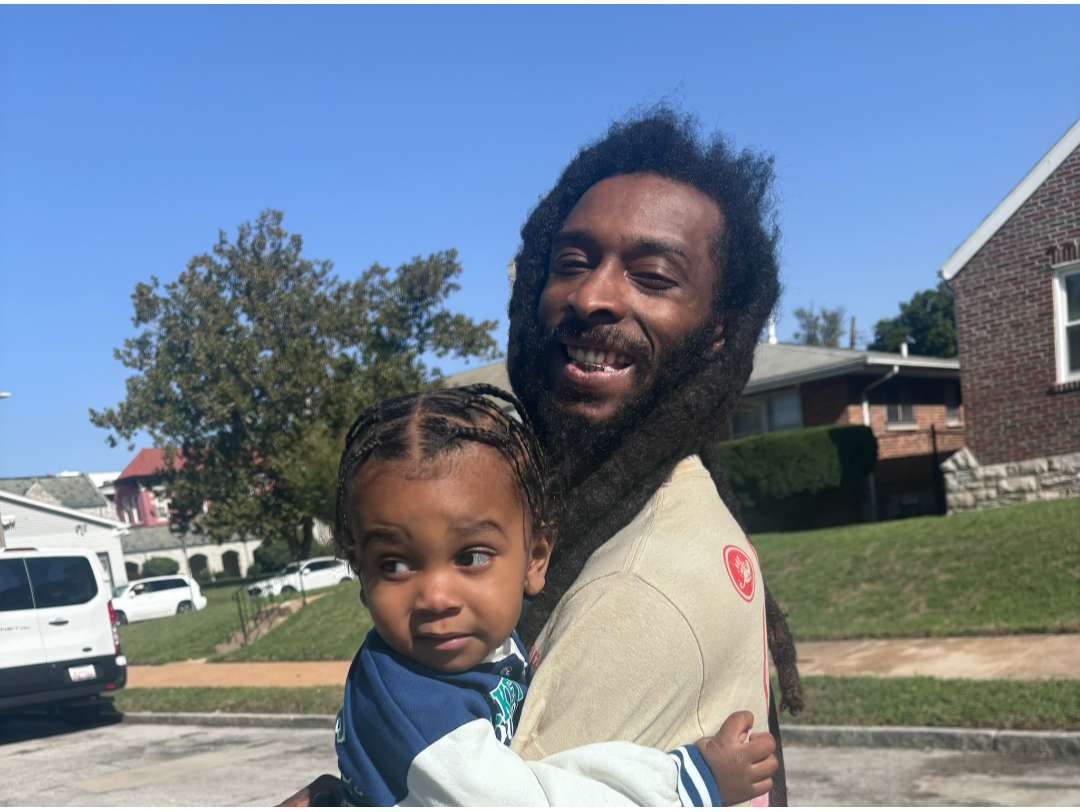
Snow and Je’von Henderson, photo courtesy of Avis Henderson
Note: No police testimony will be included in this article apart from the YouTube video released by the respective police departments. Local legacy media has once again done a fine job of stenography for them, as is their function. See my previous article on a separate incident for context.
Ms. Avis Henderson, mother of Je’von, received a phone call from her son at approximately 3:58 pm on October 30th of last year.
“This day, my phone rang at exactly 3:58. I don’t know why, [but] I turned around and I looked at the clock. It was Je’von. I said, “hello.” He said, “Mom, I just got flagged.” I said, “Put your cell phone on speaker phone.” That’s when I put my speaker phone on because I need to… I need the people in that kitchen [where she was working] to hear this conversation as well as me. I needed someone to hear this conversation. I looked at the clock. It didn’t turn four o’clock. By then I heard the officer talking. He, Je’von, said, “What are you stopping me for?” He [the officer] said improper placement and tinting of the windows. He asked for his license and insurance card. Je’von gave the officer his license. He said, “Ma, I’m not getting out this car.” I said, “Give him your insurance card.” He told the officer to hold on. “My insurance card is on my phone.” The video will show that part right there. He going back and forth. Now keep in mind, he got an iPhone. He don’t have to put me on hold to pull up his insurance card. The officer’s steady, trying to switch up his questions. I said, “Je’von, forget what he talking about. Just find your insurance card.” They kept going back and forth about an insurance card. All I heard next was, “You effing shot me” and the car took off. While the car took off, Je’von kept saying, “Ma, I love you. I love you, but they’re going to kill me.” I started screaming. I started screaming. I ran. I said, to somebody, “I got to go”.
It’s hard to imagine a more terrifying phone call one could receive from their kid. Ms. Avis felt like she was on track to lose another child, having already lost a daughter, Meanna “Me-Me” Draper, and with one son permanently hospitalized.
“They couldn’t understand how I got up on a crime scene like that because I came the back way. I was on the phone with my son. I knew exactly which way y’all went. So when I got up there, they did everything they could to stop [me]. I said, “No, I was on the phone. What did you do?” So I jumped back in the car that brought me up there. I got down to the hospital, and that’s when the detectives came. When nobody answered my question if he was dead or alive. No one. Because when I ran up on that car, I said, “God, there’s no way a body came out this car alive.” See, the courts have not, have failed to mention yet that he not only has one lung and a piece of a stomach, but they shot up his intestines too. So he got a bag on the side of him. It’d be well over a year before his intestines heal. I said, Je’von, I’m so sorry. So we got to the hospital once again. My story would never change. I was on the phone with my kid. I heard the whole conversation. That gun went off before Je’von took off. He took off after that gun went off. Driving. This is what I don’t understand. If you got a cell phone in one hand, because he don’t have no plugs in his ear, you can see on the video, he got his cell phone in his hand because he talking to me, it’s not a gun, it’s a cell phone. So how could he shoot at you if he’s on a cell phone with me driving with the other hand? And I don’t know where the third hand came from. All you heard was boom, boom, boom, boom, boom. Je’von said, “Ma, I love you,” and that was it. And I screamed, “they killed him!” But what bothered me the most, is when they stood in back of their cars and reloaded their guns again. They had the audacity to show that part on the video. They was proud and mighty.”
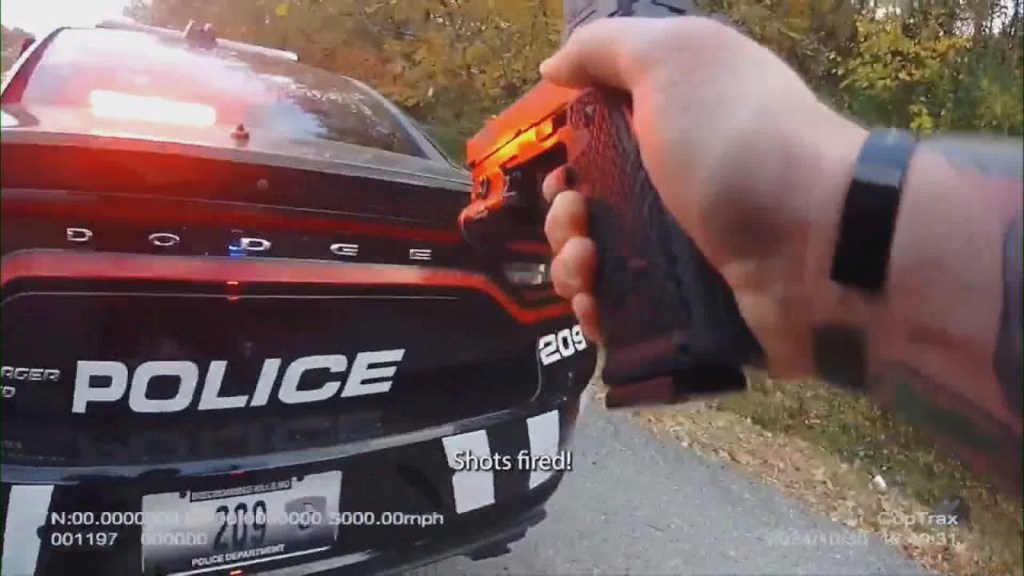
The video in question:
After viewing this video, released by the offending police departments, the inquisitive-minded viewer would have several questions. The most salient being, of course, where is the evidence of Je’von having fired a weapon?
This writer was present at the December 19 bond hearing at the Clayton Justice center with Judge Nicole Zellweiger, in which the prosecution alleged that Je’von fired two shots at police from a 9mm pistol, the second of which, they claim, was a .40 caliber round which “stovepiped” (jammed) the barrel of the weapon. This was the only statement during the hearing that caused a visible, incredulous, but restrained, reaction from Mr. Henderson. No gunpowder residue or other evidence of having fired a weapon was found on Je’von after the incident, and the video has no audio evidence of two reports being discharged before the officers released a hail of gunfire on Je’von’s vehicle. The second question that comes to mind is, was there a previous relationship between the defendant and the officers?
“The two officers and the other officer that stopped him know Je’von. I always told Je’von, you had too many encounters with this officer. He was moving out those apartments where everything occurred [Je’von discovered the body of his sister in this apartment] to start his life over. He wanted a fresh start. How these two officers from Woodson Terrace got involved in Je’von’s life, [is] because Je’von found his sister. Now you got to keep this in mind. Je’von and his sister, [they were] only two years apart, but they was best friends. When she moved out and got her place, you might as well say it was Je’von’s place too. He was always coming home to check on me, but he always made sure he stayed with her. I catch myself going back to look at the videos at the clubs they was going to and wishing that them days could happen all over. So Je’von was moving out those apartments. It was too much for him,” said Avis Henderson.
An antagonistic relationship had been established. When asked if there had been any trouble with the police before his sister’s passing, Ms. Avis responded: “No, no, he never, no, never got into trouble. Um, like I said, Je’von was a jokester. He was always trying to bring people together.”
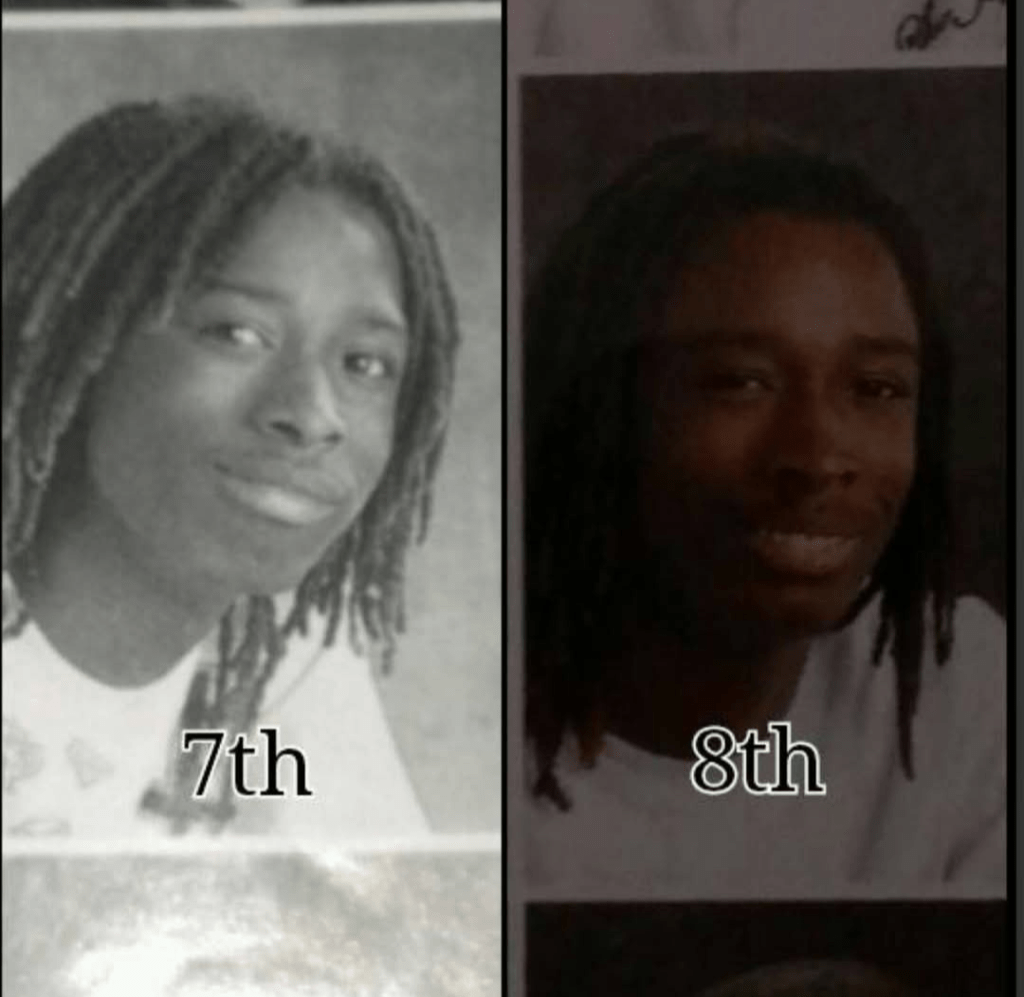
Je’von spent his childhood in the small town of Kinloch, Missouri, near Ferguson, a town with a vibrant black history that the state has never ceased punishing it for. “We lived in a real rough neighborhood, but he was different from the other kids. He always kept up to his self. He was always a good student in school. He was unique. What made him different from every other kid and like that, out there was like, instead of getting angry, from where we came from, he took it and turned it into something positive. He started writing poems. He started writing about the things that was going on in the neighborhood, writing about the struggles that I had, and writing about how someday that he gonna make it better for all of us,” his mother says.
“Je’von was the type to make the crowd laugh. He wasn’t about drama. He would come up with the weirdest jokes. And everybody was just starting laughing like, they my new buddies. He was just a joker. He loved jokes. He tried everything in sports, but he was one of those kids that was goofy, you know, that was clumsy. So he found his, his liking in drawing and writing. He can look at you and draw you. He can draw you like a cartoon character. I never, out of all of my children, I have to be honest with you – Je’von was the one I always felt like at a young age, it was his job, he already knew his place on this earth, to take care of the family. I never understood how a young kid could have an adult mind to think like that.”
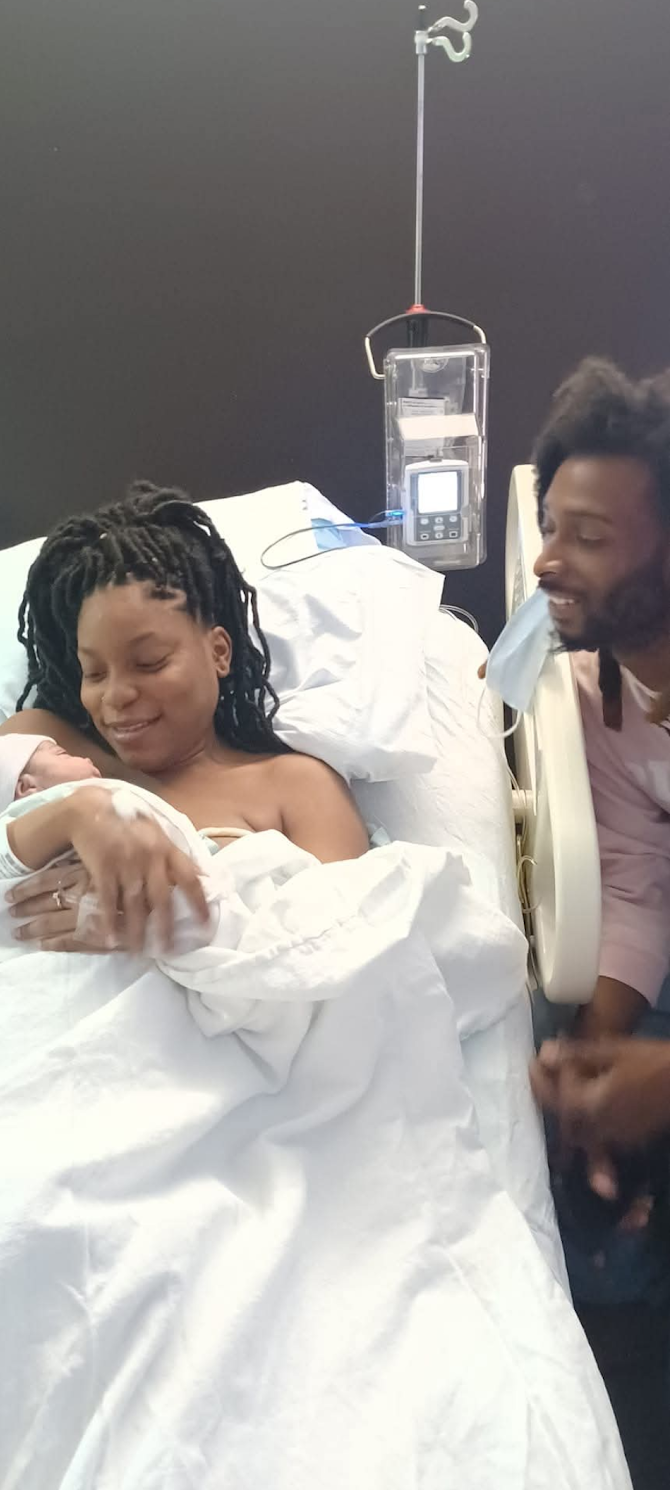
“Je’von has always wanted to be a dad. Out of all of my children, he was the last one to have a kid. He never thought that he was able. So what he did, he played dad to his nieces and nephews. He shopped for them. He went and picked them up. He taught my daughter’s son. Je’von is really, I promise to God, a good kid. Has he ever made mistakes in his life? Yes, he did. Je’von had to not only be a brother, an uncle, a son, but most of all, a father. He took on positions that no teenager should have. And I know that I put a lot on him. He started working at a young age, at 16. Now keep in mind, we lived in Overland, Missouri. Je’von walked from Overland to New City and was at work on time every day. He walked through the rain, snow, and sleet. When my husband died, I struggled. My oldest son had already moved out with his own family. They left me with four kids in the house to support. Je’von went to school. After school, he changed clothes. I didn’t even have change to give him for bus fare, but it didn’t bother him. As long as he had his music, headphones, he kissed me on that left cheek and said, Mom, I’ll call you when I get to work. And this kid had a long walk and he did it.”
So, contrary to the typical police-painted narrative of their victims being irredeemable criminals, we see that Je’von was a gentle, family-oriented man for his entire life. So family-oriented, in fact, that having returned home late one night to find his sister dead on their bathroom floor, understandably affected him deeply. He tried continually to establish counseling, but the pre-existing condition of being systemically impoverished and Black in America prevented him from being able to do so, and opened the door to the all-too-common police harassment that comes with it.
“He never was the type to talk about his pain because he felt like, “if I’m reaching out to doctors, no, they’re turning me away because I can’t afford to go. Don’t nobody care. So I was the only ear he had. So it got to the point where I couldn’t handle it. So one day the police came. They wind up suggesting that he go get help. Je’von refused. They forced. He winds up in a psych ward. He talked to them for a minute, but the thing about it, when they ran him to find out he had no insurance, just as quick as they found that out, just as quick as they released him. Don’t nobody care. So I was the only ear he had. Instead of them [the police] helping us to resolve it, they was quick to lock him up. So, Je’von, they called him by his name, and instead of being professional about it, they disrespect him. But then they call another officer and you know how the story goes.”
We all know how the story goes.
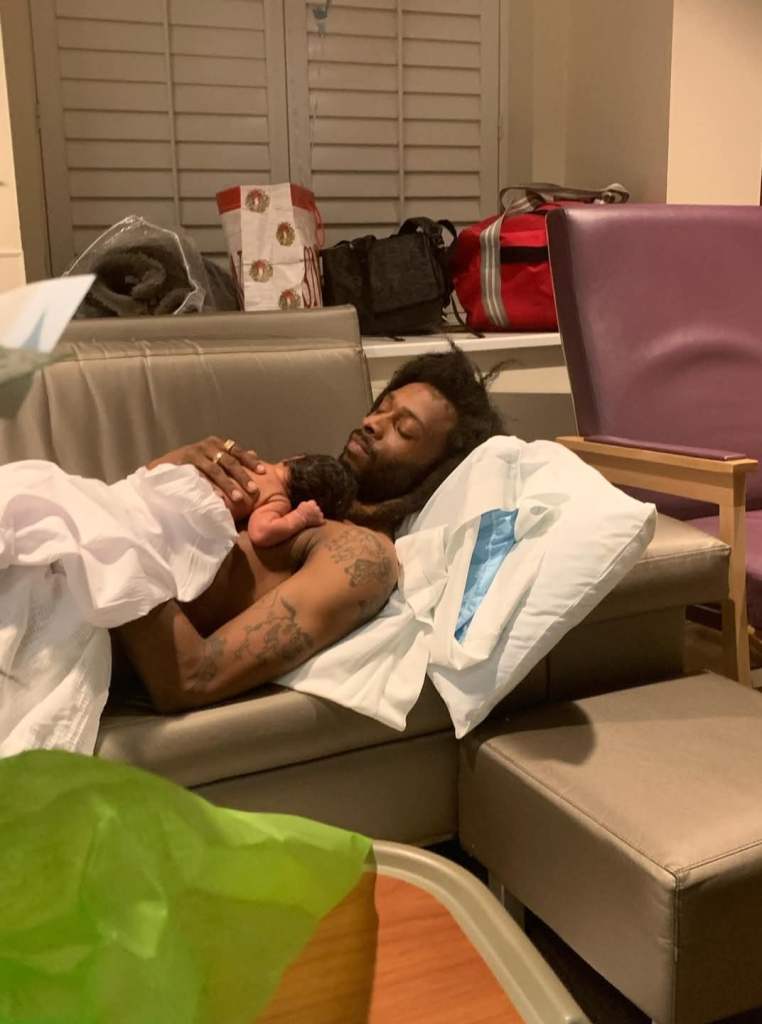
Je’von was no career criminal, no drug dealer, no abuser, no con artist. He is a gentle man, a doting father, caring boyfriend, and attentive son. All of this despite the crushing weight of being born into the American ghetto system that exists to squeeze any labor use-value from its systemically created, racially delineated sub-strata of working class people. A class strata that exists as a warning to all of us more privileged citizens as if to say, “you don’t want to end up like THEM, do you?” A subclass that has been shown again and again to be the most prone to end up between the crushing, recurved gears of the “justice” system, where even the slightest infraction condemns one to continual violent police interactions at best, a lifetime of incarceration, or at worst, lynching by police, with little to no repercussions for offending officers.
Given the context of his life and his past encounters with these same officers, it’s easy to comprehend that he would fear for his safety when confronted by them in any situation. Verbatim, from the interview:
Avis Henderson: When you look at the video, Je’von kept telling him, no, I won’t get out. And the reason for that, the reason that he called me, because where they stopped him coming from his apartments, that’s a side thing that’s coming off of Natural Bridge. There’s no cameras right there at all in that area. And Je’von told him, uh-uh, because he never forgot what Woodson Terrace told him. “Oh, we gonna get you.” And he always thought, like, what does that mean? I always wondered, what do you mean by “I’m going to get you?” Because you disrespected him. He called you out his name.
MCM: So this was a threat directly from the officers that he had gotten?
Avis Henderson: Yes.
MCM: The same officer? [Sergeant Sullivan, as self -identified in the body cam footage]
Avis Henderson: The same officer. When we got down to the hospital, I said, who shot him? Woodson Terrace looked at me because the other officer from Breckenridge was upstairs. That’s what I didn’t understand. Why are you upstairs with a victim that you shot? And you guys are turning your body cams off. So I asked the question, and the nurse was right there, Je’von’s dad was right there, and so was the detective. I said, who shot him? He said, I did. And then he looked at me like with this crazy smirk, like, “you should be happy.” These are his words. It bothered me so bad while I grabbed my purse and got an ink pen and a piece of paper to make sure I wouldn’t forget. And I wrote it down. And to this day, his words stick with me. He looked at me in my face and said, “This was bound to happen. You should be happy. You should be happy. Now he can probably get some help.” And I looked at the officer like, “what do you mean this was bound to happen? You intentionally did this to my kid.” I said, “What did you do?” And he looked at me and walked away. And all I know, we was told to get off the lot from the hospital. We was escorted. And we didn’t understand that. We was getting put in detective cars. We was headed off to Clayton. They took our civil rights for almost three hours.
Direct threats from officers, followed by attempted murder, followed by bragging about it to the victim’s family members. This is the system that we are expected to believe will give the accused a “fair and speedy” trial.
Regarding Je’von’s treatment after his arrest, having been hit by police bullets seven times:
MCM: He’s still injured and they’re keeping him on, where are they keeping him?
Avis Henderson: He’s on the sixth floor. Now they moved him.
MCM: Sixth floor where? At what facility?
Avis Henderson: In St. Louis County.
MCM: The jail?
Avis Henderson: The floor is, yes, it’s so bad. The first night they moved him, when Je’von called, because he called on his tablet. It was a fight on the floor. He steady asking the man, can you please open this gate? And the guy was telling him, shut the hell up, Henderson. I said, Je’von, just be quiet. Please be quiet. Just be quiet. Once he got in the cell, he called back. He said, Ma, I have no mattress and no cover. So I said, call the boy down there, but act like you’re not on the phone. He did. He asked the boy, I don’t have no cover or mattress in there. She said to him, well, if they ain’t one in there, it didn’t come with one. Figure it out. So that means for two days he slept with his hands inside of his clothes and his back against the wall until I called the lawyer. I said something got to give because they gonna kill my kid in there. So Je’von just got a bed and a cover right after Christmas.
MCM: I’m glad they at least provided him with that.
Avis Henderson: Now you want to know what’s worse? See Je’von don’t know nothing about jail. He went to go wash his clothes because he’s still bleeding in them clothes, because the nurse barely come and take care of him. Not knowing that if you leave your stuff in there, they will take it. And that’s what happened. They stole everything. So he had to take a towel and wrap it around him and go back to the cell because he said, I can’t fight these guys in here. You got bloods fighting crips. You got drug dealers, you got murderers. My son is scared. And I’m not gonna lie about it.
This is what serves as justice in this country, in our state, in our city. Just like the massive, indescribable violence funded and enacted by our government worldwide, here in our state, in our city: physical, economic, and legislative violence is being enacted against our brothers and sisters in our names by unelected state representatives in the name of “peacekeeping.” It is a common folly among the non-POC population to apply some ideological “otherness” to black and brown people caught in the jaws of the penal colony system of the American carceral state. Make no mistake, fellow “white” people: Je’von Henderson is you. “But for the grace of god,” as the old cliche goes. We should all understand by now that the myth of race is exactly that: a fabrication, a tissue paper delineation that separates “us” from “them.” A legislative justification for oppression and state violence of the highest order against people who share our same bread and blood, our same joy and sadness, have the same thoughtful inner lives and experiences. When that tissue paper breaks, when the claws of the hand of the carceral state push through that non-material border, YOU are on the other side of it. His fight will become your fight. It is now, and it will be in the future. This writer encourages you to follow the news of this attempted lynching, and to provide emotional and physical support for the Henderson family as they proceed through the legal gauntlet that the state has thrown at them.
A pre-trial conference has been scheduled for Jan 9, RM. 485 NORTH, DIV 11, 105 S. Central Ave, Clayton MO.
“Sometimes, you will never know the true value of a moment until it becomes a memory” -Je’von Henderson
You can donate to Je’von’s legal defense here,
To support his mother CashApp: $23Avis
To support his son and son’s mother CashApp: $miacalhoun26.