
Tax Subsidies Are a Mistake We Can’t Seem to Learn From
By David Stokes
A bad idea doesn’t get better with age. Bad ideas aren’t wine, jeans, or your high school memories. The tax subsidies for the Post-Dispatch building redevelopment in downtown St. Louis were a bad idea back in 2019 when the development was proposed, and they are a bad idea now.
Using tax subsidies for economic development rarely benefits the public. Instead, it lowers the risk and increases the returns for private investors. Under a capitalist system, the relationship between risk and reward for investors can be a wonderful thing, but in recent decades, the government has somehow decided the public should get involved in private business dealings through tax subsidies and incentives. Taxpayers in St. Louis were left holding the bag for the failed St. Louis Marketplace tax increment financing (TIF) plan, the tax subsidy package for the Renaissance Hotel that was literally sold on the courthouse steps, and numerous other failed, subsidized enterprises. Most economic development schemes are like an expensive game of musical chairs in which the taxpayer is always the one with nowhere to sit.
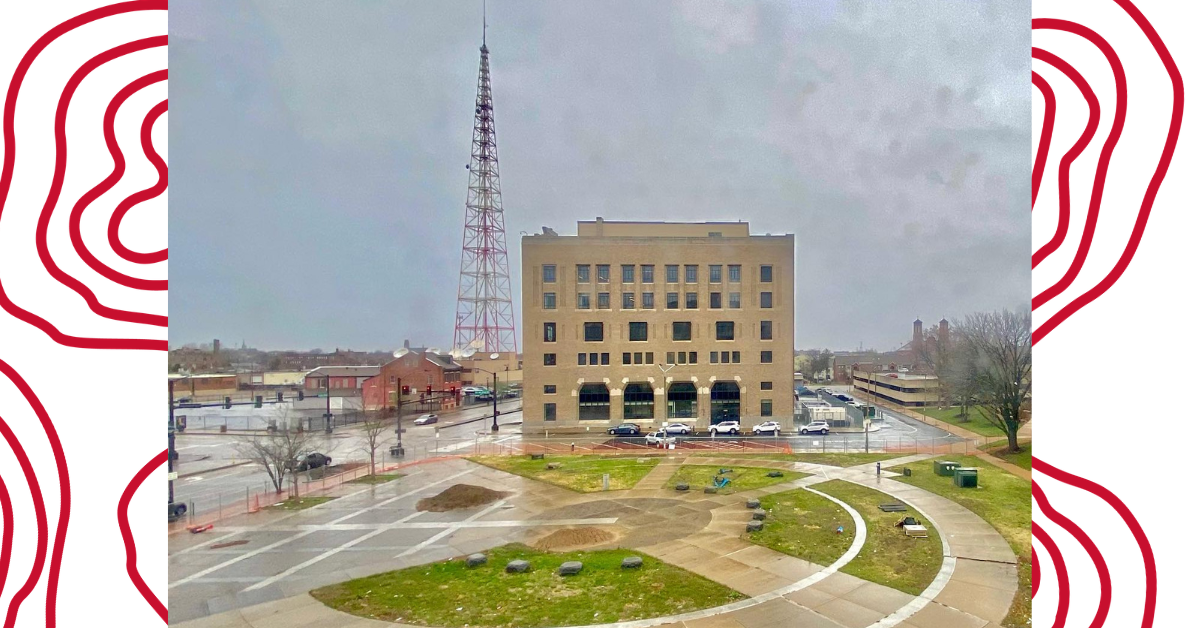
The tax subsidy package for the old Post-Dispatch building at 900 N. Tucker on the northern edge of downtown St. Louis was approved by the Board of Aldermen in 2019. It primarily consisted of a $12 million TIF package. The summary included with the legislation featured the normal jargon required for such bills, and it included a statement that the development “will have approximately 1,250 jobs with an average salary of $76,500.”
How has that jobs promise worked out? Well, OK at first. The most recent annual TIF report (2024) filed by the developers with the state auditor repeated the same number of 1,250 estimated jobs created. It also listed 830 jobs created so far. There are two ways to look at that number, and both are accurate. The first is that, once again, developers exaggerated their job creation in order to get the subsidies they wanted. That often happens, and it may have happened here. The second is that getting to two-thirds of the promised jobs is actually better than many other subsidized developments, and maybe the developers deserve some credit. Not enough credit to justify all the subsidies in the first place, but, you know, some.
Except that recent actions indicate that the development is highly unlikely to ever get to 1,250, and it may quickly move in the other direction. The largest tenant in the redevelopment at 900 N. Tucker is Block, formerly known as Square. As you may have read, Block recently announced that it was laying off 4,000 people companywide, almost half of its total workforce. How many of those layoffs will be in St. Louis in unknown at this time, but the company previously announced much smaller layoffs in Missouri in both 2024 and 2025, so it seems unlikely that its St. Louis office will be unscathed.
I am not judging the company about the layoffs. If artificial intelligence is making some employees obsolete (the company’s stated reason for the move) then those people should be let go so they can do something else with their lives. That’s the creative destruction of capitalism. But this situation is a perfect example of why cities and counties should not give subsidies to private companies based on promises of employment, growth, renewal, or whatever the vibe of the moment is.
Numerous economic studies have disproved the belief that tax subsidies lead to economic growth. If tax subsidies worked, the City of St. Louis would already be awash in riches. Tax incentives have been piled on top of tax subsidies under every acronym under the sun for decades. None of it has worked. The city should focus on keeping tax rates level and low for everyone, not high for most and low (because of special exemptions) for the politically connected. A reliance on subsidies rewards cronyism, over-promising, and political grandstanding, but it doesn’t lead to real economic success. Just ask the Block employees who may be laid off soon.

David Stokes is director of municipal policy at the Show-Me Institute. He is a St. Louis native and a graduate of Saint Louis University High School and Fairfield (Conn.) University. He spent six years as a political aide at the St. Louis County Council before joining the Show-Me Institute in 2007, where he worked as a policy analyst from 2007 to 2016. From 2016 through 2020, he was Executive Director of Great Rivers Habitat Alliance, where he led efforts to oppose harmful floodplain developments done with abusive tax subsidies. Stokes rejoined the Institute in early 2021 as the Director of Municipal Policy. He lives in University City with his wife and their three children.


