
UN BALLO IN MASCHERA Entertains with Layered Melodies and Tragic Love
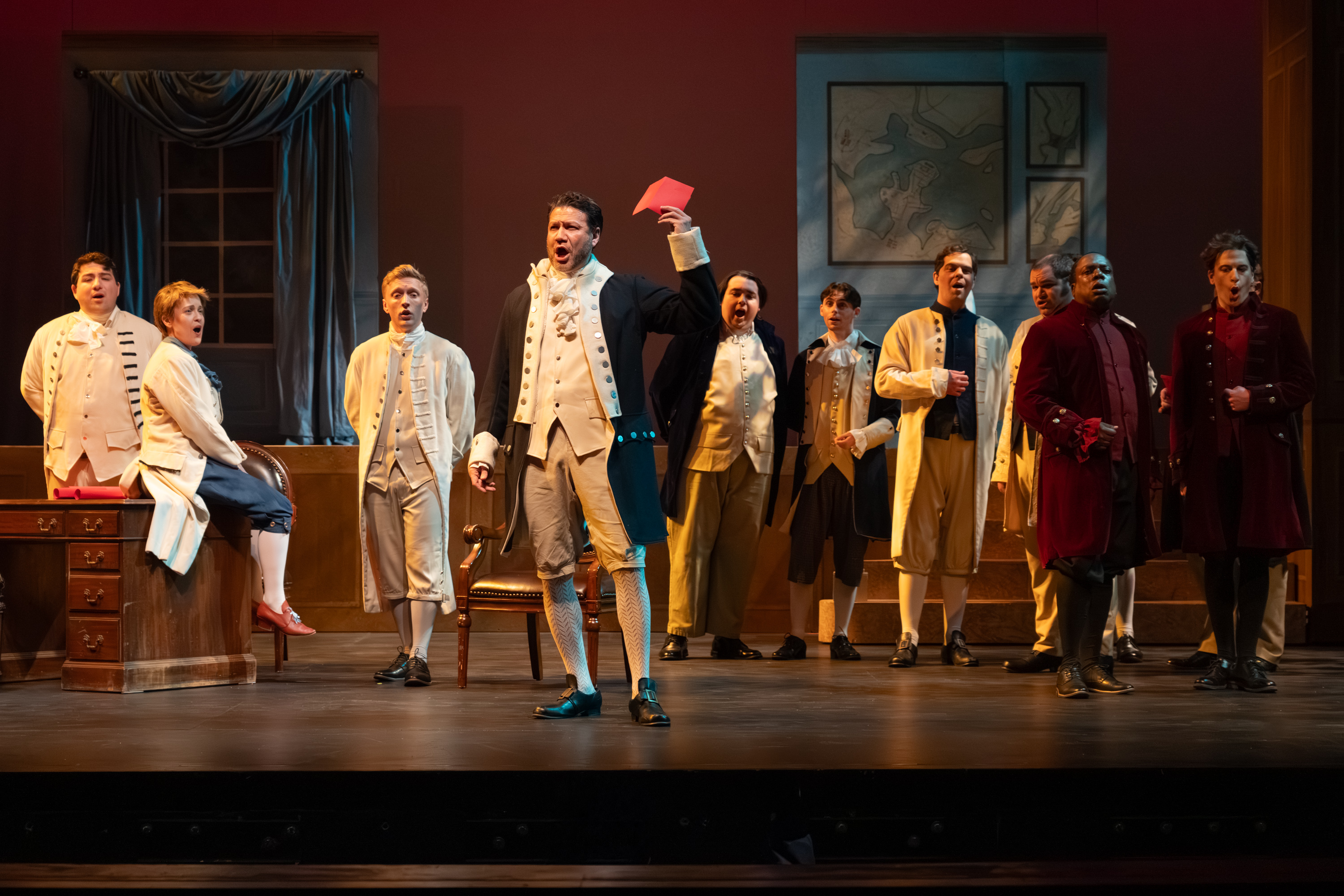
For the second production of its season, Winter Opera St. Louis presents Un Ballo In Maschera (A Masked Ball), a lesser known, less frequently produced opera by Guiseppe Verdi. With pleasant melodies, gorgeously layered harmonic sections, and several showcase arias, the opera is easy to follow and enjoyable to listen to, even if it lacks recognizable melodies. Exceptional performances and a lilting, rhythmic score move the production through its three acts with a story centered on betrayal and deception.
Set during the waning days of the Revolutionary War, Count Riccardo, the governor of Boston, is admired for his level-headed demeanor, progressive views, and generosity, as well as his ability to maintain order in a time of uncertainty. Enlightened and sympathetic to the revolution, there are factions of loyalists plotting against him, but he dismisses the concerns voiced by his friends. A single man, Riccardo has a tragic secret – he is in love with Amelia, the wife of his best friend and closest confidant, Renato. A visit to Ulrica, a fortune teller renowned for her accuracy and close association with demons, reveals Amelia’s feelings and foretells his own death. Riccardo follows Amelia as she searches for the herb that will erase her desires and the two confess their feelings. Riccardo promises Amelia he will not dishonor her or her husband just before Renato arrives to warn the Count that traitors are in hot pursuit. At Renato’s urging, Riccardo flees, but Renato discovers Amelia and, fearing the worst, joins the plot to kill Riccardo. The plot comes to violent light at the Count’s masked ball as Riccardo’s enemies and underlying integrity are both revealed.

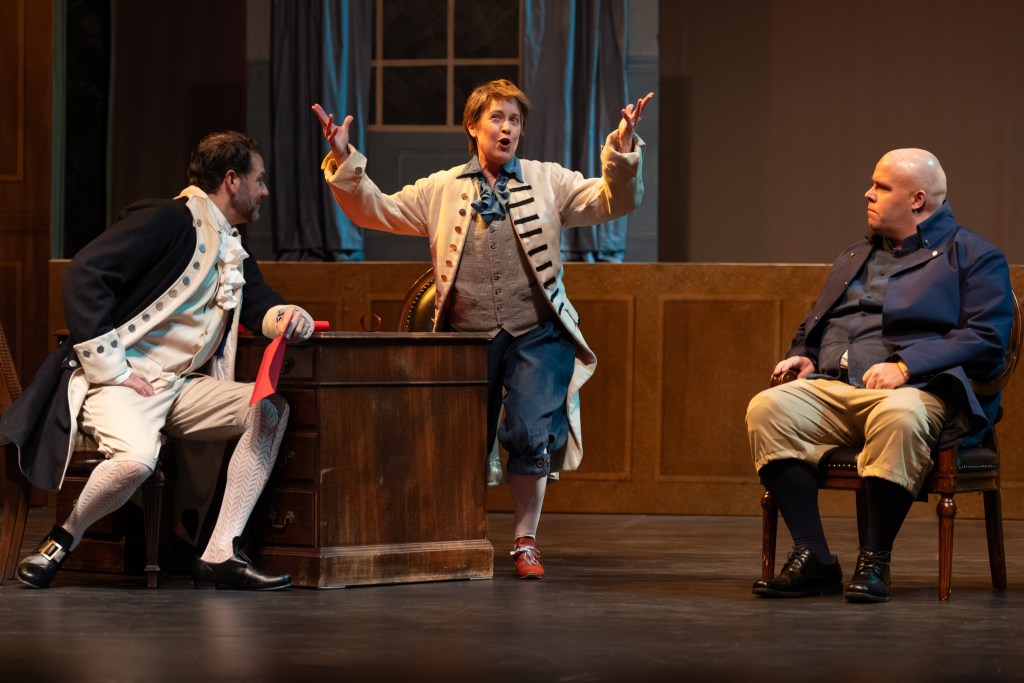
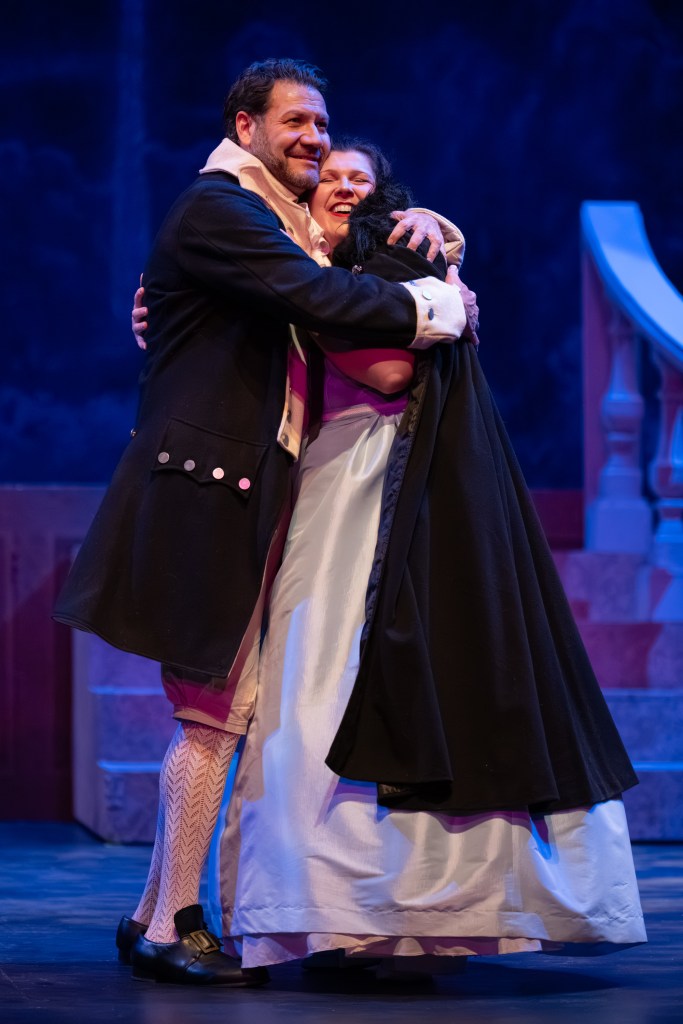
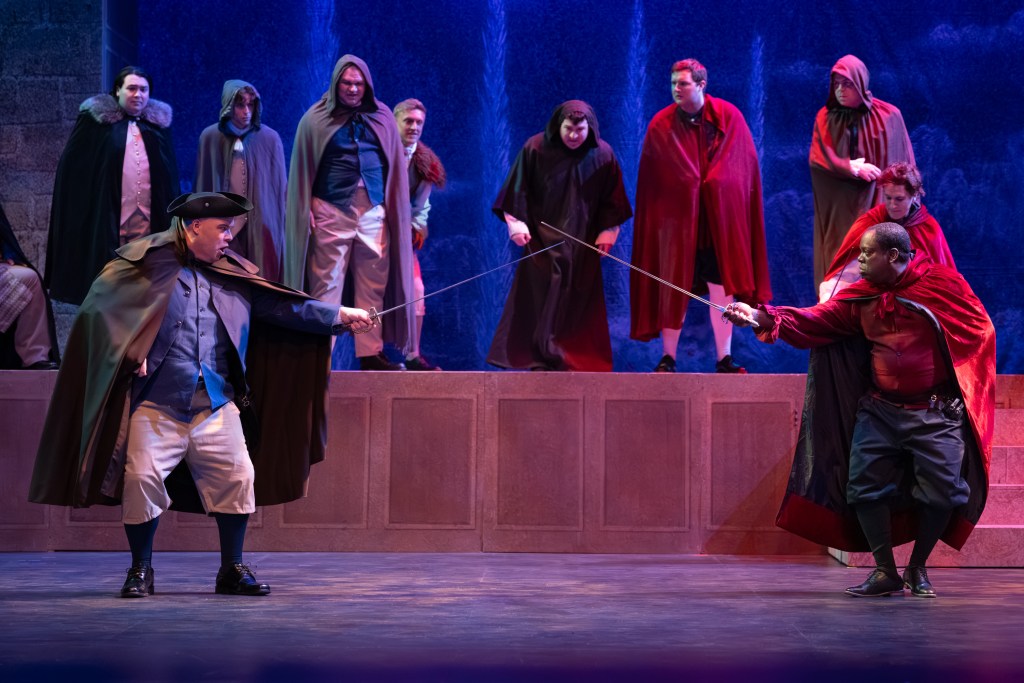
Issac Hurtado is intriguing and memorable as the conflicted Count Riccardo, with a smooth and powerful voice and commanding presence. A baritone with good range, he easily moves through the music with confidence and a surprisingly bright tone. Joseph Gansert, as Renato, provides a vocal contrast; his voice has a grittier tone, filled with gravitas. Elizabeth Baldwin is stunning and vocally flawless as the deeply conflicted Amelia, with an incredible range that enables her to easily handle the demands of the vocally challenging role. Baldwin captures the sense of despair in emotionally wrought arias that engender sympathy, with soaring notes that inspire admiration. Ola Rafalo captivates as the fortune teller and consort of demons; her clear, distinct voice and trance-like dance are almost hypnotic, and the audience is as easily caught up in her dark magic as the performers. Eli Panek and Fitzgerald St. Louis standout as the primary conspirators against Riccardo, with satisfying bass voices that add depth and a sense of danger, while Leann Schuering is delightful, lively, and in fine voice as Oscar, Riccardo’s loyal and devoted page.
Dianna Higbee directs the staging with authority and purpose, emphasizing the conflict and ensuring that the audience clearly understands the moral foundation that prevents Riccardo and Amelia from acting on their feelings, even after confessing their love. This clarity, coupled with Renato’s jealous impulse to join the conspirators, only heightens the tragedy. Conductor Andy Anderson leads a talented orchestra that skillfully interprets Verdi’s orchestrations, which are lovely, rhythmic, and almost too melodic to match the sad story. Excellent harmonies are woven throughout the score, adding to the pleasing tone that persists even as the story turns from romance to assassination. The opera is thoroughly compelling and excellently sung, from the lovely layering of harmonies to the aching love songs of Riccardo and Amelia and the fiery, forceful incantations of Ulrica to the tension and sharply contrasting sections of the ball. Audiences may not find a tune to hum along to on the way home, but the overall musicality and layered vocals will likely linger.
Verdi’s rhythmic, almost poetic composition Un Ballo In Maschera was first performed in 1859 and is said to be written in honor of the founding of the United States. Audience members should not, however, expect a tribute or adulation of the cause – the connection to the Revolutionary War is insubstantial beyond its usefulness to the conspirators plotting against the count’s life. Still, the framing does provide plot as well as a point of reference that amplifies themes of loyalty, conflicting ideology, and change. Winter Opera St. Louis takes a bit of a risk in presenting this lesser-known Verdi opera, but the composer’s unmistakable style and use of harmonic elements shines through, ensuring the performance is enjoyable and memorable for experienced and new opera fans alike.


